
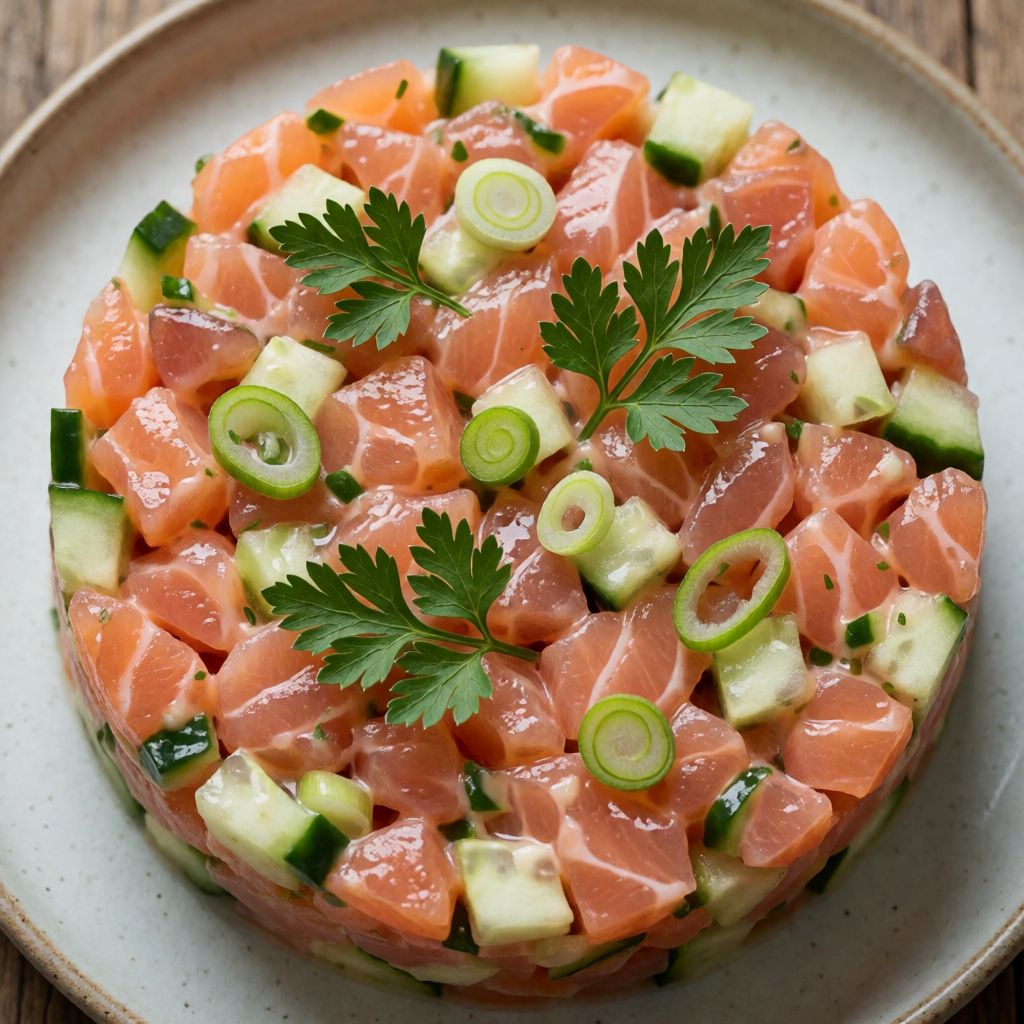
 AI photo
Salmon Tartare
A fresh salmon and smoked salmon tartare with apple, cucumber and avocado, finished with a chervil and mustard dressing.
Labels are worked out automatically from the ingredients and can be wrong. Check the packaging if it matters to you.
Ingredients
- 300 g Salmon diced small
- 100 g Smoked Salmon diced small
- 1 pcs Apple diced small
- 2 pcs Spring Onion finely chopped
- 75 g Cucumber diced small
- 1 bunch Chervil finely chopped
- ½ tsp Dijon Mustard
- 2 tbsp Olive Oil
- 1 pcs Lemon zest and juice
- 2 pcs Avocado diced small
- Salt to taste
- Black Pepper freshly ground
- ½ bunch Chervil for serving








Steps
Combine the salmon, smoked salmon, diced apple, spring onion and cucumber in a bowl.
Make a dressing with the chervil, Dijon mustard, olive oil, lemon juice, finely grated lemon zest, salt and pepper, then stir two-thirds of the dressing into the salmon bowl, mixing well and tasting.
Mix the remaining dressing (one-third) with the diced avocado.
3 minPlace a small serving ring on a plate and spread the avocado inside it first. Press gently so the layer is even and neat. Spoon the salmon tartare on top, remove the ring and sprinkle with a little of the reserved chervil.
2 min
This isn't a recipe you cook — it's one you assemble, and that changes what decides success. There's no flame to hide behind, no caramelisation to cover a mistake. What you're building is four textures stacked against each other: soft raw salmon, firmer salty smoked salmon, crisp apple and cucumber, creamy avocado. If any one of those loses its own character — if the apple goes soft, if the salmon turns to paste — the whole thing collapses into mush with a fishy smell, which is the fate of most bad tartare.
The knife decides more than the fridge does. Dice small means cut, not chop, not mince, not pulse in a food processor. A sharp blade goes through the cell walls cleanly; a dull one crushes them, and crushed cells weep liquid — that's the mushy, watery tartare people blame on "fish that wasn't fresh enough" when really it was fresh and just badly cut. Keep the blade sharp and the dice will hold its shape and its juice inside, where it belongs.
Cold is your stove here. Raw fish protein starts breaking down the moment it warms past fridge temperature, and that's not dramatic food-safety talk, it's just texture: warm salmon goes slack and loses the slight resistance that makes tartare pleasant to eat rather than sad. Keep the salmon in the fridge until the last possible moment, dice it last, and don't let the bowl sit out on the counter while you faff about with the avocado.
On the fish: buy salmon you'd happily eat raw because someone you trust sold it to you — a fishmonger who can tell you when it was landed, not a label that says "sushi grade." That phrase has no legal meaning in the UK or anywhere else; it's a marketing word, not a grade. What actually matters is how the fish was handled after catching — kept cold, not left to sit — and whether it was previously frozen hard enough to deal with parasites, which most commercial salmon destined for raw eating has been. Ask, don't assume.
The smoked salmon isn't there for more fish flavour — it's there for salt and a different bite. Raw salmon alone is soft and a bit one-note; the smoked kind brings firmness and a cured, savoury edge that the fresh fish doesn't have. If you've no smoked salmon, any cold-smoked fish with a similar chew — trout, for instance — does the same job. Don't try to substitute it with more raw salmon; you'll lose the contrast and the dish goes flat.
Apple and cucumber are your crunch, and their job is structural, not just flavour. Pick an apple that's tart and firm — a soft, sweet apple turns to mush against the other textures and brings nothing. Any crisp, slightly sour fruit works on the same logic: a firm pear, even a bit of unripe mango if you want to push it further than Stalic ever would. The cucumber should be deseeded if it's watery — the seeds and the gel around them are mostly water, and water is the enemy of a tartare that's meant to hold together on a plate.
Chervil is a soft, faintly aniseed herb, delicate rather than loud, and it's doing a job similar to tarragon but gentler. If you can't find it — and in most British supermarkets you genuinely can't — use parsley with a smaller amount of tarragon or dill mixed in, because those are stronger and will shout if you use chervil quantities. The lemon zest matters more than people think: grate it before you squeeze the fruit, because zest is aromatic oil sitting in the skin, and once you've juiced the lemon that skin is no good to you.
The dressing is split two-thirds and one-third for a reason — the salmon mix and the avocado need seasoning at different strengths, because avocado is richer and duller on its own and the acid in its third of the dressing is also what keeps it from browning. That greying on cut avocado is oxidation, a chemical reaction with the air, and citric acid slows it down — which is why you toss the avocado in dressing rather than leaving it bare while you deal with everything else.
Tartare, as a word, gets dragged through a story about Tatar horsemen tenderising raw meat under their saddles — charming, and almost certainly invented by a nineteenth-century French restaurant trying to sound exotic on a menu. There's no evidence for the saddle. What's true is more mundane: raw, finely cut food dressed with acid and oil is just an old, sensible way to eat something you don't want to cook, and it travelled through French kitchens into a technique, not a legend. As for the ring mould on the plate — you don't need a proper one. A cookie cutter, or a small tin with both ends cut off, does exactly the same job: it holds the avocado flat while you build the tartare on top, and gives you a clean edge when you lift it away.