
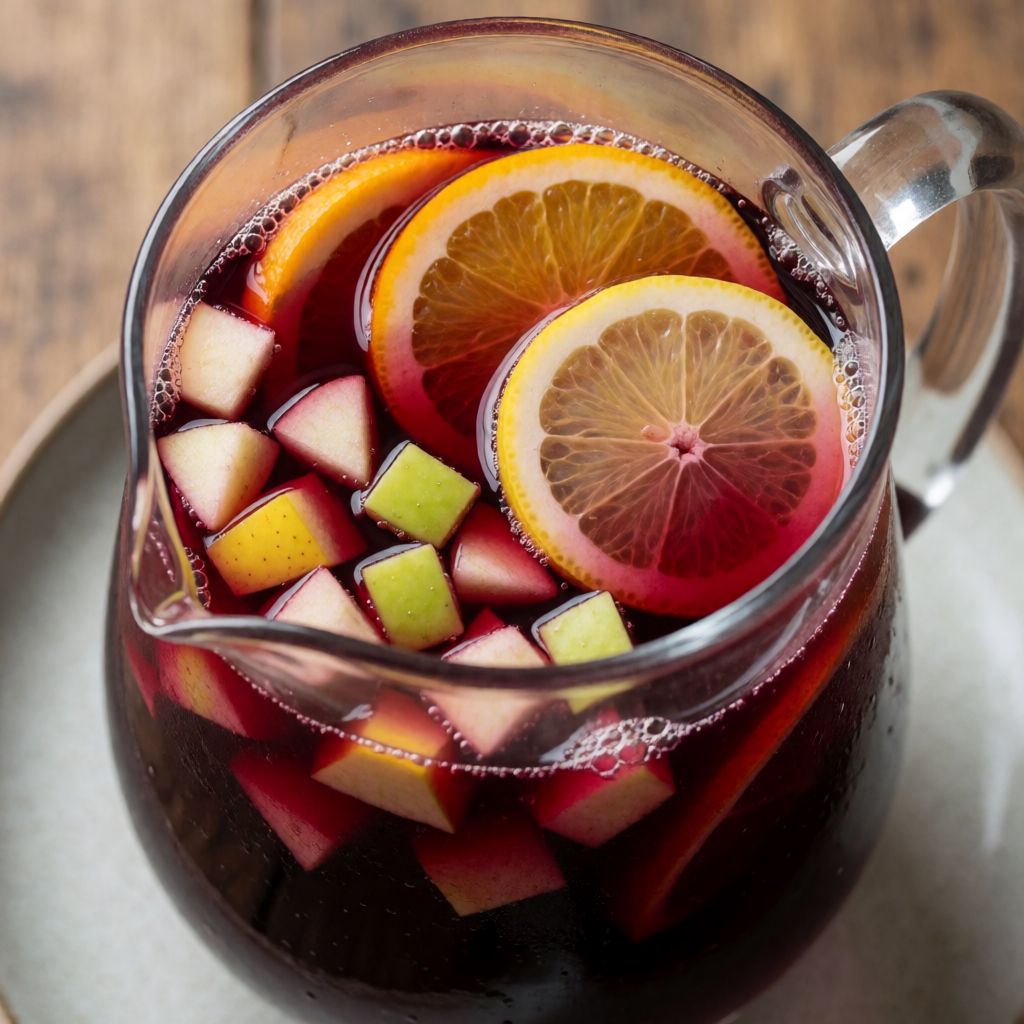
 AI photo
Real Spanish Sangria
A classic Spanish-style sangria with red wine, citrus and seasonal fruit, lightly spiced and topped up with lemonade.
Labels are worked out automatically from the ingredients and can be wrong. Check the packaging if it matters to you.
Ingredients
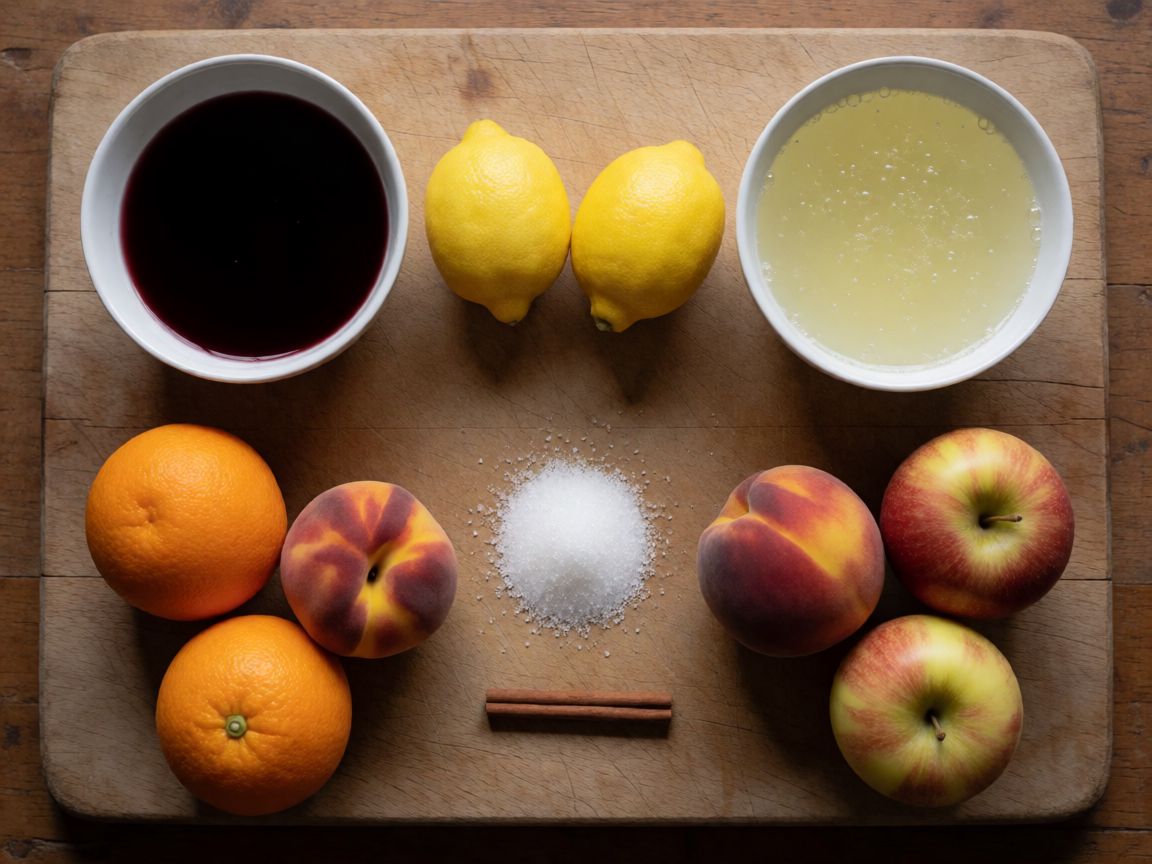
- 1.5 l red wine full-bodied, such as still Bonarda, Sardinian Cannonau or Salice Salentino
- 0.75 l sparkling lemonade
- 2 pcs lemon
- 2 pcs orange
- 2 pcs peach
- 2 pcs apple
- 80 g sugar
- 1 pcs cinnamon stick
- 1 pcs vanilla pod
- 3 pcs cloves
- 50 g brandy optional











Steps
Squeeze the juice from one lemon and one orange and set it aside.
Cut the second lemon and second orange: some into slices, some into cubes, keeping the peel on.
Wash the peaches and apples thoroughly, leaving the skin on, and cut into cubes.
Put the cut fruit into a bowl, sprinkle with sugar and pour over the strained citrus juice.
Pour in the red wine and mix well. Add the cinnamon stick, vanilla pod and cloves.
Pour in the brandy, cover with cling film and chill in the fridge.
Remove the vanilla pod and spices, top up with sparkling lemonade and mix well.
Chill in the fridge until ready to serve.
Sangria isn't a cocktail you mix and drink — it's a marinade you wait for. The wine is the brine, the fruit is what gets cured in it, and the two hours (minimum — the fridge time is the real recipe, the "115 min cook" on paper is just the clock running while you do nothing) is what turns cut fruit and raw wine into something that tastes like one drink instead of wine with garnish floating in it. Rush this and you get red wine with fruit salad dumped in; wait, and the sugar pulls juice out of the fruit while the wine pulls flavour out of the peel, and the two liquids meet in the middle.
What decides whether it works is restraint in two places. First, the wine: it has to be full-bodied and a bit rough at the edges — a thin, polite wine disappears under sugar and fruit and you're left tasting lemonade with a headache attached. Second, the fizz: it goes in last, cold, and only just before serving, because sparkling lemonade poured into a fridge for two hours is sparkling lemonade that's gone flat by the time you drink it. Everything bubbly in this recipe is added at the very end for exactly that reason — carbonation is the one thing patience destroys rather than improves.
Some say sangria is "just wine with chopped fruit thrown in" — no, because the chopping and the standing time are doing actual work. The peel stays on the citrus and the apple deliberately: that's where the bitter, aromatic oils live, and they need the wine's alcohol to pull them out slowly. Peel it and you lose the bitterness that keeps the drink from tasting like cordial.
On the wine itself: Bonarda, Cannonau, Salice Salentino — what they have in common is weight and a bit of rustic grip, not elegance. You want a wine that can carry sugar, citrus, and fruit sugar without turning into juice. Any full-bodied, youngish, not-too-tannic red will do the same job — a basic Tempranillo or a cheap Côtes du Rhône works fine. What won't work is anything delicate or expensive: you're about to dissolve sugar and steep spices in it, so there's no subtlety left to protect, and a fine wine here is money poured away for nothing the drink will ever notice.
The citrus does two jobs, not one. One lemon and one orange get squeezed — that juice, mixed with the sugar, is what starts breaking down the other fruit by osmosis, drawing liquid out of the peach and apple cubes before the wine even gets involved. The second lemon and orange go in whole, peel and all, cut into slices and cubes, because their job isn't juice — it's slow release of oil and bitterness over the two hours. Slices look better floating in the glass; cubes macerate faster and get eaten with a spoon. Keeping the peel on both is deliberate, and it's the main thing people get wrong when they "tidy up" the fruit before adding it.
Peach and apple: skin stays on for the same reason — texture and a bit of bite at the end, and because peeled fruit sitting in wine for two hours turns to mush, not macerated fruit. Use what's firm and a little underripe rather than soft and sweet; a soft peach collapses into fibres, an underripe one keeps its shape and still takes on the wine. If peaches aren't around, a pear or a hard plum substitutes on the same logic: firm flesh, skin on, cut into cubes that can hold their shape for two hours in liquid.
Sugar is there to start the maceration, not to make the drink sweet on its own — the final sweetness comes from the fruit juice it draws out plus the lemonade at the end. 80g for 1.5 litres of wine is restrained on purpose; you can taste and adjust once the lemonade goes in, but adding more sugar after the fact is easy — taking it out isn't.
Cinnamon stick and vanilla pod go in whole, not ground, because ground spice dissolves into the liquid and you can't retrieve it — you'd be stuck with however strong it got. Whole, you can pull them out the moment the flavour is where you want it, which is exactly step 7: remove the spices before the lemonade, because spice flavour doesn't stop developing just because you're ready to drink.
Brandy is marked optional, and that's honest — it isn't there for flavour so much as backbone, a bit more spirit under the fruit and fizz. Skip it and the drink is lighter and more fruit-forward; add it and it drinks closer to the stronger, bar-made versions. Either way it goes in before the chill, with the wine, not at the end — it needs the same steeping time as everything else, not a last-minute splash.
Sparkling lemonade, finally, should be a plain lemon soda with real fizz, not a heavily flavoured one — you want carbonation and a touch of citrus, not a second competing drink layered on top of the wine. Added last and cold, it stays fizzy for as long as the sangria takes to drink, which, for eight people on a warm afternoon, is not very long at all.