
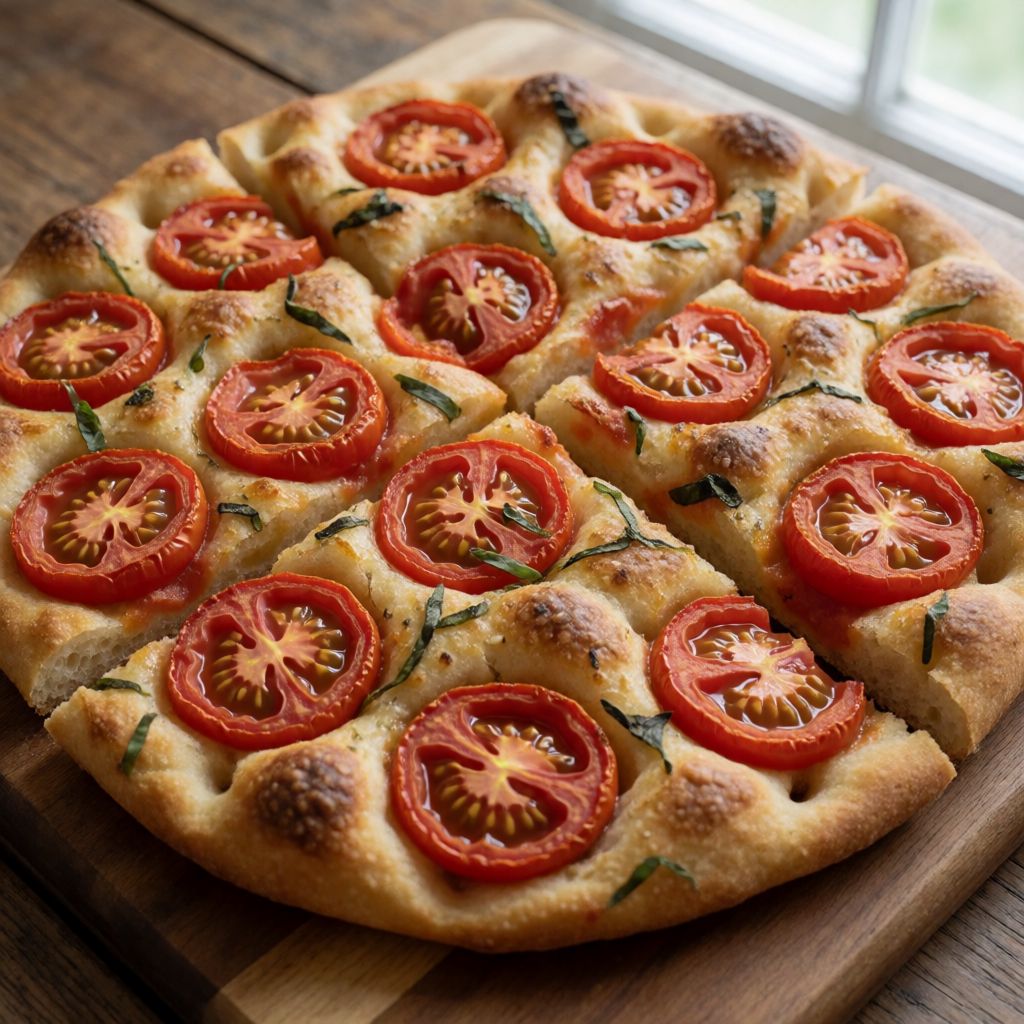
 AI photo
Sardinian Focaccia with Tomatoes
A rustic Sardinian-style focaccia where chopped tomatoes, garlic, basil and olive oil are kneaded right into the dough.
Labels are worked out automatically from the ingredients and can be wrong. Check the packaging if it matters to you.
Ingredients
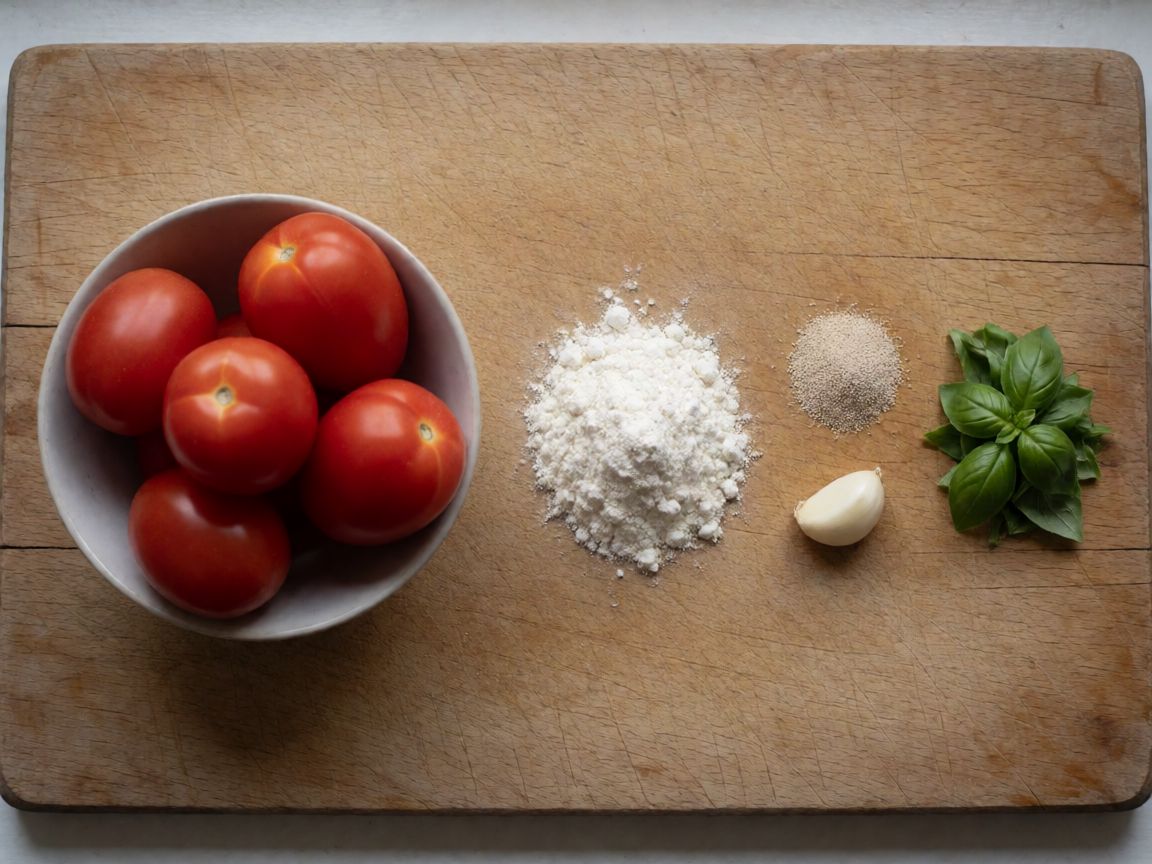
- 500 g Tomatoes
- 300 g Plain flour
- 10 g Salt
- 6 g Dried yeast
- 1 clove Garlic
- Basil to taste
- Olive oil to taste







Steps
Wash the tomatoes, pat dry and cut into small cubes. Put them in a bowl, add the garlic, salt, basil and olive oil.
Mix together and leave for 10 minutes.
10 minAdd the flour and dried yeast. Knead until you have a smooth dough.
Transfer the dough to a bowl, cover with cling film and leave to rise until doubled — about 3 hours.
180 minTip the dough onto a baking tray, stretching it out with damp hands.
Leave to rest for 30 minutes.
30 minDrizzle with olive oil and bake at 180°C for about 30 minutes.
30 minRemove from the oven and serve hot or warm.
This is not pizza with tomatoes scattered on top. It is bread with tomatoes built in, and that one fact decides how you handle the whole thing. Sardinians made it when the garden gave more tomatoes than the table could eat — a flat, cheap way to turn a glut into supper, nothing fancier.
Look at the list: no water. That is not someone forgetting to type a line. Salt pulls juice out of the cut tomato by osmosis — you salt them, they weep, and that weeping, now carrying garlic, basil and oil with it, is the only liquid the dough ever sees. Skip the ten-minute rest after salting and you will not have enough liquid, you will reach for the tap, and you will have diluted the one thing this bread is for.
What tells you it is going well: the dough comes together smooth, no dry crumbs hiding at the bottom of the bowl, elastic under your knuckles. It doubles — that is the yeast working, not the clock ticking; three hours is a guess, doubling is the fact. Wet hands, not flour, stretch it on the tray, because dry hands catch on sticky dough and tear it. And after stretching, it rests again before the oven — skip that and the gluten snaps straight back, you get a thick, sulky edge instead of an open one.
One thing worth saying out loud: some think good focaccia means drowning it in oil before baking. No — because a short bake at this heat will steam a flooded top rather than crisp it. The oil earlier in the bowl does the flavouring work; the drizzle at the end is for the crust, not a swimming pool.
Tomatoes: want them ripe and full, because this bread runs on their juice, not on added water. British tomatoes in December are often pale and watery for the wrong reason — too little sun, picked early. If that is what is in the shop, tinned chopped tomatoes, well drained, will serve you better than a sad fresh one; you need concentrated flesh, not thin soup. Cut them small enough to release juice quickly in that ten minutes, but not so small they turn to paste — you still want to see tomato in the finished bread, not just taste a rumour of it.
Flour: plain, not strong bread flour, and that is deliberate. This is a soft, close-crumbed bread, not a chewy pizza base that needs a gluten workout. If you panic at how sticky the dough is and start adding extra flour to tame it, you are fighting the recipe — the stickiness is why you wet your hands instead of dusting them. Dry it out and you lose the soft bite that makes this worth making.
Yeast: dried yeast is roughly half the weight of fresh — so 6 g dried is about 12–15 g fresh cake yeast if that is what you have, crumbled straight in, no need to proof it first in water since there is no water here to proof it in. The three-hour rise is a British-flat guess, and a cold flat in winter will take longer; a switched-off oven with the light left on, or a spot near a radiator, speeds it along. Judge by size, not the kitchen clock.
Garlic and basil: the garlic goes in raw and mellows sitting in salted, oiled tomato juice — it is not cooked, it is cured, gently. If whole bits of raw garlic worry you, crush it instead of chopping, so the flavour spreads rather than ambushing one bite. Basil fresh is better here; dried basil concentrates in the oven's heat and can turn bitter rather than fragrant. If fresh is not to hand, use a pinch of dried in the mix and scatter a little fresh, if you can get any, once it is out of the oven.
Olive oil: this is one ingredient where the substitution has a real cost, because the dish is partly built on what olive oil smells like. A neutral oil — sunflower, rapeseed — will still give you risen, cooked bread, just blander. If budget is the issue, spend the olive oil where its smell matters most, the final drizzle before baking, and use the cheaper oil, if at all, inside the tomato mix where other flavours carry more weight.
Oven and tray: a home oven dial reading 180°C and the actual air around your tray are not always the same number — thermostats drift, and a tray on a cold shelf cooks slower than the display claims. Go by what you see: edges lifting and colouring, the exposed tomato pieces blistering and darkening at the tips, the smell turning from raw dough to baked bread. Without a stone or a proper oven floor, the base will stay softer than a Sardinian wood-fired one — that is the honest limit of a baking tray in a flat, not a mistake you made.