
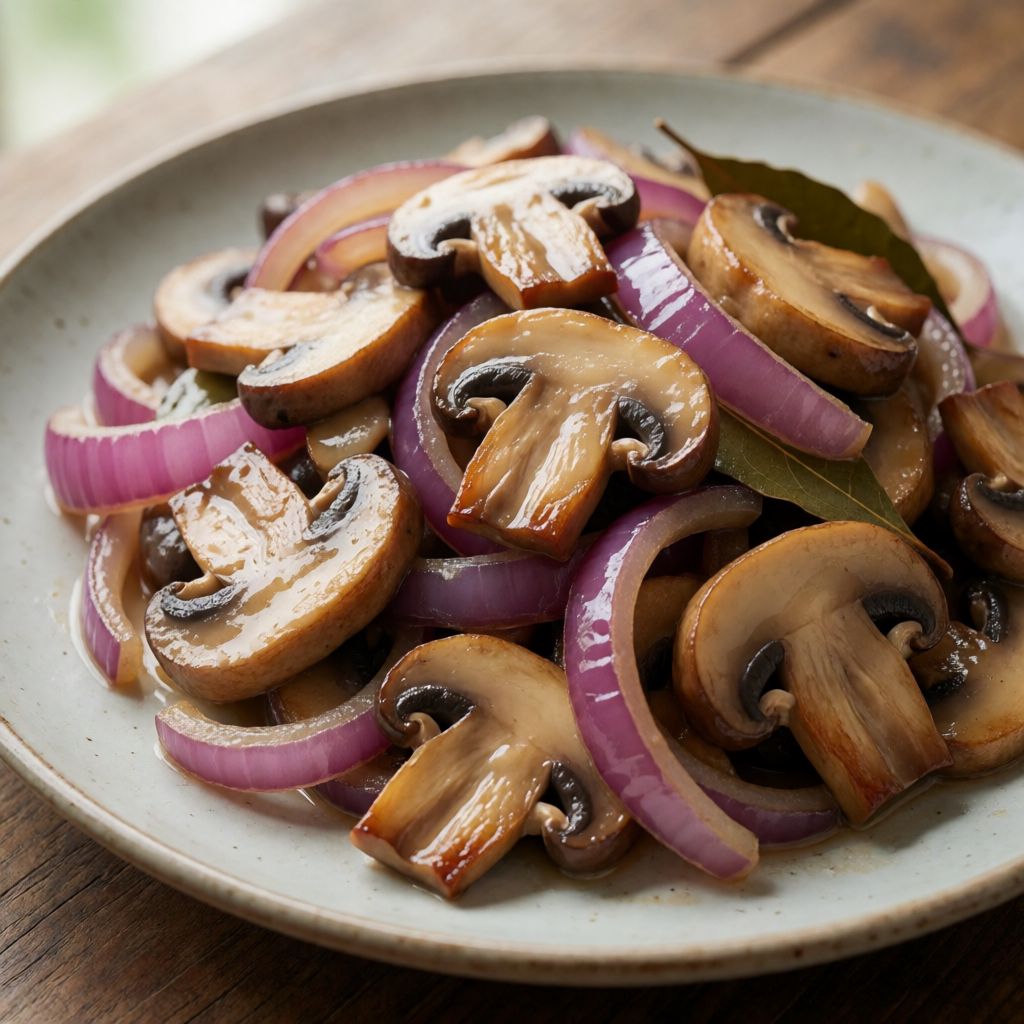
 AI photo
Pan-Fried Mushrooms and Onions
A simple skillet side of mushrooms and caramelised onions, finished with mint and parsley.
Labels are worked out automatically from the ingredients and can be wrong. Check the packaging if it matters to you.
Ingredients
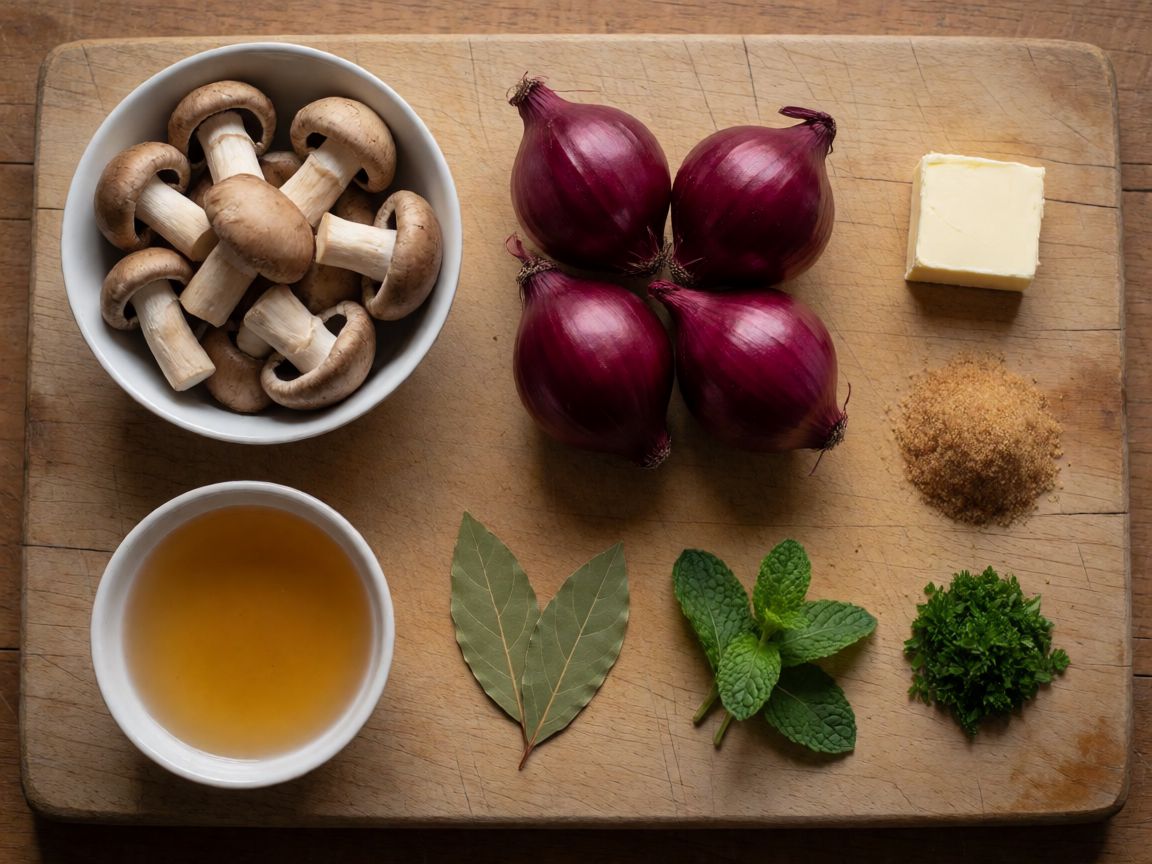
- 1 kg chestnut mushrooms
- 4 pcs red onion
- 40 g butter
- 2 tbsp brown sugar
- 2 tbsp apple cider vinegar
- 2 pcs bay leaves
- mint to taste
- parsley to taste
- salt to taste
- black pepper to taste








Steps
Rinse the mushrooms under running water, remove any traces of soil, pat dry with a cloth and slice thinly.
5 minPeel the onions and slice into rings.
3 minFry the onions in a pan with butter over low heat.
5 minAdd the brown sugar, a pinch of salt and black pepper, and cook until the onions caramelise.
8 minPour in the apple cider vinegar and let it evaporate.
2 minTransfer the caramelised onions to a bowl, then put the mushrooms with the bay leaves into the pan.
1 minAdd a pinch of salt and cook the mushrooms until soft and well browned.
8 minCombine the caramelised onions with the mushrooms and fry together for a few more minutes.
3 minAdd the chopped parsley and mint leaves.
1 minServe the dish hot, ideally with toasted bread.
This is onion jam meeting fried mushrooms halfway — one half sweet and sharp, one half dark and savoury, cooked separately because they want different things from the heat and then married at the end so neither one drowns the other. What decides whether it works is restraint in two places: letting the onions actually caramelise rather than just soften, and letting the mushrooms give up their water before you ask them to brown.
Four red onions sliced into rings go into butter on low heat, no rush. Some say onions "caramelise" in eight minutes flat because a recipe card says so — no, because caramelisation is a colour and a smell, not a clock: the onion goes from sharp and raw-smelling to sweet, jammy, the colour of strong tea. The sugar you add later isn't there to caramelise them for you, it's there to deepen what the onion is already doing — a shortcut that works because sugar browns faster than onion sugars alone, but it only works if the onion has already started to soften and sweeten on its own.
The vinegar hitting the hot pan is the other hinge. It's not a garnish — it's acid cutting through all that sweetness so the onions taste like something other than jam, and it has to actually evaporate, not just splash in and sit there raw and sour.
Chestnut mushrooms, not the pale button ones, because they hold more flavour and more structure — a chestnut mushroom sliced thin will still be a slice when it's done; a watery button mushroom can collapse into something closer to mush. If chestnut isn't in the shop, button works, just expect less depth and don't crowd the pan — wet mushrooms piled on top of each other steam instead of fry, and steaming is the actual cause of the grey, slippery mushroom everyone's had and nobody liked. A wide pan and mushrooms in a single loose layer, or in batches, is what prevents that — not a hotter stove, which just scorches the outside while the inside stays wet.
Red onion rather than brown or white matters here mostly for colour and a slightly milder bite once cooked — brown onion will caramelise too, it's just a touch sharper raw and a touch less red-purple in the finished dish. Either is fine; this isn't a dish where the onion variety is sacred, it's a dish where someone chose red onion because it looks good against dark mushroom and said so, not because brown onion fails chemically.
Butter, 40g, is doing two jobs: carrying heat without the onion catching and sticking, and leaving its own flavour behind, which a neutral oil wouldn't. If you want dairy-free, use any oil with no smell of its own — sunflower, a mild rapeseed — and accept the dish will taste a little leaner, less rounded, because butter's milk solids are part of what makes the caramelised onion taste "cooked" rather than just "soft."
Brown sugar over white isn't fussiness — brown sugar carries molasses, which adds a faint bitter-dark note that plain sweetness doesn't have, closer to what a long, slow caramelisation would give you if you had the hour to let the onion do it unaided. Apple cider vinegar for the same reason gives a rounder, fruitier sharpness than white vinegar's flat acid — malt vinegar, very British and sitting in most cupboards already, would work as a substitute, just expect a more aggressive tang, so go lighter with it.
Bay leaf in with the mushrooms is a quiet thing — it doesn't dominate, it just stops the mushroom tasting one-note earthy, the way bay does in a stock. Pull it out before serving; nobody wants to bite a bay leaf. Mint alongside parsley is the one unexpected move — most people reach for parsley alone with mushrooms and stop there. Mint here is doing what it does in lamb dishes: cutting through the richness of butter and caramelised sugar with something cold and green at the very end, added raw, off the heat, so it stays bright instead of wilting into the pan.
This feeds four as a side — think of it sitting next to a Sunday roast in place of, or alongside, your usual gravy-heavy veg, or spooned over toasted bread as its own small meal. Patience is the real ingredient that doesn't appear on the list: rush the onions and you get sweet mush instead of jam; rush the mushrooms and you get grey instead of brown. Fifteen minutes of prep and twenty-five of cooking is the floor, not a target — go by colour and smell, and let the clock be the thing you check afterwards, not the thing you follow.