
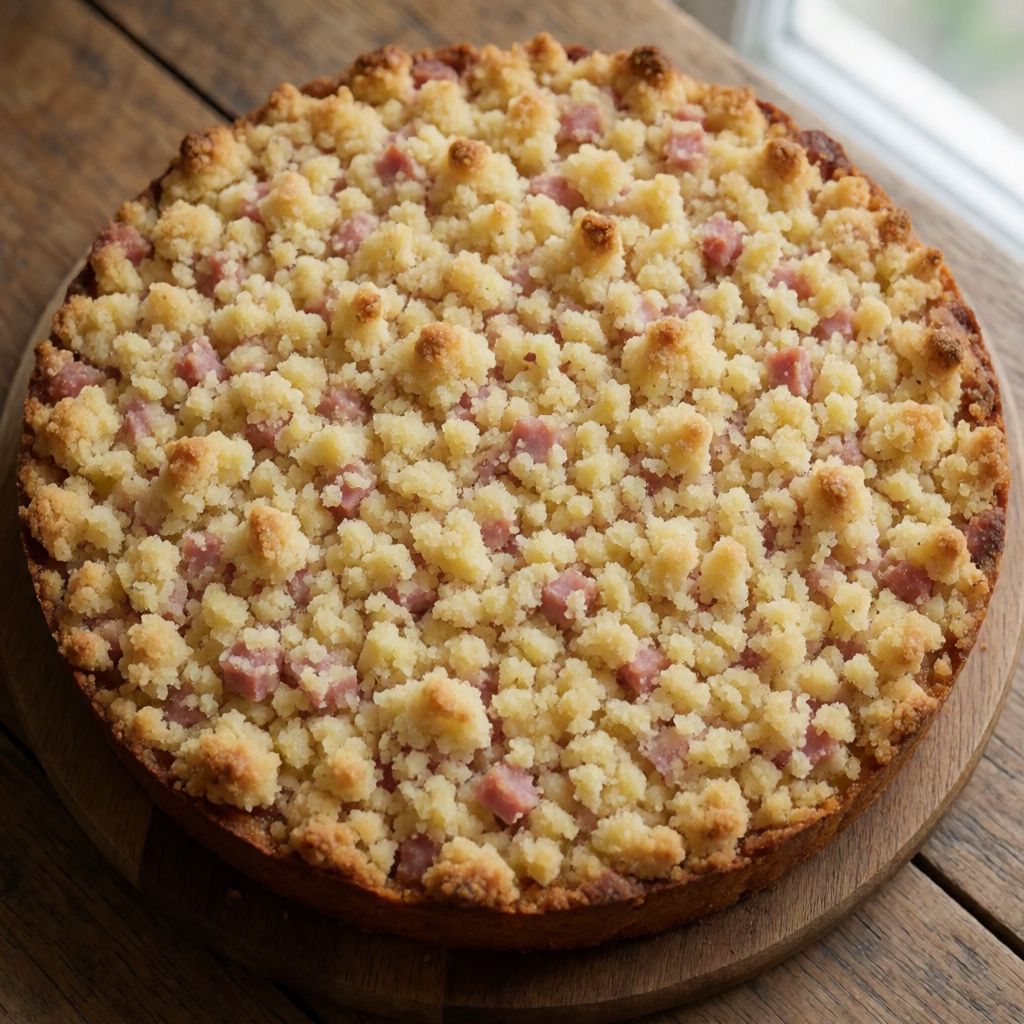
 AI photo
Savoury Mortadella Crumble Pie
A savoury crumble-pastry pie filled with creamy ricotta and mortadella, perfect for a hearty bake.
Labels are worked out automatically from the ingredients and can be wrong. Check the packaging if it matters to you.
Ingredients
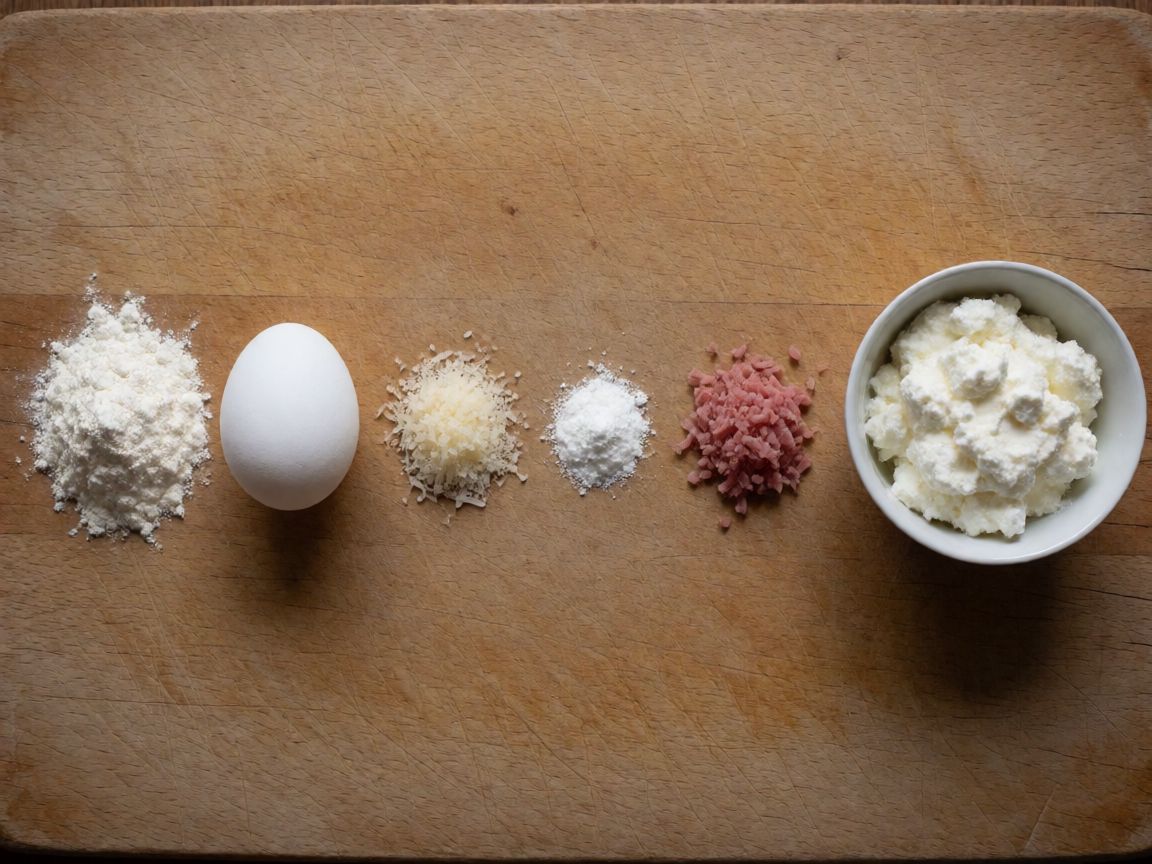
- 300 g Plain flour
- 1 pcs Egg
- 100 g Parmesan
- 100 g Olive oil
- 8 g Baking powder for savoury baking
- 300-350 g Mortadella
- 300 g Ricotta
- Salt to taste
- Black pepper to taste
- Olive oil to taste









Steps
Mix the flour with the Parmesan, egg and olive oil in a bowl, combining until incorporated.
Add the baking powder and a pinch of salt, then mix first with a spoon and then by hand to form a crumbly dough.
Line a baking tin with parchment paper and press half of the dough into the base, pressing down firmly with your hands.
Mix the ricotta with olive oil, salt, black pepper and the mortadella cut into cubes.
Spread the filling over the base and cover with the remaining crumbly dough.
Preheat the oven to 180°C and bake for 35-40 minutes until the edges are crisp and golden.
40 min
This is not a pie in the pastry sense of dough wrapped around a filling. It's a crumble that holds together: a dough with no water, no kneading, no chilling, pressed into the tin with your palms instead of rolled with a pin. Base and lid come from the same batch — press half down, fill, crumble the rest over the top. That's the whole architecture, and it's simpler than it looks on the plate.
What decides whether it works is the contrast you get in the mouth: a crust that shatters a little, and under it a filling that stays soft and faintly glossy from the fat the mortadella gives up as it bakes. Get that contrast and the pie earns its name. Lose it — a soggy middle under a dry crumb, or a crust gone tough and bready — and you've made a savoury scone with meat hiding in it.
The crumbliness isn't rustic charm, it's mechanics. Dry flour on its own would just turn to clay with the egg. Oil coats every grain of it before the egg arrives, so when you press the dough together there's no long elastic gluten web forming — just short clusters that hold their shape and let go cleanly between your teeth. Some say you need cold butter rubbed in with your fingertips for a proper short crust. No — oil does the same coating job by a different route: butter works because it's solid and broken into pieces, oil works because it's liquid and already everywhere. Different method, same short result.
Flour here does one job: give the oil and egg something to cling to. Plain flour is right — a strong bread flour, with more protein, would push gluten development the opposite way from what you want, toward chew instead of crumb. No need to sieve it or treat it gently; this dough doesn't mind being handled, which is the whole point of building it on oil rather than cold butter. Warm hands help it come together instead of ruining it.
The egg is the glue. Without it the oil-coated flour would stay sandy and refuse to hold a shape when you press it into the tin. Parmesan does double duty: salt and savour, but also — being dry and granular — it behaves a little like extra flour, soaking up moisture and helping the crumb stay short rather than cakey. Any hard, aged grating cheese works on the same principle — pecorino, grana padano — but skip the bagged pre-grated kind; it's often cut with anti-clumping starch that won't behave the same way against the oil.
Olive oil is doing the fat's job without bringing butter's water content along with it. The criterion for substitution is simple: any oil that's liquid at room temperature and doesn't smell strongly of itself will do the structural work. Extra virgin brings a bitter, peppery edge that plays nicely against parmesan; a milder olive oil, or any neutral vegetable oil, still binds the dough — you just lose that small sharpness at the finish. Baking powder here isn't there to make the dough rise like a sponge; it's there to loosen the crumb a touch as it bakes. Too much and you tip into cake territory, which is not what a crumbly savoury base wants.
Mortadella is the digression worth having: it's a Bologna invention built on economy, not showmanship — finely emulsified fat and trim, so smooth that the fat doesn't show as separate lumps the way it does in a coarser salami. Cubed and baked into the ricotta, its job is to render that fat slowly and baste the filling from the inside, so the middle of the pie doesn't dry out while the crust crisps. If you have none, use any cooked cured meat with real fat marbling — a fattier ham, a mild salami — but lean ham on its own will leave you with a dry filling, because there's nothing to melt and baste it.
Ricotta is mild on purpose, and its character comes from still carrying some of its whey. That whey is the real enemy here, not the oven. If the ricotta looks wet, drain it in a sieve for twenty minutes before mixing; otherwise it turns the filling into a sauce rather than a filling, which seeps down and undoes all the work the base dough did to stay crisp — a second, independent cause of the soggy-bottom problem, nothing to do with timing. Salt it cautiously: mortadella already carries its cure's salt, so taste the mix before you commit, and let the pepper do more of the work than the salt does.
On the tin: no size is given, and that's fine — a 20cm loose-base or springform tin suits this quantity and gives four generous lunch portions, closer to a wedge of pie than a sliver of tart. It holds up cold as well as warm, in the way a British picnic pork pie does — the fat firms as it cools and the slice holds together better than it did straight from the oven. And trust your eyes over your oven dial: domestic ovens, especially fan ones, run warmer than the number suggests, so the gold at the edge is a better clock than the timer.