
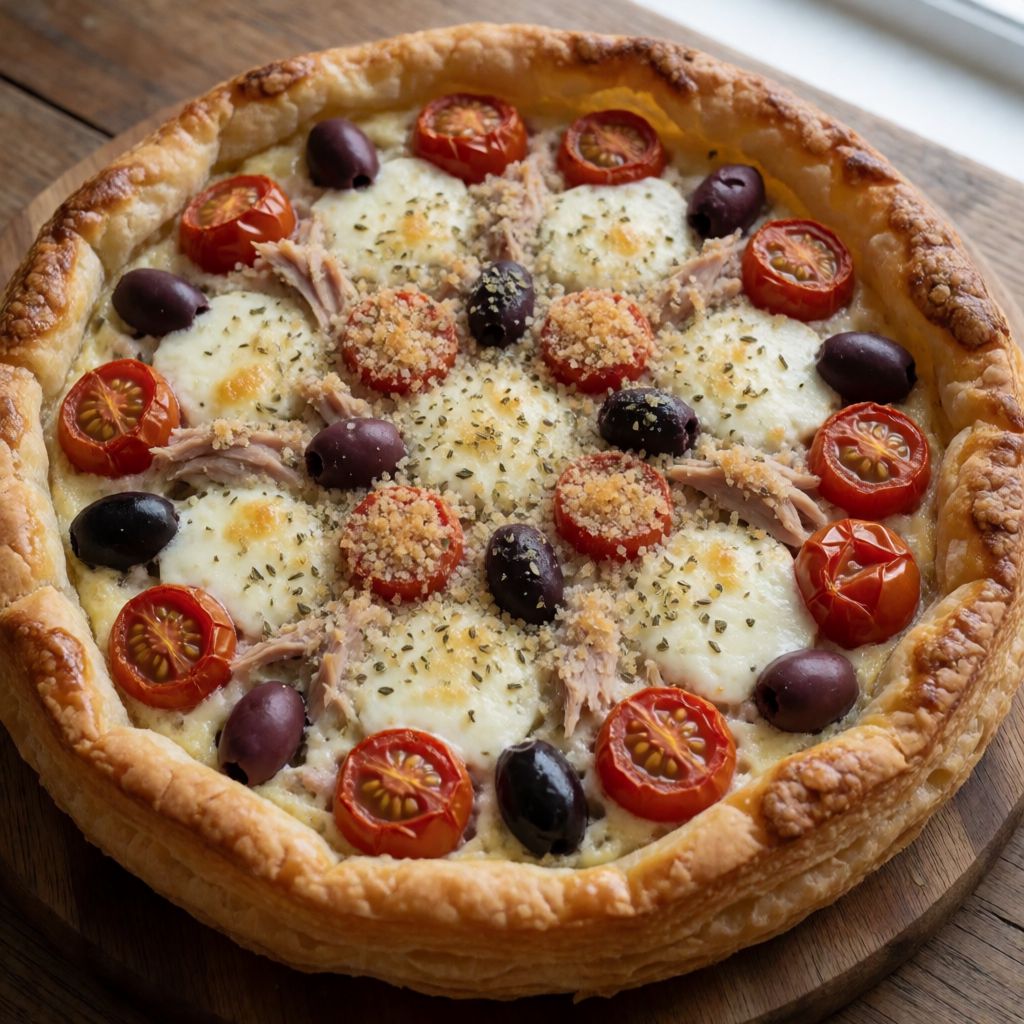
 AI photo
Savoury Tart with Cherry Tomatoes, Tuna and Olives
A savoury tart with cherry tomatoes, tuna, mozzarella and black olives in a crisp pastry case.
Labels are worked out automatically from the ingredients and can be wrong. Check the packaging if it matters to you.
Ingredients
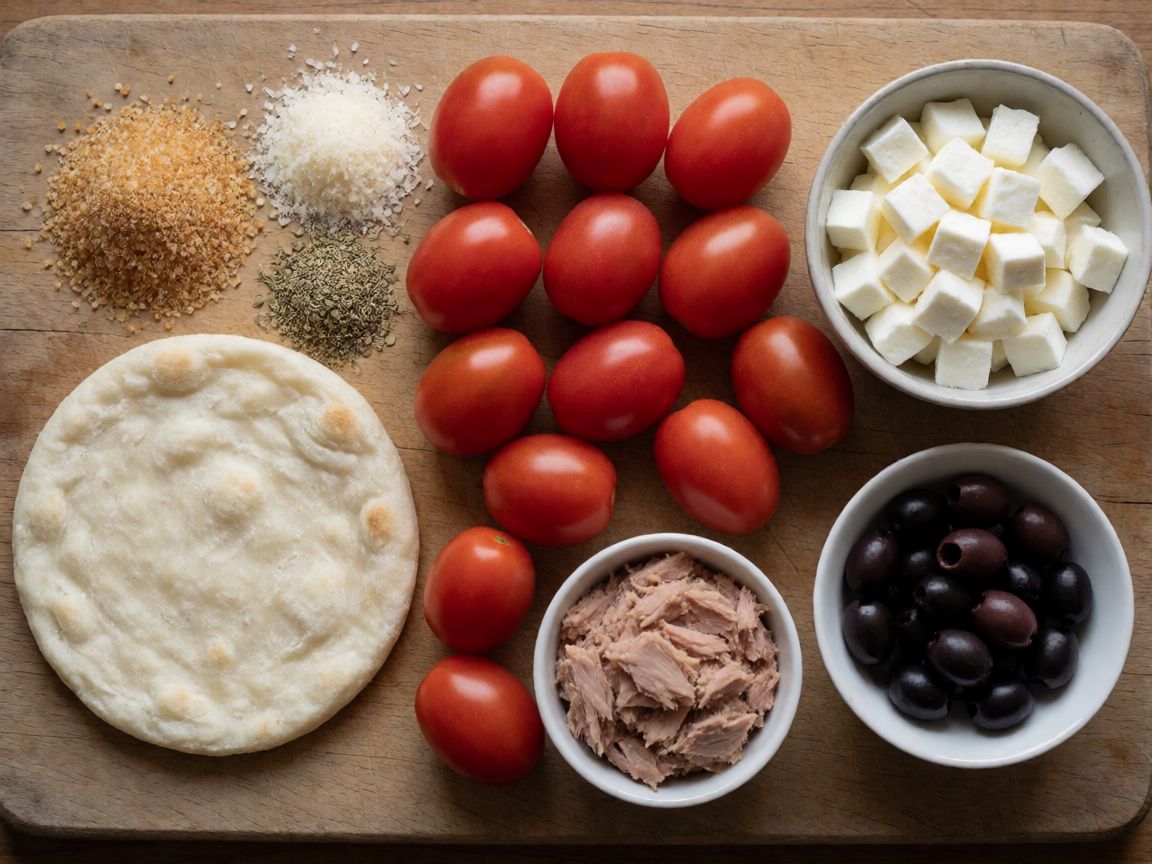
- 1 pcs Puff pastry
- 25 g Breadcrumbs dried
- 25 g Parmesan
- Oregano dried, to taste
- 12 pcs Cherry tomatoes
- 200 g Mozzarella diced
- 160 g Tuna canned
- Pitted black olives
- Olive oil
- Salt to taste
- White pepper to taste








Steps
Mix the breadcrumbs with the parmesan, season with oregano and stir.
In a separate bowl, combine the tuna, cherry tomatoes (halved or quartered), the diced mozzarella and the pitted black olives.
Add salt and white pepper to taste, drizzle with olive oil and mix.
Line a 24cm tin with the puff pastry, pressing it onto the base and sides, then prick the base with a fork.
Spread the breadcrumb and parmesan mixture over the base, then spoon the remaining filling on top.
Sprinkle with oregano and olive oil, fold over the edges of the pastry and bake in a preheated oven at 200°C for 28 minutes.
28 min
This is not a quiche, and that is the whole point. No egg, no cream, no custard to set — just a puff pastry shell holding a cold, oily, salty jumble of tuna, cherry tomato, mozzarella and olives, baked once, hard and fast. Think of it as a savoury pie built the way the French build a pissaladière rather than the way they build a quiche lorraine: the filling doesn't need setting, it needs heating through while the case around it turns to shards.
What decides whether this works is moisture, and where it goes. Tomatoes bleed juice, mozzarella sheds whey, tuna comes packed in oil or brine — all of that water is sitting directly on top of raw puff pastry, which is just layers of flour and fat that need dry heat to puff apart into flakes. Wet dough does not puff, it steams and goes to dense, soft cardboard underneath. That's why the first thing you do before any filling goes in is build a barrier: breadcrumbs and parmesan, dry, salty, absorbent. That layer isn't decoration, it's insurance — it drinks the juice that would otherwise drown the base before the pastry has had a chance to rise.
Some say a tart like this needs blind baking the base first, the way you'd do for a quiche with its thin, wet egg mixture. No — because the filling here is dense and chunky, not poured custard; it doesn't flood the pastry, it sits on it, and the crumb barrier is doing the job blind baking would otherwise do. Blind-bake this one and you'll just dry the case out before the filling's even warm.
Puff pastry — in a UK kitchen this almost always means the ready-rolled sheet or block from the chiller cabinet, and the only real choice you're making is butter versus the cheaper vegetable-fat kind. Butter puff tastes of something and browns better because butter has milk solids that caramelise; the vegetable-fat version is blander but more forgiving, it won't catch as fast at the edges. Either works here. What matters more is handling it cold — warm hands melt the butter layers before the oven can turn them to steam, and a pastry case lined while your hands are warm shrinks and slumps in the oven. If you've got five minutes, let the lined tin sit in the fridge before you fill it. That's patience doing the pastry's job for it.
The breadcrumbs and parmesan aren't interchangeable with 'anything dry' — you want something that absorbs liquid and also seasons as it does it. Parmesan brings salt and a savoury depth that plain crumbs can't; if you haven't got parmesan, any hard, well-aged cheese that grates fine and has no fresh-milk wetness to it will do — a mature cheddar, pecorino. If you're out of dried breadcrumbs, dry polenta or semolina will absorb just as well, though you lose some of that cheesy backbone.
Tuna from a tin is doing double duty: protein and a background hit of oil or brine. Drain it properly — don't just tip it in — because that liquid is exactly the kind of moisture the crumb layer was built to manage, and asking it to manage extra tuna brine on top of tomato juice is asking too much of one thin layer. If you're using tuna in oil, that oil is worth keeping to drizzle over the filling instead of using a separate spoonful of olive oil; it's already carrying the fish's flavour.
Mozzarella: use a drier block type if you can rather than the ball sitting in its own brine, which weeps the moment you cut into it. If all you've got is the ball-in-liquid kind, dice it and leave it on kitchen paper for ten minutes before it goes anywhere near the filling — you're draining it the way you'd drain yoghurt for a thicker set. The cherry tomatoes, likewise: halving or quartering them opens up the seed cavity, which is where most of the water sits, so if your tomatoes are particularly juicy (high summer ones, or anything a bit overripe) a quick squeeze of the seedy middle before they go in the bowl saves the base some work.
Olives bring salt and a bitter note that cuts the fat of the cheese and pastry — pitted, black, cured ones, not the bright green brined kind, which are sharper and wetter and will throw the balance off. If you haven't got olives, capers give you salt and sharpness in a similar register, though the texture is nothing alike, so use fewer, chopped.
Oregano dried rather than fresh is the right call here, not a compromise — dried oregano is actually more pungent, its oils concentrate as it dries, and it survives the oven heat without scorching the way fresh leaves would on an exposed tart top. White pepper over black is a kitchen habit from pale sauces where black flecks look like a mistake — here, with tomato and olive already doing the visual work, it won't matter if you've only got black. Season properly before you fill, not after — once it's under pastry and in the oven you can't fix it.