
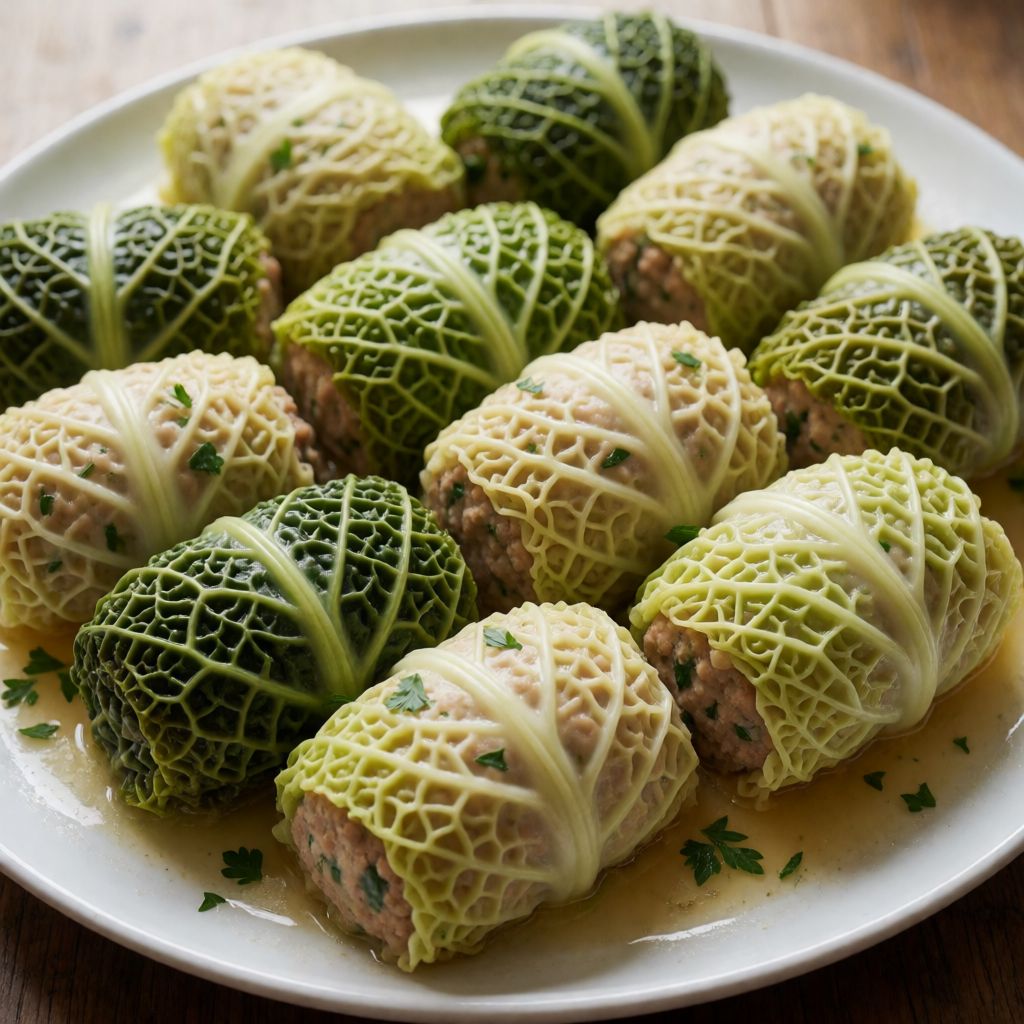
 AI photo
Savoy Cabbage Rolls
Savoy cabbage leaves rolled around a beef and pork filling, gently braised until tender.
Labels are worked out automatically from the ingredients and can be wrong. Check the packaging if it matters to you.
Ingredients
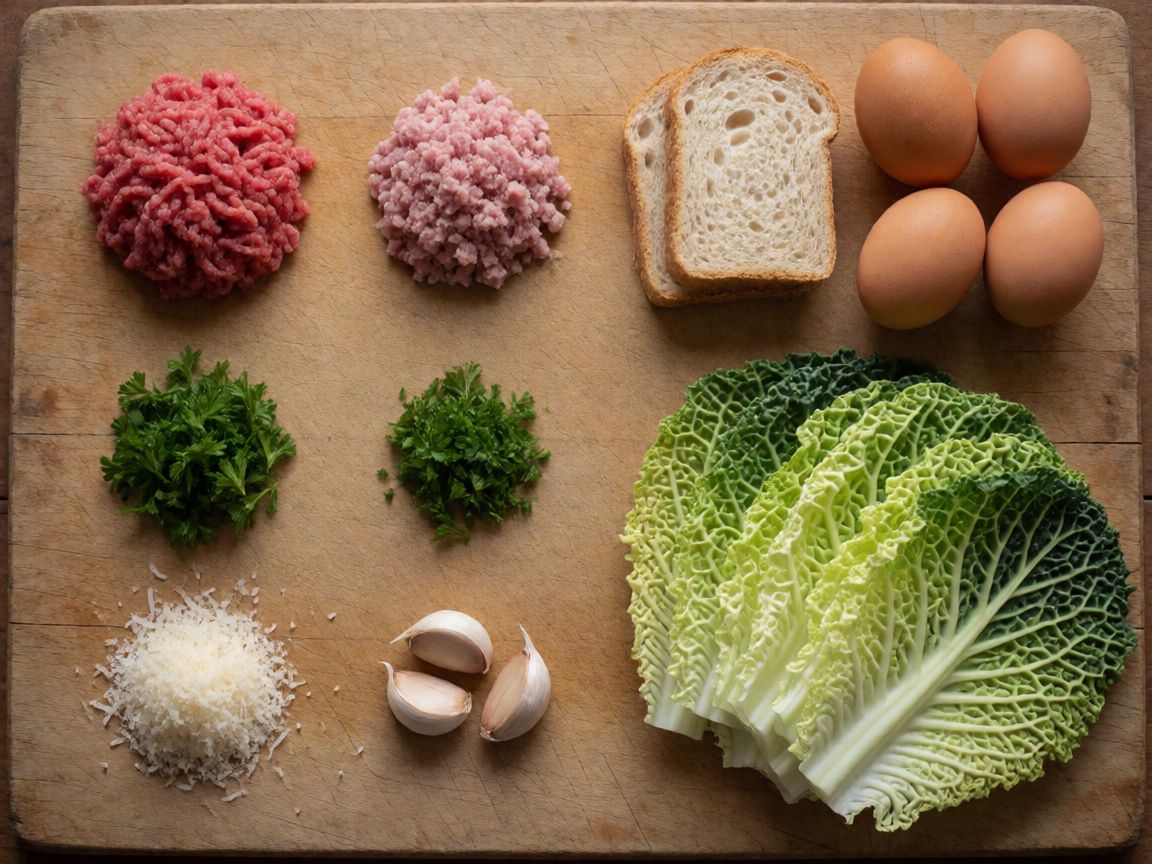
- 200 g Beef mince
- 200 g Pork mince
- 80 g Stale bread crumb
- 3 pcs Eggs
- 1 bunch Parsley
- 1.5 clove Garlic
- 50 g Parmesan
- 1 tbsp Olive oil
- Salt to taste
- 13-15 pcs Savoy cabbage leaves
- Olive oil to taste, for frying
- Water as needed, or vegetable stock
- Black pepper to taste











Steps
Pick the savoy cabbage leaves and choose ones of roughly equal size. Blanch them for no more than one minute, then lay them on a towel.
1 minIn a large bowl combine the beef and pork mince, eggs, crumbled stale bread, finely chopped parsley, grated Parmesan, olive oil, salt and half of the chopped garlic clove. Mix well.
Unroll each cabbage leaf, trim away the tough central rib. Place the filling, fold in the edges and roll into a tight parcel.
In a wide pan heat the olive oil and fry the whole garlic clove until golden.
Arrange the rolls in rows on the bottom of the pan, season with parsley, add salt and pour in water or stock.
Cook the rolls over medium heat with the lid on, turning them roughly halfway through cooking.
40 min
This is cabbage doing what pastry does in other hands — holding a parcel together while the inside cooks slowly in its own steam. The whole dish is a trade-off between a leaf and a filling, and almost everything that goes wrong comes from treating the leaf like paper instead of like a muscle that needs softening first.
What decides whether it works is the blanch. A savoy leaf has a thick rib running through it and a surface that's basically raw vegetable — stiff, upright, unwilling to fold without cracking. One minute in boiling water doesn't cook it, it just relaxes the fibres enough that the leaf will bend around a spoonful of mince without splitting at the fold. Go much past a minute and you've gone the other way: the leaf turns limp and wet, tears as you roll it, and leaks filling into the pan. So the leaf wants exactly enough heat to stop fighting you, no more.
The filling itself is a 50/50 beef-pork mix bulked with bread and egg — the same logic as a good meatball, not a cheap one. Bread soaked in nothing but its own crumb and the meat's moisture keeps the mince from going dense and rubbery when it cooks through twice (once rolled, once in the pan). Parmesan and raw garlic do the seasoning work that salt alone can't — depth, not just saltiness.
The garlic clove fried whole and left in the oil, not chopped into the pan, is doing something specific: it flavours the fat without burning, because a whole clove browns slowly and evenly while minced garlic left in hot oil for the full 40 minutes would turn bitter long before the rolls are done. You get the aroma without the acrid edge. If you don't have a fresh clove, a pinch of garlic powder stirred into the water works as a stand-in — it won't perfume the oil the same way, but it won't burn either, which is the bigger risk.
The two eggs in the mix aren't for richness, they're the glue holding mince and breadcrumb together through two rounds of cooking. Leave them out and the filling is more likely to crumble when you unroll — sorry, when you cut into — the parcel. Any binder that sets when heated does the job; egg is just the cheapest one that's always in the fridge.
Bread crumb, not fresh bread, matters because fresh bread brings extra moisture you don't need — the mince already has plenty, and a wet filling steams rather than browns even slightly inside its wrapper. Stale crumb absorbs the meat's own juice instead of adding to it, so the filling stays tender but holds its shape when sliced. No stale bread in the house — use dry breadcrumbs or even a tablespoon of rice; the point is something starchy and dry.
Parmesan here isn't a garnish, it's a seasoning that also browns and binds slightly as it melts into the mince — salt, umami and a little structure in one ingredient. Any hard, aged grating cheese does the same job; a soft cheese won't, because it melts to liquid instead of knitting into the meat.
Water or stock poured around the rolls, not over them, is there to braise the bottom layer and steam the rest — this is why the lid stays on and why you turn the rolls halfway: so every roll gets its turn sitting in the liquid and taking colour, instead of one layer swimming and the top layer drying out. Medium heat with the lid on means the liquid simmers gently rather than boils hard — a hard boil would agitate the rolls enough to unravel the folds you made with such care. Keep it at a point where the pan lid rattles only now and then, not constantly.
As for doneness — forty minutes is where you start checking, not where you stop the clock. The real sign is the leaf: translucent rather than bright green, soft enough that a fork slides through without resistance, and the liquid in the pan reduced to something closer to a sauce than a puddle. If it still tastes of raw cabbage at the stem end, it needs longer, lid back on, heat unchanged.