
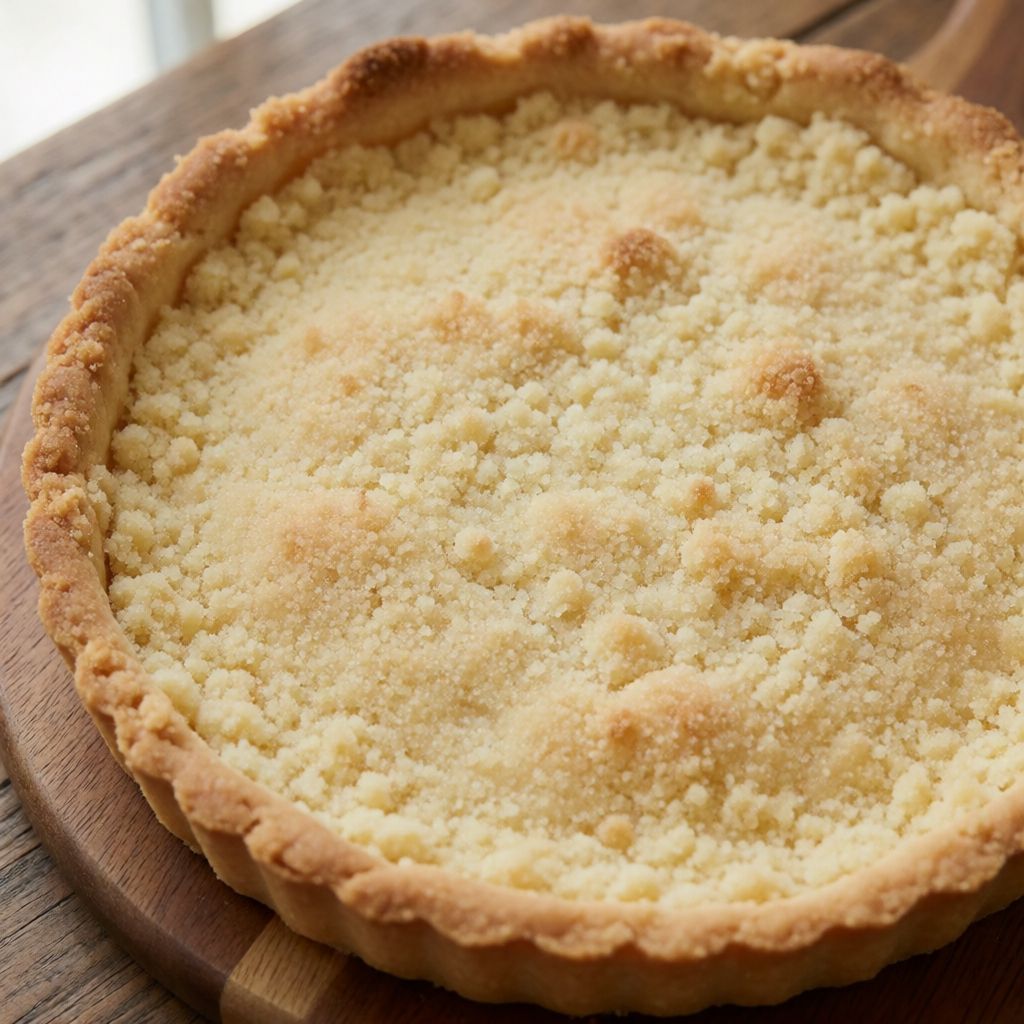
 AI photo
Simple Crumble Tart Base for a Thousand Fillings
A versatile crumbly pastry base you can fill with custard, jam, frangipane or ricotta for endless variations.
Labels are worked out automatically from the ingredients and can be wrong. Check the packaging if it matters to you.
Ingredients
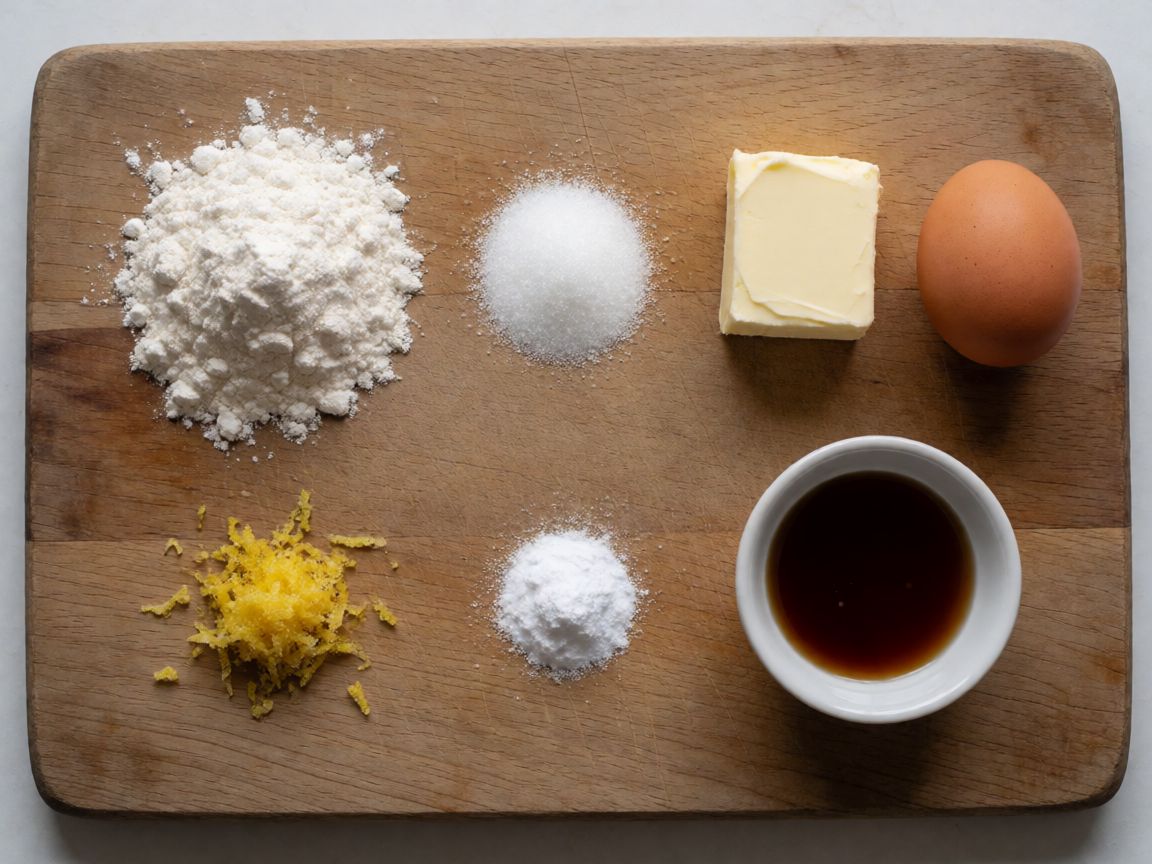
- 300 g Flour
- 100 g Sugar
- 100 g Butter cold
- 1 pcs Egg
- 15 g Baking powder
- Vanilla extract to taste
- Lemon zest to taste







Steps
Pour the flour into a bowl, add the sugar, baking powder, egg, diced cold butter, vanilla extract and lemon zest. Rub everything together by hand until you get a crumbly dough.
Transfer about two-thirds of the mixture into a 22 cm tin lined with baking parchment. Press the dough evenly over the base and up the sides.
Spread your chosen filling over the base (custard, jam, frangipane, ricotta, etc.) and scatter the remaining dough on top.
Bake the pie at 180°C for 30 minutes.
30 min
This isn't one pie, it's a shell with no fixed character. You build a crumbly dough once, press most of it into a tin, pile in whatever filling you have — jam, custard, ricotta, frangipane — and scatter the rest on top like a lid that doesn't close. The base holds the filling in place while it bakes, the top gives it a dry, golden roof. Same crumb does both jobs, which is the whole economy of this recipe: no separate pastry and separate crumble topping, just one mixture split two-thirds and one-third.
What decides whether this works is temperature of the butter, not of the oven. Cold butter stays as distinct lumps when you rub it through the flour, each lump coated but not dissolved. In the oven those lumps melt locally and fry the flour clinging to them into something sandy and short — that's the texture you're after. If the butter warms in your hands while you work it, it stops being lumps and starts being paste; the flour binds into dough instead of crumb, and you get a biscuit base, not a crumble one. So work fast, and if your kitchen is warm, don't be shy about putting the bowl back in the fridge for a few minutes halfway through rubbing it in.
Some say this dough needs to rest in the fridge before you use it, same as shortcrust. No — resting relaxes gluten, and here you don't want gluten developed at all, you want it broken. The only cold that matters is the butter's cold, and that's already spent by the time you've rubbed it in. Chase that, not a chilling step that isn't doing anything for this particular dough.
Flour is just structure here, nothing special — plain flour, not strong bread flour, because you don't want the elasticity that comes with more protein. More protein means more gluten means more chance the dough stops being crumb and starts being dough proper, stretchy where you want it to shatter.
Sugar does two things: sweetens, obviously, and gets in between the butter lumps and the flour, so it caramelises a little on the surface and gives you that faint crust on top rather than just soft crumb all the way through. Any granulated white sugar works; caster if you want it to melt in a touch faster, but it's not a fight worth having.
Butter is the one ingredient where the criterion matters more than the brand. What you need is a fat that's genuinely solid straight from the fridge — not just cool, solid, cuttable into little dice that hold their shape for the few minutes it takes you to rub them in. Supermarket butter does this. A hard block margarine does this too if that's what's in your fridge; a tub spread that's soft enough to smear on toast does not, because it's already halfway to paste before you've touched it, and your crumble will come out dense instead of sandy. Fifteen percent of this recipe's success is just keeping that butter cold until the last possible second.
Egg is the binder, and it's doing a narrow job: just enough moisture to let the crumb hold together when you press it into the tin, not enough to turn it into a smooth dough you could roll out. That's also why you press this base with your fingers instead of rolling it with a pin — rolling would align and compact the butter into layers, the way you'd want for puff pastry, and that's not the texture this recipe is chasing. Pressing keeps the crumb random, which is what gives you the short, sandy bite instead of a flaky one.
Fifteen grams of baking powder for 300 grams of flour is more than you'd use in an ordinary cake, and that's deliberate — there's no creaming of butter and sugar here to beat air into the mix mechanically, so the lift has to come entirely from the raising agent instead. Don't be tempted to cut it down because it looks like a lot on the spoon; cut it and the base bakes denser than it should, closer to a biscuit than a crumble.
Vanilla and lemon zest are seasoning, not structure — add them to taste, or swap the zest for orange if that's what's in the fruit bowl. The zest's job is the oil in the peel, not the fruit itself, so a grater that actually takes the outer skin off and leaves the white pith behind matters more than which citrus you pick.
If the base comes out of the tin cracked and falling apart in wedges, that's too little egg or too much flour relative to butter — more crumb than can be bound. If it comes out soggy underneath where the filling sat, that's the base pressed too thin or not far enough up the sides when you shaped it, so the filling found a way under. Line the tin with parchment rather than just greasing it: the sugar in this dough will catch and stick to bare metal in a way that butter alone doesn't fix, and parchment also means you can lift the whole tart out cleanly for Sunday tea without wrestling it out of the tin at the table.