
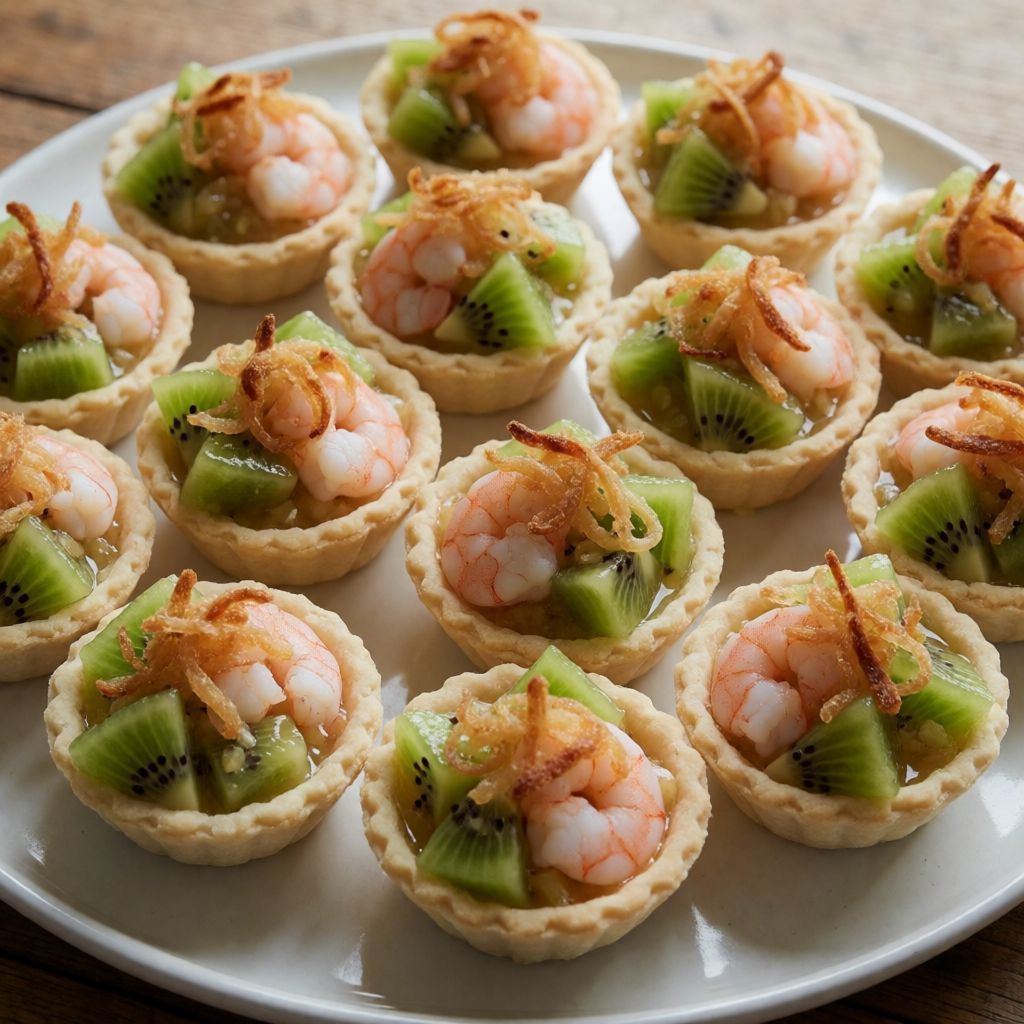
 AI photo
Shortcrust Tartlets with Kiwi, Prawns and Crispy Onion
Crisp shortcrust tartlets filled with tangy kiwi cream, marinated prawns and thin crispy onion petals.
Labels are worked out automatically from the ingredients and can be wrong. Check the packaging if it matters to you.
Ingredients
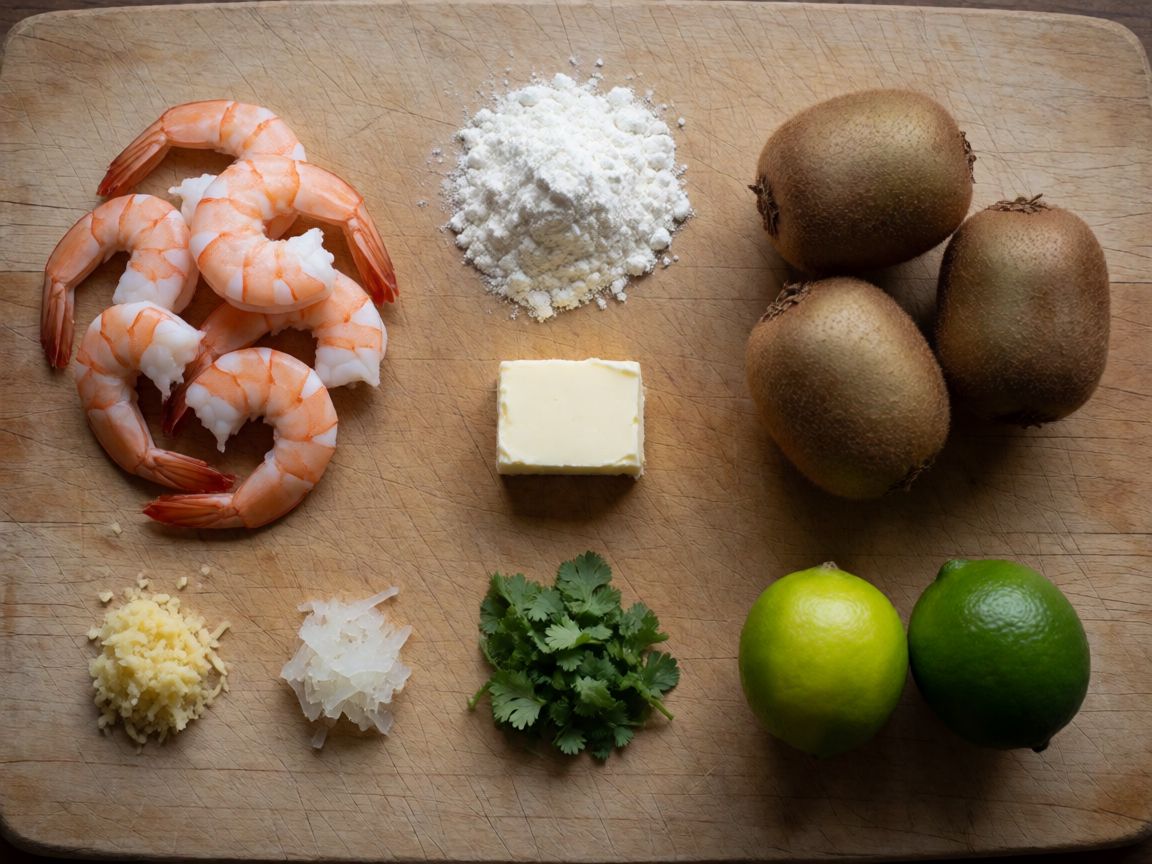







Steps
Combine the flour, cold butter cut into pieces, a pinch of salt and cold water.
Using a fork, work in the pieces of butter, then knead the dough by hand.
Wrap the dough in food wrap and chill in the fridge.
30 minBring a pan of water to the boil for the prawns.
Grate the lime zest, squeeze the juice, and add the ginger, coriander, salt, pepper and oil.
Drop the prawns into the salted boiling water. Doneness: 63°C at the thickest point.
Drain the prawns and leave to rest in the marinade.
Peel the kiwis, cut into pieces and place in a blender jug.
Blend the kiwi mixture with a pinch of salt.
Heat the mixture gently, adding the agar-agar.
Roll out the shortcrust pastry between two sheets of baking parchment.
Line the tartlet tins with the pastry.
Prick the tartlets with a fork.
Bake at 180°C.
15 minSlice the onion into thin petals.
Remove the tartlets from the tins and garnish with the kiwi cream, prawns, onion, coriander and lime zest.
This is a cold-and-warm sandwich of a dish: a crisp shell that's been through the oven, holding a cream that never sees heat the way jam does, topped with prawns that got their one brief moment in boiling water and then had to behave themselves after. The whole thing lives or dies on three separate decisions, each made at a different stage, and none of them forgiving.
The first decision is the dough, and it's decided the moment you choose cold butter over soft. Soft butter blends into the flour — you get a paste, and paste bakes into something closer to biscuit than to the short, sandy crumb you actually want. Cold butter stays in flakes until the fork breaks it small; those flakes melt in the oven and leave gaps, and gaps are what "short" means. Some say rub it in with warm hands for speed — no, because warm hands are exactly what you're fighting.
The second decision is the prawn, and the number that matters is 63°C at the thickest part, not a clock. Prawns go from translucent to opaque to rubber in about the time it takes to read this sentence, and a domestic hob with no thermometer means you're watching colour and feel: it should have just turned, still slightly springy, not tight. Pull it, and let the marinade — lime, ginger, oil — do the rest of the work while it cools. That's not seasoning for flavour alone; the acid and salt also firm the flesh gently without more cooking, so the texture keeps moving in the right direction after the heat is off.
Flour and butter here are a ratio, not a recipe — roughly half butter to flour by weight (75g to 150g) is the shortcrust baseline, and it's shortcrust because that much fat genuinely shortens the gluten strands, stopping them linking into the long chains that make bread chewy. You want plain flour precisely because it's low in protein; a strong bread flour here would fight you the whole way, building elasticity you then have to beat back out. Water is added cold and in the smallest amount that brings the dough together — too much and you've started building that gluten network again, the thing a pinch of salt also indirectly discourages by stiffening things slightly, well beyond just taste.
The rest is between two sheets of parchment because tartlet dough, rich in butter, tears and sticks to a floured worktop the moment it warms past fridge temperature — and in a British kitchen without a marble slab, parchment is the honest substitute for keeping it cool and intact while you roll. Pricking with a fork before baking isn't decoration; trapped air under a lining would blister the base into a dome, and a domed tartlet holds no cream.
Prawns: fresh or defrosted, it doesn't change the mechanism, only the starting moisture — frozen ones release more water as they cook, so pat them dry or your boiling water turns cloudy and the marinade gets diluted. If prawns aren't to hand, any firm white fish cut small follows the same 63°C logic, though the timing to get there will differ and you'll have to watch, not assume.
Kiwi wants to be ripe enough to yield under thumb pressure but not soft to the point of fermenting — underripe and you get a sourness no amount of salt balances; overripe and the texture turns to mush before the agar even gets involved. The pinch of salt in the blended fruit is there because fruit purees read as flatter than they taste on their own; salt isn't masking anything, it's sharpening what's already there, the same principle as salting a melon.
Agar-agar sets by boiling, briefly, which is the opposite habit from gelatine, which you'd melt gently and never let bubble. A scant teaspoon per this quantity of puree gives a cream firm enough to hold its shape on a spoon but not a solid block — if you've only got gelatine in the cupboard, you can use it, but you'll need to chill the tartlets afterward rather than leave them at room temperature, and the set will soften faster under a warm prawn.
Lime and ginger in the marinade aren't a flourish; they're doing a job on the prawn's texture as discussed, and ginger specifically carries a mild enzyme that nudges protein structure, which is partly why ginger-marinated meat and fish often feel more tender rather than just differently flavoured. The onion, sliced into thin petals and left raw, is the crunch and the sharp note against all that softness — if raw onion's harshness bothers you, a few minutes in cold water before serving pulls out some of the sulphur compounds responsible, no vinegar needed. Oil should carry no flavour of its own so it doesn't compete with lime and ginger — a light olive oil works, but anything neutral, including a mild vegetable oil, does the same job.
Feeds four as a starter, and the dough resting for its half hour is not time wasted — it's the gluten relaxing back down after you worked it, which is what stops the baked shell shrinking and pulling away from the tin. Skip that rest and you'll find out the hard way, with a tartlet smaller than the tin that made it.