
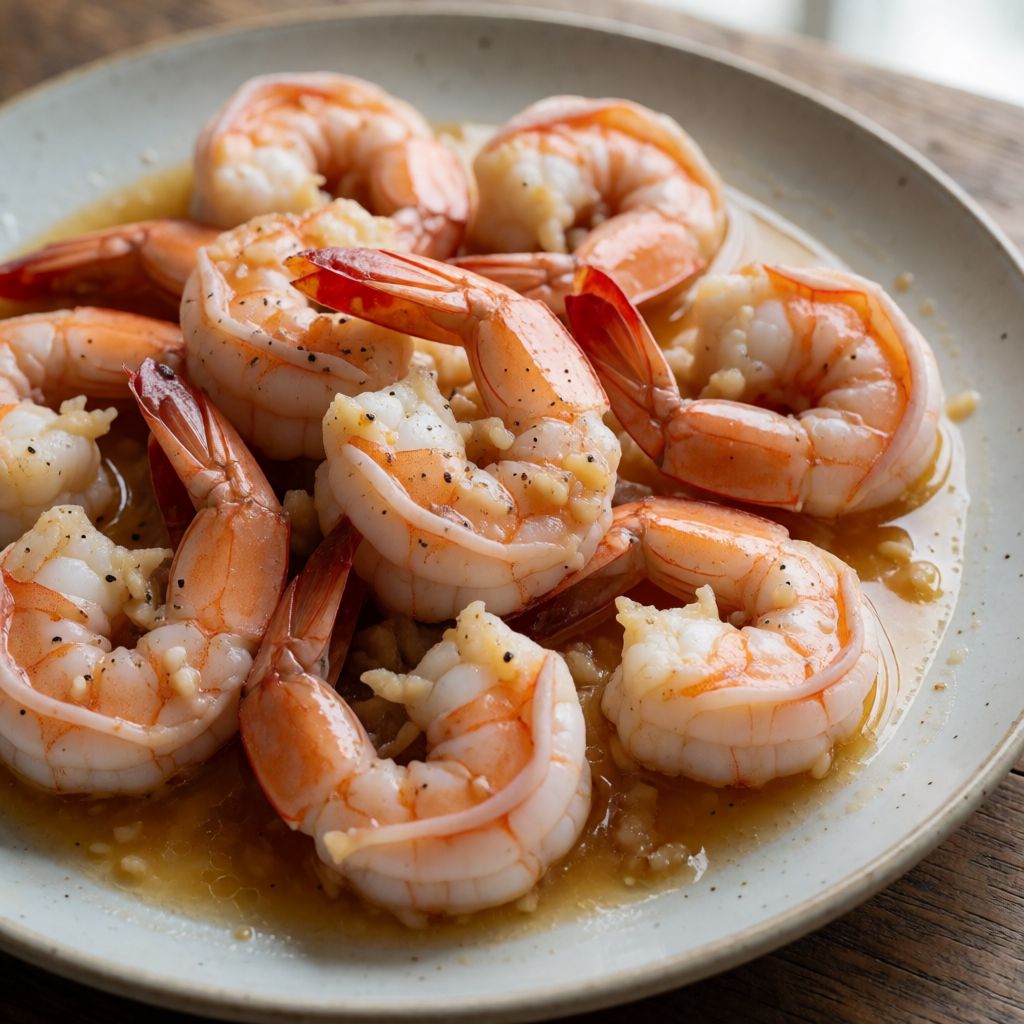
 AI photo
Tiger Prawns in Brandy
Pan-seared tiger prawns flambéed in brandy, lightly seasoned with garlic, pepper and marjoram.
Labels are worked out automatically from the ingredients and can be wrong. Check the packaging if it matters to you.
Ingredients
- 800 g Tiger prawn tails Fresh Argentinian or thawed, peeled, deveined (black vein removed)
- 1 clove Garlic
- Salt To taste
- Black peppercorns To taste
- White pepper To taste
- 1 pcs Brandy For flambéing
- Marjoram To taste, dried
- 2 tbsp Olive oil








Steps
Heat the olive oil in a large frying pan and sauté the garlic, then remove it.
2 minAdd the peeled prawns and fry for a few minutes, seasoning with salt. They are ready when the thickest part reaches 63°C.
8 minPour in the brandy and flambé.
2 minGrind over the pepper and sprinkle with marjoram.
1 minServe immediately.
What was changed
Pink peppercorns aren't listed in the catalogue, so Black peppercorns are used for the pepper instead.
This is a five-minute dish with a two-minute flourish — prawns seared hard in garlic oil, then set alight in brandy so the alcohol's rawness burns off and leaves only its warmth and a faint caramel note behind. It belongs to the family of things cooked "a la plancha" and then dramatised a little for the table: Spanish and French seafood bars did this for decades, partly because it's quick enough to fire for one table while three others wait, partly because a flame over the pan tells the customer something is happening right now, for them.
What decides whether it works has nothing to do with the brandy and everything to do with the prawn. Tiger prawns go from translucent and springy to rubber in under a minute of extra heat — their muscle protein tightens fast once it crosses roughly 60°C, and it keeps tightening the longer it sits over flame. The thermometer cue in this recipe (63°C at the thickest part) isn't fussiness, it's the only honest way to know, because colour lies to you here: prawns turn opaque and pinkish well before they're actually cooked through, and by the time they look "properly pink" in a hot pan, you've often already overshot. Pull them a shade earlier than you think you should.
Start with the prawns themselves. "Fresh Argentinian" tiger prawns are usually wild-caught in cold southern water and frozen at sea within hours — which in practice makes the frozen ones more reliable than a lot of what sits on a "fresh" counter after a slow thaw and refreeze somewhere in transit. Buy them peeled and deveined if you can; that dark line running down the back is the digestive tract, not a flavour note, and leaving it in doesn't ruin the dish but it does put grit and a faint muddy bitterness on your tongue at the worst moment. If tiger prawns aren't to be had, the criterion is firmness and size — any large raw prawn that holds its shape when you press it, king prawns included, will behave the same way in the pan. Avoid anything pre-cooked and pink from the chiller; it will only get tougher from here, it can't improve.
The garlic is there for scent, not substance — one clove, bruised or halved so it releases oil faster, fried just until it colours and no further. Once it smells toasted rather than raw, it's done its job and should come out before it does any more. There's no substitute that behaves the same way chemically, but a thin slice of shallot gently sweated first gives a comparable background warmth if you're avoiding garlic.
The oil only needs one quality: it shouldn't fight the prawns for attention. Olive oil works because its own flavour is mild enough at this heat not to dominate, but any oil with no smell of its own — a light vegetable or sunflower oil — does the job just as cleanly if that's what's in the cupboard. Keep it to two tablespoons; this is a sear, not a shallow fry, and too much oil just steams the prawns from underneath instead of browning them.
Salt goes in while they're frying, not after, because salt at this stage draws a little moisture to the surface and helps that surface actually brown rather than just heat through and turn grey-pink. The black and white peppers are both held back until the very end, after the flame — ground pepper loses its sharper aromatic edge within a minute or two of hitting hot oil, so adding it late means you taste pepper rather than just heat. White pepper brings warmth without the visible fleck, black pepper brings the aroma and the fleck; using both is really about finishing the look as well as the taste. Marjoram, dried, is scattered at the same point for the same reason — it's a bitter, slightly resinous herb that would turn flat and dusty if it had spent two minutes in hot fat. Dried oregano or thyme sit close enough on the shelf to stand in without the dish noticing much difference.
The brandy itself doesn't need to be anything special — you're burning most of its raw character off anyway, so a basic cooking brandy does exactly what an aged one would here, and saving the good bottle for drinking is not a sacrifice. What it needs is to go in while the pan is still properly hot from the prawns, not after you've turned the heat down to be careful — a lukewarm pan gives you a boozy puddle instead of a clean burn, and that's the one genuine way this step goes wrong.
This feeds four as a starter, less as a main on its own — 800g raw weight sounds like a lot until you remember how much shell and head weight you've already paid someone else to remove. And the one ingredient not written on the list is patience, oddly, in a dish that takes twenty-five minutes start to finish: resist the urge to move the prawns around constantly in that first sear. Let one side actually brown before you turn them. A pan you keep disturbing never gets hot enough on the surface to do anything but boil the prawns in their own juice, and that's the quiet way most people ruin this without ever touching the brandy at all.