
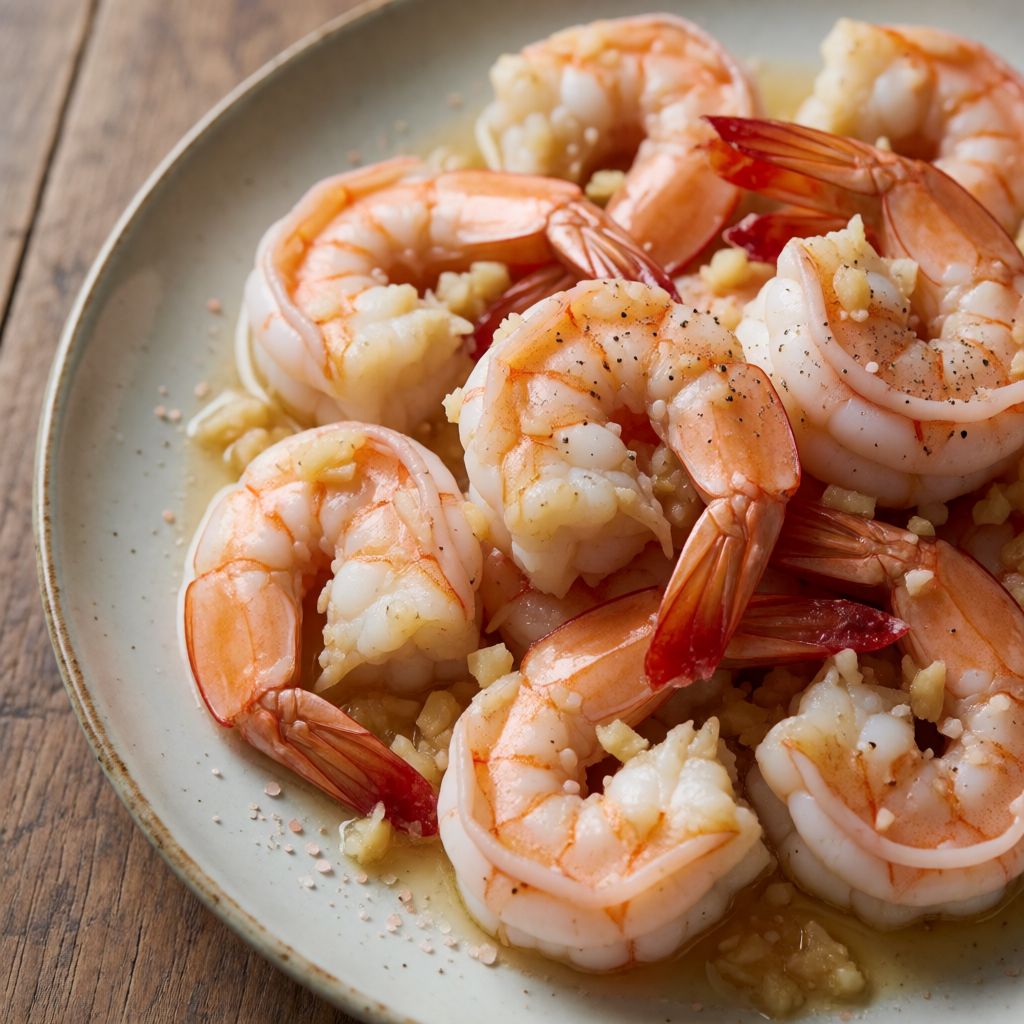
 AI photo
Prawns with Ginger
A quick pan-fried prawn dish flavoured with ginger, garlic and a splash of rosé wine.
Labels are worked out automatically from the ingredients and can be wrong. Check the packaging if it matters to you.
Ingredients
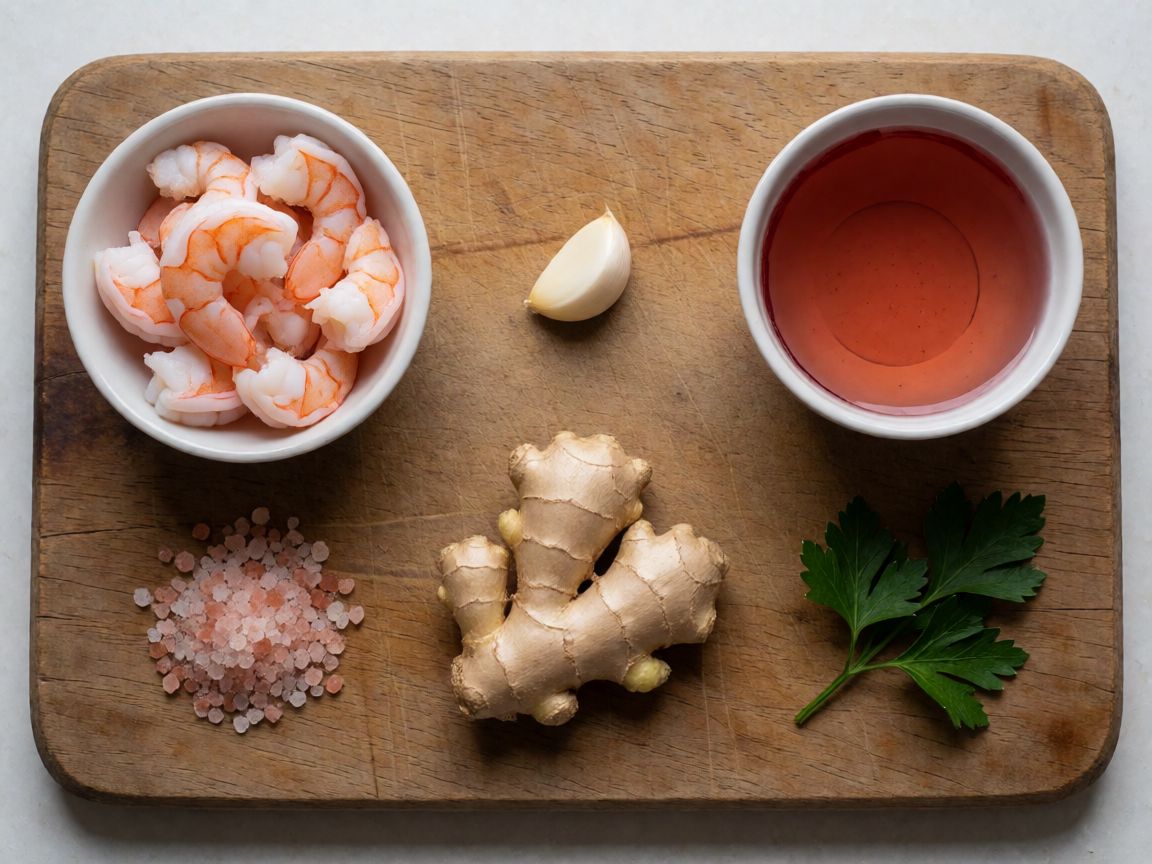
- 800 g Tiger prawn tails
- 1 clove Garlic
- 2 tbsp Olive oil
- Himalayan pink salt to taste
- Ginger ground, to taste (or fresh root)
- White pepper to taste
- 250 ml Rosé wine
- Parsley to taste








Steps
Heat the olive oil in a pan with the crushed garlic, and remove it once golden.
Add the prawns and pour in the rosé wine over high heat, letting the alcohol evaporate.
Season with salt to taste, add the white pepper and sprinkle with ginger.
Cook over low heat until done, checking that the thickest part reaches an internal temperature of 63°C.
15 minServe generously sprinkled with parsley.
This is not a stew you can leave and come back to — it's a quick pan dish built around one decision: the exact moment you pull the prawns off the heat. Everything before that, the garlic sizzling in oil, the wine thrown in hot, is just setting the stage for about ninety seconds of real cooking.
The garlic has two lives in hot oil: fragrant up to gold, bitter past it. You're not meant to eat that clove — you're borrowing its smell for the oil, then throwing it out before it turns the whole pan sour. Leave it in past gold and the dish tastes of scorched skin, not garlic.
The wine's job isn't to make a sauce you reduce for twenty minutes. Poured in over high heat, next to the prawns, its only task is to lose the raw alcohol sting fast — that sharp smell has to cook off in a minute or two, not simmer away slowly, or it sits on the dish like something unfinished. Use your widest pan for this step: a narrow saucepan traps the fumes instead of letting them flash off, and a tall pot is the wrong shape for a job that depends on surface area, not flame.
Tiger prawn tails are the right size for this precisely because they're forgiving — bigger than ordinary prawns, so the window between done and overdone is a few seconds longer, which matters on a home hob where you can't blast heat the way a professional burner does. Frozen prawns, thawed properly beforehand, are often the better buy over 'fresh' ones sitting on ice for days — most prawns are frozen at sea minutes after catching anyway, so frozen-and-thawed can be fresher than fresh. Don't cook them straight from frozen: the ice melting into the pan cools everything down right when you need the wine's alcohol to burn off quickly, not simmer in cold water.
One clove of garlic is deliberate — this is a whisper of garlic in the oil, not a garlic dish. If you've only got old, sprouting garlic, use a bit more and discard it even sooner, since old garlic turns bitter faster. The olive oil here is chosen for its own flavour, unlike most frying oils where you want something with no taste of its own — this is one of the exceptions, so use a decent extra virgin if you have it. A neutral oil will still cook the prawns fine, you just lose a layer of flavour the dish is built to have.
Rosé earns its place through economics as much as taste: it's usually the cheapest bottle on the shelf that still tastes of something, lighter than red so it won't bully delicate shellfish, with a touch more fruit than a dry white. That's also the real reason so many recipes default to 'cooking wine' — nobody wants to crack open an expensive bottle to pour most of it into a hot pan. A dry white with a splash of something fruity does the same job if rosé isn't in the house; skip anything sweet enough to be a dessert wine, it'll fight the ginger.
Fresh ginger and ground ginger are not interchangeable in character, even if the recipe treats them as a choice. Fresh gives a sharp, bright top note that fades fast once grated, so it wants to go in near the end. Ground ginger is mellower and deeper — more baked than sharp — and can go in earlier without losing itself. Pick by what you want on top: brightness, or warmth.
Himalayan pink salt is just salt with trace minerals that give it colour — it dissolves in this wine-and-oil base exactly like any other salt, the pink doesn't survive contact with liquid, so don't go buy it specially; any salt that dissolves cleanly does the same work. White pepper is worth keeping separate from black here, not for romance but for colour: it's black pepper with the dark husk fermented off, which means warmth without the little dark flecks that would show up against this pale, light-coloured dish.
Parsley at the end isn't decoration — it's the cut against the oil's weight and the wine's sweetness, a bit of grassy sharpness the dish needs once the richness settles. If you're out of it, use another soft, mild herb rather than something assertive like coriander, which brings its own flavour strongly enough to compete with the ginger instead of just cutting through it.