
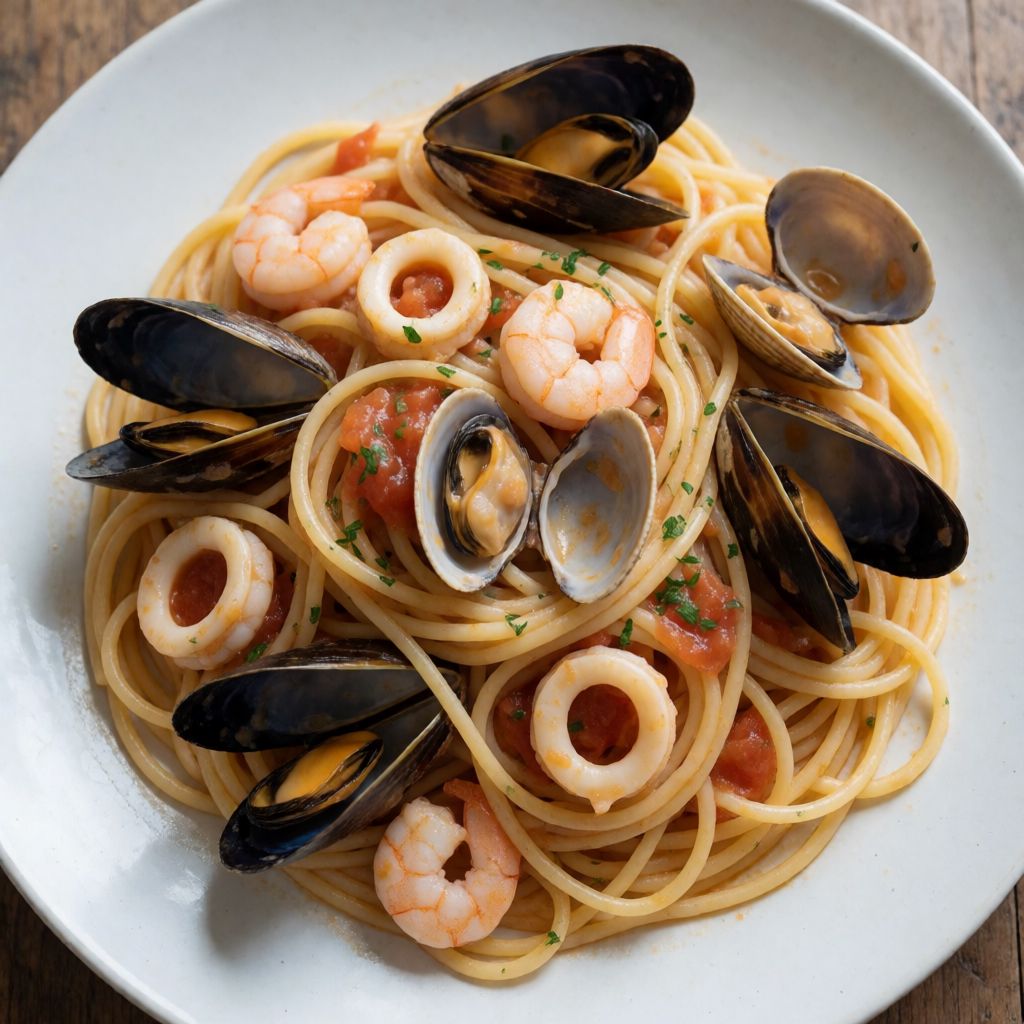
 AI photo
Spaghetti allo Scoglio
A seafood spaghetti with mussels, clams, squid and prawns in a tomato and white wine sauce.
Labels are worked out automatically from the ingredients and can be wrong. Check the packaging if it matters to you.
Ingredients
- 300 g Spaghetti
- 800 g Mussels
- 500 g Clams
- 4 pcs Squid
- 8 pcs Argentine prawns
- 2 pcs Tomato
- Parsley to taste
- Chilli flakes to taste
- 2 clove Garlic
- 1/2 pcs Red onion
- Olive oil to taste
- Salt to taste
- 120 ml White wine













Steps
In a wide pan, fry the chopped onion and lightly crushed garlic cloves in heated olive oil.
After a few minutes add the squid, cleaned and sliced beforehand.
Pour in the white wine and let the alcohol evaporate.
Add the mussels and clams together with a few spoonfuls of water, then add the chopped tomatoes.
Add a little salt and a pinch of chilli flakes.
Finally add the prawns, shelled only at the tail end.
Cover the pan with a lid and cook everything through. Doneness: 63°C at the thickest point.
At the end of cooking add a little parsley.
Separately boil the spaghetti in a pot of salted water.
Once the spaghetti is drained al dente, transfer it to the pan with the sauce.
Mix everything together and serve, finishing with a little fresh parsley and olive oil.
What was changed
We swapped the Marsala for White wine, as it suits the dish and is easier to find in local shops.
Scoglio means "rock" or "reef" — this is pasta the way it's made for whatever the net brought back that morning, not a fixed guest list of shellfish. The dish only has one real job: cook four completely different proteins — squid that wants a long simmer, mussels and clams that snap open fast, prawns that turn to rubber if you blink — in the same pan, in the same few minutes, without any of them paying for the others' mistakes.
That's the whole mechanism. Squid goes in early because it's muscle, and muscle needs time to soften rather than seize; mussels and clams go in once there's wine and juice to steam them open; prawns go in last, because they're already nearly cooked by the time anything reaches them in the heat of the pan, and overcooked prawn is the one thing on this plate nobody forgives. Everyone else is cooking in a shared broth of seawater, wine and tomato — the prawns are really just being warmed through.
Some people will tell you mussels and clams are done "when they open." No — they open when they get hot enough, which happens well before the flesh inside is actually cooked through or, worse, after it's already overcooked and shrunk to nothing. You're watching the shell gape and the flesh plumping, not timing a pot. Any shellfish that stays shut after the others have opened is dead and was dead before it went in the pan — bin it, don't force it.
Buy your mussels and clams alive, shells shut or closing when tapped — any gaping shell that won't close is already dead, and a dead shellfish left out of the fridge for a day is a stomach upset waiting to happen, not a bargain. Scrub mussels, debeard them (pull that little thread hanging from the hinge), and soak clams in cold salted water for half an hour beforehand — this is not ritual, it's how you get them to spit out the grit and sand they've been filtering all week, so you're not biting into seabed at the table. Supermarket bags pre-cleaned in the UK save you most of this, but still rinse and still bin anything that won't shut.
Squid: fresh if you can get it, frozen is genuinely fine here because squid freezes well and doesn't toughen the way fish does — frozen rings from the fishmonger counter work. Clean it yourself if whole (pull out the beak, the ink sac, the cartilage quill) or buy it ready-cleaned and just slice into rings. It goes in early in the pan not because tradition says so, but because squid is almost pure muscle fibre — rush it and you get the chewy, slightly bouncy texture that gives squid its bad reputation. Given its few minutes in wine and juice before the shellfish arrives, it relaxes instead.
Argentine prawns, or any big raw prawn, shell-on with tails exposed — the shell protects the flesh from the direct heat of the pan and keeps it from drying out while everything else finishes, and peeling just the tail lets you eat them without a fight at the table. If you can only get cooked, pre-peeled prawns, add them right at the very end, off the heat almost, just to warm through — cooked prawn reheated in a bubbling sauce is how you get the rubber-band texture everyone blames on "overcooking seafood" generally, when really it's just timing.
White wine: anything dry and unsweetened, nothing you'd call a "cooking wine" from a bottle that's been open for three weeks — the alcohol is meant to cook off and leave acidity and aroma behind, not vinegar. Tomatoes: two ripe ones, chopped, not a tin of passata — you want pieces that soften into the broth, not a sauce that coats the pasta on its own. Out of season, a handful of good cherry tomatoes halved does more for you than a flavourless "proper" tomato that's travelled further than the squid.
Olive oil here is doing two jobs — frying the aromatics, and finishing the dish raw at the end for scent, since whatever fragrance it has gets mostly cooked away in the pan. Use something with actual character for the finishing drizzle; for the frying, any oil with no smell of its own works, though plain olive oil is cheap enough in the UK that there's no real reason to substitute.
Garlic lightly crushed, not minced — you want it to flavour the oil and then mostly get fished out or ignored, not turn bitter and dominate, which is what happens when it's chopped fine and left too long in hot oil. Chilli flakes and parsley are seasoning, not ingredients with a job description — add parsley at the very end because its whole value is the smell, and that smell is the first thing to vanish once it's been simmering in a hot pan.
One more thing, and it's not a small one: this dish does not wait for you, and you do not rush it either. The window between "clams just opened" and "prawns gone tough" is short, so have the pasta water already at a rolling boil and the spaghetti going in before you start the shellfish — not after. Patience here isn't about long cooking, it's about not panicking into overcooking everything because the pasta's still got four minutes left. Get your timing sorted before the pan goes on, and the dish does the rest on its own.