
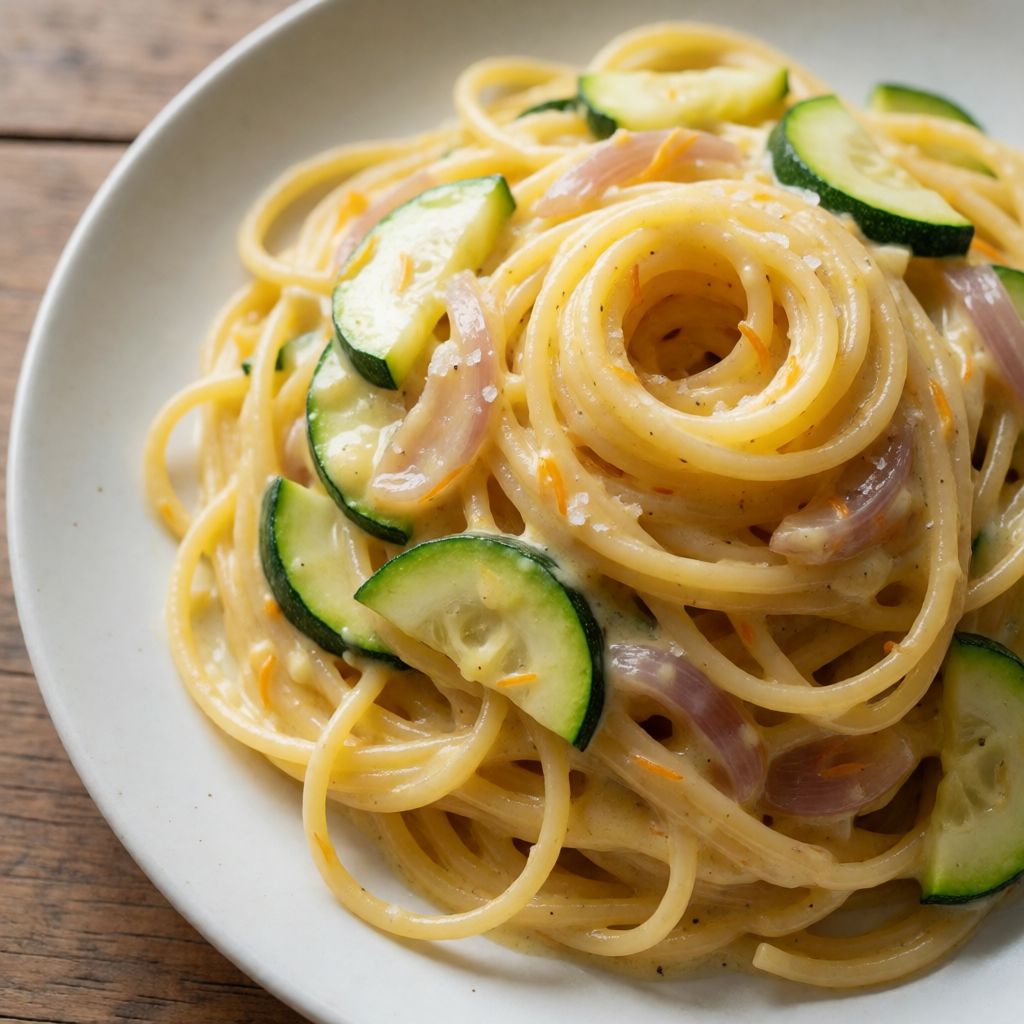
 AI photo
Spaghetti Carbonara with Egg Yolks and Courgettes
A creamy yolk-based spaghetti carbonara with sautéed courgettes, pecorino and a touch of chilli.
Labels are worked out automatically from the ingredients and can be wrong. Check the packaging if it matters to you.
Ingredients
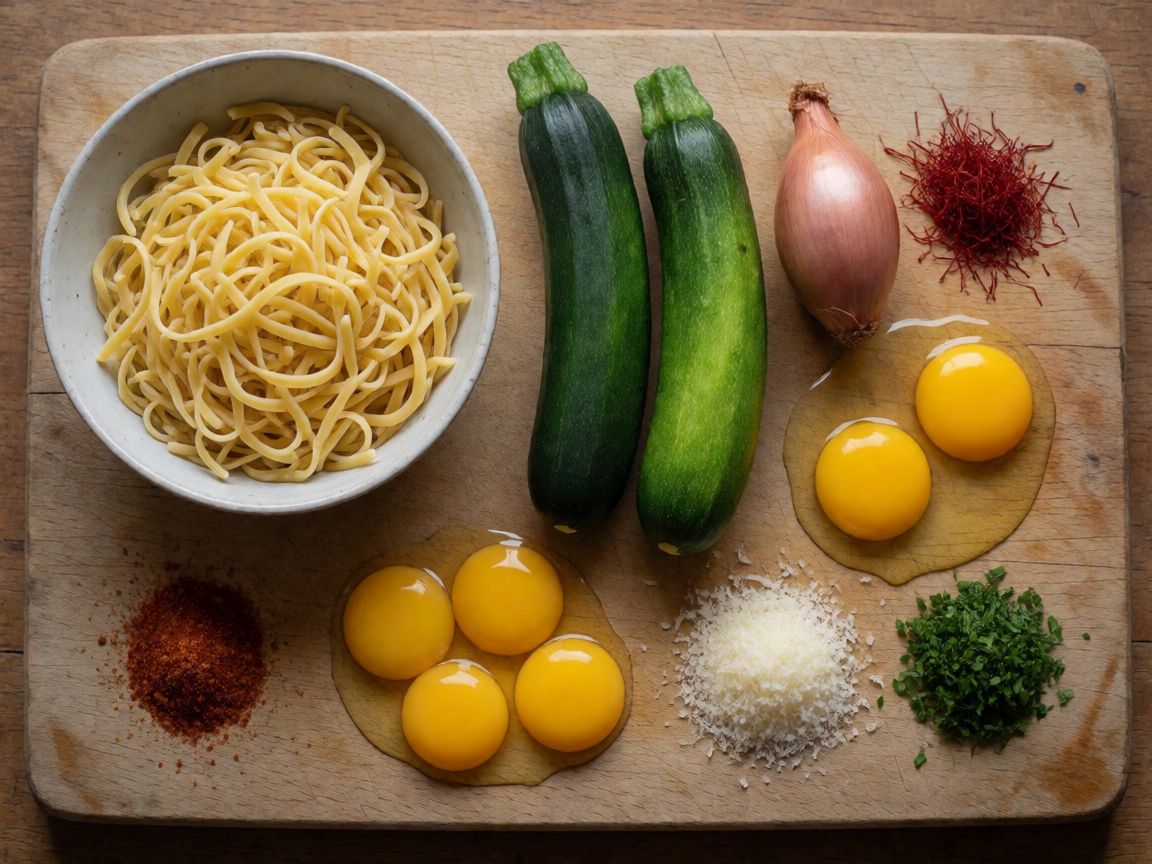









Steps
Sauté the shallot in olive oil.
Add the courgette and sauté briefly with a little warm water and the saffron, until the courgette softens.
Cook the spaghetti until al dente.
In a bowl, whisk the egg yolks with the pecorino, chilli powder and parsley.
Drain the spaghetti and tip it into the pan with the courgette and the egg mixture.
Toss everything together, warm through for a few seconds over the heat, and serve immediately.
This is carbonara with the pork taken out and a courgette put in its place — same mechanism, different cast. What decides whether it works isn't the courgette, isn't the saffron, it's whether you treat egg yolk as something you warm, not something you cook.
Four yolks, no cream, no stock — the sauce is the yolk itself, loosened by the water still clinging to the drained pasta and thickened by the cheese melting into it. Tip that yolk into a pan that's actually hot and you get scrambled egg with noodles stuck to it, a different and sadder dish. Pull the pan off the heat first, then bring pasta and yolk together — the pasta's own residual warmth, dropping fast from boiling, does the coaxing instead of your flame doing the cooking. That's the whole secret, and it isn't really a secret, it's just a temperature nobody explained to you.
Some will tell you this isn't carbonara at all because there's no guanciale in it. No — carbonara is a method, not a shopping list: yolk, hard salty cheese, starchy pasta water, built into a sauce by heat you control rather than heat you apply. What else goes in — pork fat in Rome, courgette here — is a choice, not a commandment. The dish came out of scarcity as much as out of habit, and scarcity never cared what vegetable was in the larder that week.
Courgette's whole job is to bring water and a little sweetness, and it has to be coaxed soft without going to paste — that's something you watch, not something you time.
Spaghetti should land firm, with real bite, because it keeps cooking a little after draining, carried by the heat you're about to use to finish the sauce. Save a splash of the water it cooked in before you tip it out — that cloudy water, with its dissolved starch, is what helps the yolk grip the pasta instead of pooling at the bottom of the bowl.
Courgette: pick ones that feel firm and give almost no dent under your thumb. An old, soft courgette is mostly water held together by habit, and it collapses into mush the moment it meets heat — no amount of careful cooking saves it, because the defect was decided at the shop, not the stove. The splash of warm water in the pan isn't for flavour, it's there so the courgette steams itself soft on a domestic hob, which runs hotter and less evenly under a wide, shallow pan than a proper pot would, and can catch and brown the courgette hard before it's cooked through.
Shallot instead of onion because it's milder and breaks down faster — less of the sulphur that makes onion bite back. If you've only got onion, it works, just give it more time and don't let it take colour; you want it gone translucent, not toward brown, or it'll sit as a sharp note under everything else.
Saffron is a pinch, not a handful — that's what a small package of it is for. It gets warmed gently in water or oil before it joins anything else, because its aroma is fragile and burns off fast in dry, high heat; thrown straight into a hot pan it gives you less, not more. No saffron, no tragedy — skip it, you lose the colour and a faint bitterness, not the dish. Don't swap in turmeric for the colour; it has none of the aroma, and a false note is worse than an honest absence.
Yolk only, not whole egg, because the yolk's fat and protein do the thickening, while the white mostly adds a rubbery risk with nothing to trade for it. Four yolks to 400g of pasta is a ratio, not a guess — fewer and the sauce stays thin and splits away from the pasta, more and it turns heavy, tasting of egg instead of the dish it's meant to be holding together. Pecorino Romano is sharp and salty by nature, which is exactly why it melts into the warm fat and seasons the sauce in one move; parmesan will do if that's what's in the fridge, but it's milder, so taste before you salt anything else. The chilli is background warmth, a hum, not a flavour you should actually notice — it disappears fast into pecorino's saltiness, which is precisely why it's a pinch and not more. Parsley goes into the egg mixture raw, stirred in at the end, so the pan's warmth only just touches it rather than wilting it into something grey.
Oil here isn't there to announce itself — the courgette and shallot need it to soften, and olive oil's own fruitiness sits well against the saffron, but if you'd rather it stayed out of the way entirely, any oil with no smell of its own does the same job. And on finishing: when the recipe says warm through for a few seconds over the heat, that's a literal few seconds on an ordinary hob, not a figure of speech — long enough to set the sauce around the strands, not long enough to cook the egg. Serve it the moment it's ready; this sauce keeps tightening as it cools, and what was silk in the pan turns gluey on a plate left waiting. The patience this dish asks for isn't at the table — it's standing at the stove, watching the courgette rather than counting minutes.