
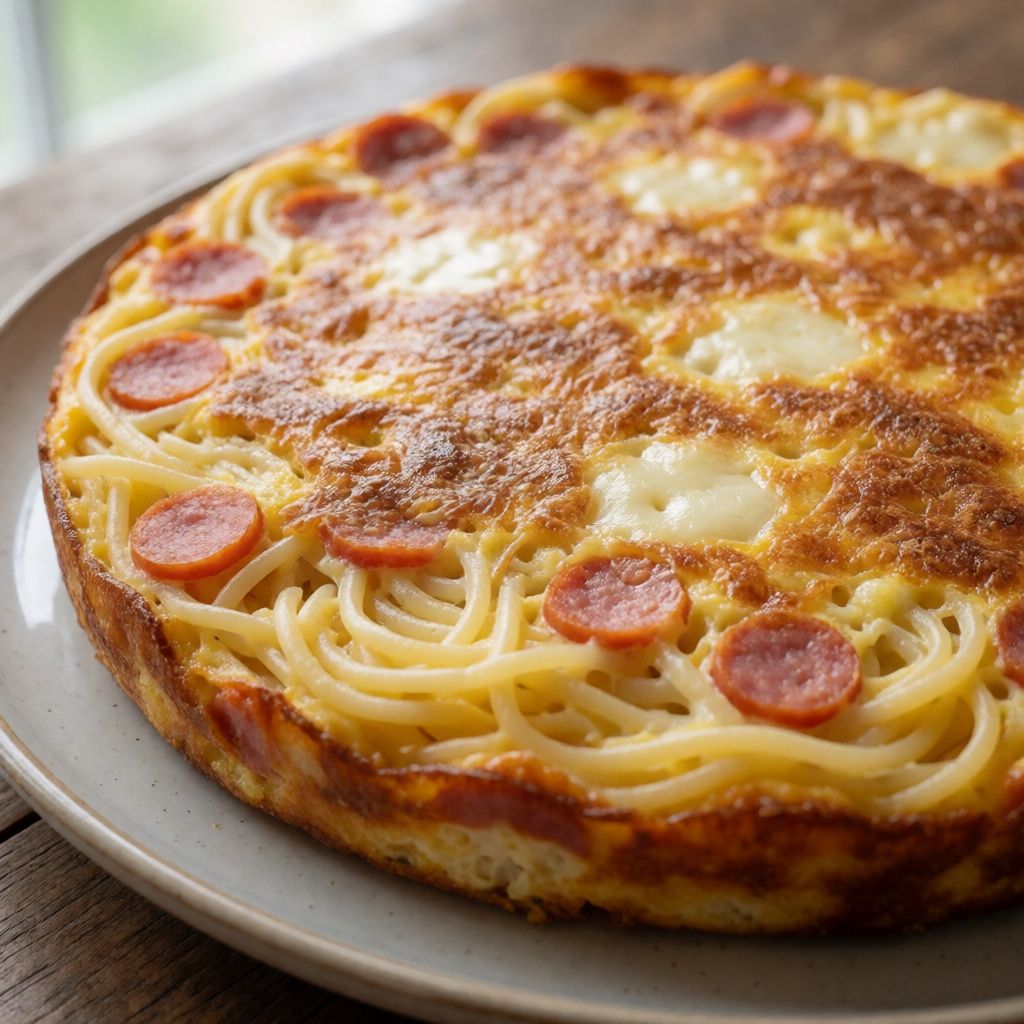
 AI photo
Spaghetti Frittata
A hearty frittata made with spaghetti, eggs, salami and mozzarella.
Labels are worked out automatically from the ingredients and can be wrong. Check the packaging if it matters to you.
Ingredients
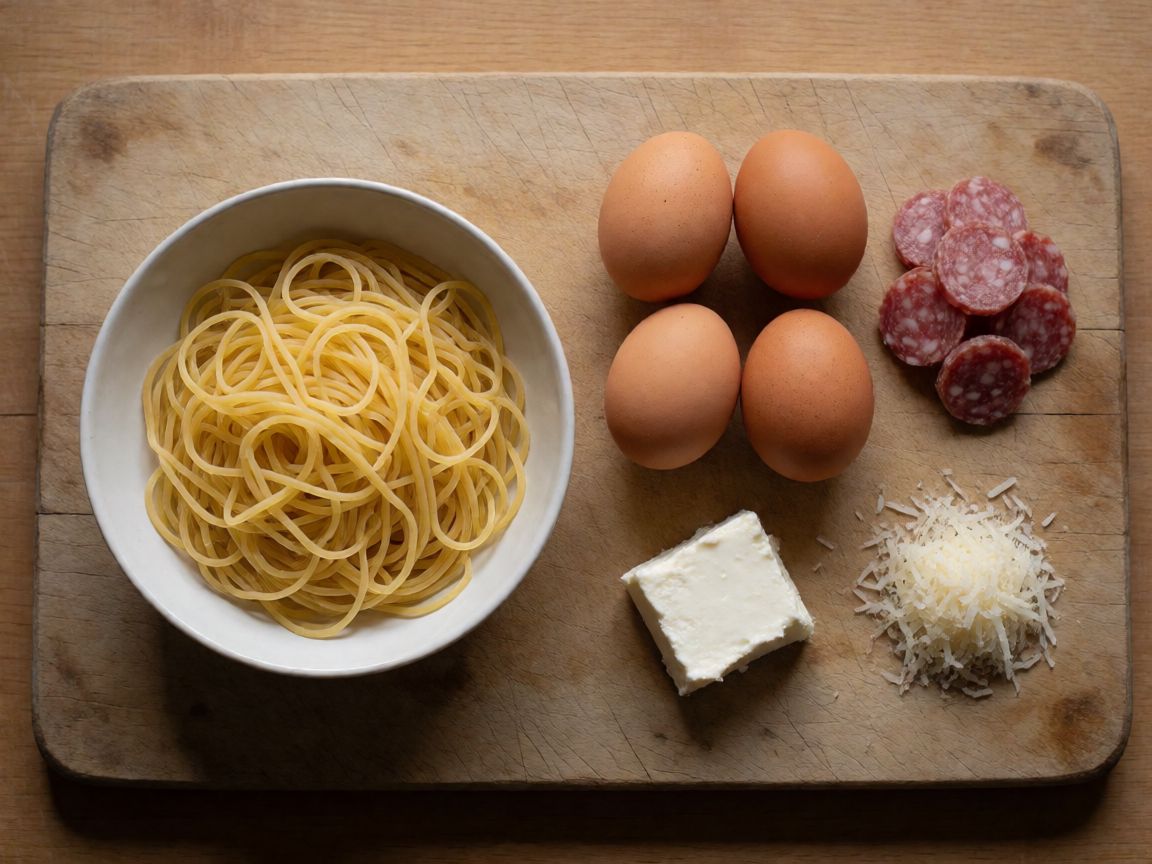
- 350 g Spaghetti
- 4 pcs Eggs
- 150 g Napoli Salami
- 150 g Fior di Latte Mozzarella
- 30 g Parmesan
- Olive Oil to taste
- Salt to taste
- Black Pepper to taste








Steps
Cook the spaghetti in lightly salted water, drain when al dente, and transfer to a large bowl.
10 minLet the spaghetti cool slightly, then add the eggs and beat vigorously with a fork.
2 minAdd the Parmesan, Fior di Latte and Napoli salami, cut into small cubes or strips, and mix gently.
3 minHeat a little olive oil in a large (26–28 cm) frying pan and pour in the spaghetti and egg mixture, pressing it down well.
2 minCook the frittata over medium heat for a few minutes, making sure the bottom browns without burning.
5 minWhen the first side is crisp and golden, flip the frittata using a lid or a plate.
1 minCook the second side the same way, until the salami inside is heated through to about 70°C.
5 minThe frittata is ready when nicely browned on both sides. Let it cool slightly, then transfer to a serving plate.
2 min
A spaghetti frittata isn't an omelette with pasta thrown in — it's the opposite logic. The egg is the glue, not the filling. Beaten raw and poured over cooked spaghetti, it sets at around 65°C and locks every strand in place, so what comes out of the pan isn't soft and spoonable like a Spanish tortilla but something you can slice into wedges and eat cold the next day, standing up, off a plate balanced on your knee.
That's not an accident of the recipe — that's the whole reason it exists. In Naples this was never cooked from scratch. It was what you did with last night's spaghetti, the half-pot nobody finished, before fridges made "leftovers" a dull word instead of a daily fact. Eggs were cheap, pasta avanzata was free, and a frittata travelled well — fishermen and day-labourers took it wrapped in paper because it needed no reheating and no plate. The dish is built around not wasting a flame twice, not around flavour for its own sake.
What decides whether yours holds together or falls apart in the pan is mostly two things: how evenly the egg coats the pasta, and whether you let the bottom actually finish before you ask it to flip. A patch of naked spaghetti with no egg on it is a weak point — it won't bind to its neighbours and it'll tear loose when you lift the wedge. And a crust that isn't properly set will stick to the pan and shred rather than release, no matter how confident the flip.
Start with why the pasta needs to cool a little before the eggs go in — this isn't fussiness, it's protection. Pour beaten egg onto spaghetti straight out of the pot and the residual heat will half-scramble it on contact, giving you lumps of cooked egg sitting separately from the strands instead of a liquid that coats them. A few minutes off the heat and the egg stays loose long enough for you to work it into every corner with the fork, which is the only thing that actually prevents the dish falling apart later.
The pan stage is where a domestic hob shows its limits honestly: it heats a wide pan unevenly, hotter at the centre, so "medium heat" here means the point where a drop of the mixture at the edge sizzles steadily without smoking or blackening in seconds — not a dial setting. Press the mixture down so it's one even layer and leave it alone. Poking it is how you get a frittata that's pale and wet in the middle but burnt underneath — you've disturbed the crust that was meant to seal the bottom before the inside had time to set. Patience here is the ingredient that actually does the work; nothing in the pan is in a hurry to be ready. When you flip — plate over the pan, hand flat against it, turn the whole thing over in one confident motion, slide back in — you're doing the same manoeuvre as flipping a full English fry-up egg, just with more at stake if it breaks. The second side finishes when the salami at the centre has come up to around 70°C, which is also, conveniently, well past the point where every trace of raw egg has set — the safety mark and the doneness mark arrive together, which is why nobody bothers with a thermometer for this.
The salami's job is fat and cure, not bulk — as it warms it renders a little of its own fat into the surrounding pasta and seasons it from the inside, which plain diced ham can't do. Any dry-cured salami with visible fat marbling and some spice to it will behave the same way; chorizo will work and will drag the whole dish toward Spain in flavour, which isn't wrong, just different.
Fior di latte mozzarella is chosen for what it does, not for prestige: it melts to a stretch without the sourness of buffalo mozzarella, which would fight with the salami's spice. Its one real danger is water — a wet ball of mozzarella left whole will weep into the mixture as it heats and give you a soggy pocket in the middle of an otherwise set frittata, so pat it dry and cut it small rather than tearing it into big wet lumps. Any firm, low-moisture melting cheese stands in for it — a block mozzarella sold for pizza, or in a pinch a mild cheddar, which melts differently but won't sabotage the texture the way a very wet cheese will.
Parmesan here isn't for show, it's salt and savoury depth worked right through the mixture rather than left on top, so grate it fine and mix it in with the eggs at the start. Any hard aged grating cheese does the job — pecorino will push it saltier and sharper, so hold back a little of your added salt if you use it.
The oil is only there to stop the first layer catching before a crust forms, so the criterion is simple: something with no flavour of its own to compete with the salami and cheese, which rules out very strong olive oils more than it rules anything in. A light olive oil is fine, as is any flavourless vegetable oil; butter will give you a better-tasting crust but burns faster, so if you use it, watch for the foam subsiding rather than trusting the clock.