
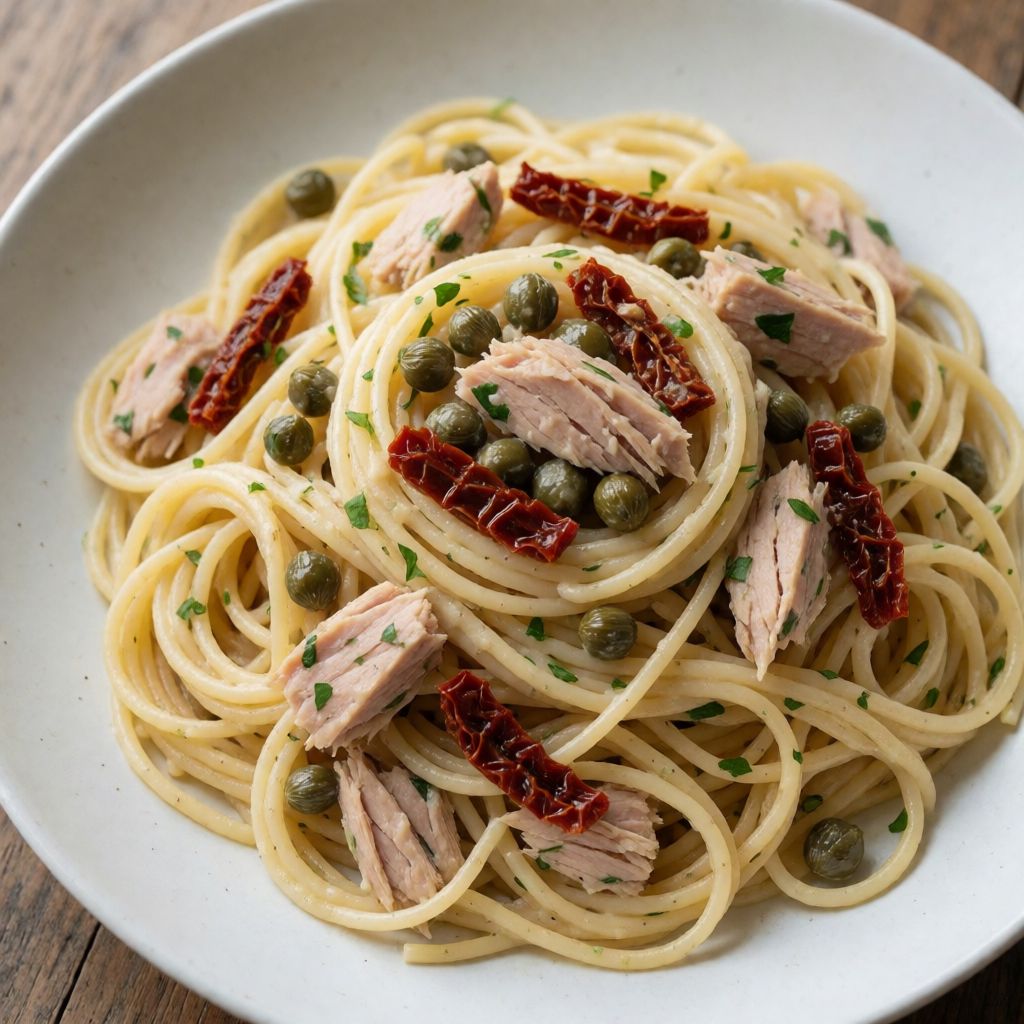
 AI photo
Spaghetti with Capers and Tuna
A quick pantry-style pasta with tuna, capers and sun-dried tomatoes, finished with lemon.
Labels are worked out automatically from the ingredients and can be wrong. Check the packaging if it matters to you.
Ingredients
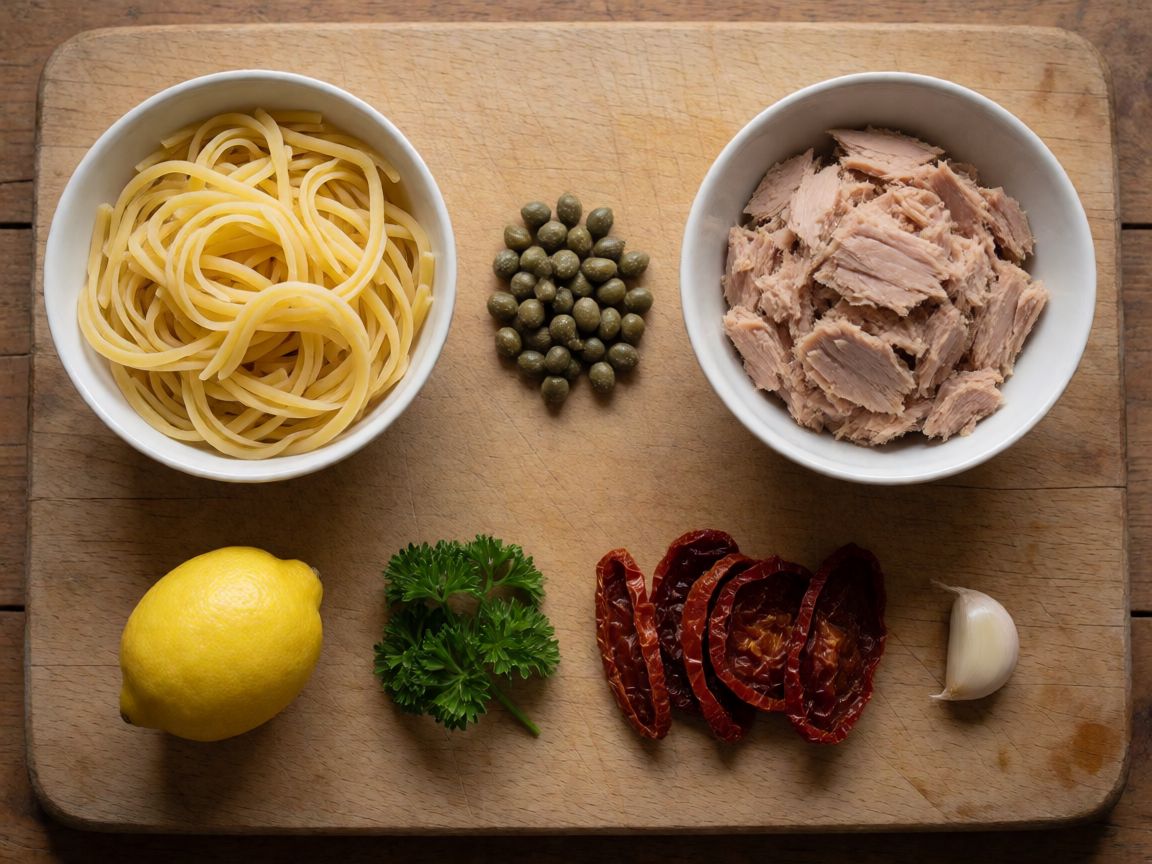
- 320 g Spaghetti
- 160 g Tuna
- 1 tbsp Capers in vinegar
- 1 pcs Lemon
- 1 bunch Parsley
- 4 pcs Sun-dried tomatoes
- 1 clove Garlic
- Olive oil to taste
- Salt to taste
- Black pepper to taste










Steps
Drain the oil from the tuna, transfer it to a plate and roughly break it into pieces.
Drain the oil from the sun-dried tomatoes, pat them dry with paper towel and cut into small pieces.
Peel the garlic, crush it and fry it in olive oil in a large non-stick pan.
When the garlic is golden, add the capers, tuna and sun-dried tomatoes, remove the garlic, and mix well.
Cook the spaghetti until al dente in plenty of salted water.
Drain the spaghetti and add it to the sauce in the pan.
Add the lemon juice and grated zest, and warm through together.
1 minSprinkle with salt and grind over black pepper. Serve immediately.
This is a pantry dish dressed up as a seaside one. No fishmonger involved — the tuna comes from a tin, the tomatoes from a jar, the capers from a jar of vinegar brine, and the whole thing takes the time it takes spaghetti to boil. That's the point of it: a Friday-night dinner built from things that sit in a cupboard for months without complaint.
What decides whether it works is restraint at the pan, not skill. Garlic goes into warm oil to flavour the oil, not to be eaten — you pull it out once it's gone from raw-white to pale gold, because a second longer and it turns bitter and the whole dish tastes of burnt garlic instead of garlic. That's the actual reason the recipe tells you to remove it: not tidiness, prevention.
The second thing that decides it is what happens in the last minute, off any real heat, when the lemon goes in. Citrus and oil don't need cooking, they need warming — enough to loosen into the tuna and tomato oil and coat the strands, not enough to cook the tuna again into dry threads. Tuna straight from the tin is already cooked; the pan's job from here on is only to melt things together, not to fry anything further.
Some say tuna pasta needs a tomato sauce to hold it together. No — the sauce here is lemon, oil, and the brine the capers and tomatoes already carry. Tomato sauce would just drown the saltiness that capers and sun-dried tomatoes are doing on purpose.
Tuna: tinned, in oil, 160 g for four people — not a lot, this dish isn't meant to taste of tuna so much as be lifted by it. Oil-packed, not water-packed, because that oil carries flavour into the pan before you even add your own; you drain it off the tuna first only because you're about to fry garlic in fresh oil and don't want two different oils fighting each other in the same pan.
Capers in vinegar, not in salt. If what you've got are salt-packed capers, rinse them hard under the tap first — salt capers are a different animal, concentrated, and will tip the dish over into inedible if you measure them like the vinegar kind.
Sun-dried tomatoes: patted dry on purpose, because wet oily tomatoes going into a hot pan spit and don't brown, they just steam. Dry surface, a little colour, more flavour released. If you've only got the dry, un-oiled kind, soak them in warm water for ten minutes first, or they'll stay leathery and never soften into the dish.
Lemon: zest and juice both, added last and barely warmed. Zest first — that's where the oil of the fruit lives, the actual perfume. Juice second, for the acid that cuts the richness of tinned tuna and oil-soaked tomatoes. Any lemon with firm skin and some weight to it zests cleanly; a dried-out one gives you bitter white pith with the zest and nothing else.
Garlic: one clove, crushed and fried gently, then thrown away. Its job is to perfume the oil, not to be bitten into — crushing exposes more surface for the oil to pull flavour from, and pulling it before the capers go in stops it scorching once the pan gets busier.
Parsley goes in raw at the very end, off the heat — it's listed as an ingredient but not mentioned again in the steps, which tells you exactly how it's meant to be used: scattered over the finished plate, not cooked. Cooking parsley kills the thing you wanted it for in the first place — a clean green smell on top of all that salt and oil.
On an ordinary hob, use the widest pan you own for step three onward — you want the tuna, capers and tomatoes spread thin enough to actually meet the garlic oil, not stewing in a heap in the middle of a small saucepan. And don't rush the spaghetti in with its cooking water fully drained — a splash of that salty starchy water held back and added with the pasta helps everything bind instead of sitting separately in puddles of oil, which is the usual failure with tinned-fish pasta: good ingredients, but a dry, clumpy plate because nothing was asked to come together.
This feeds four as a main, no side needed — it's already got its vegetable in the tomatoes and its protein in the tin. Patience here isn't long, but it's precise: the one minute the lemon spends warming through is the one minute that decides whether you've got a sauce or just dressed spaghetti with bits in it.