
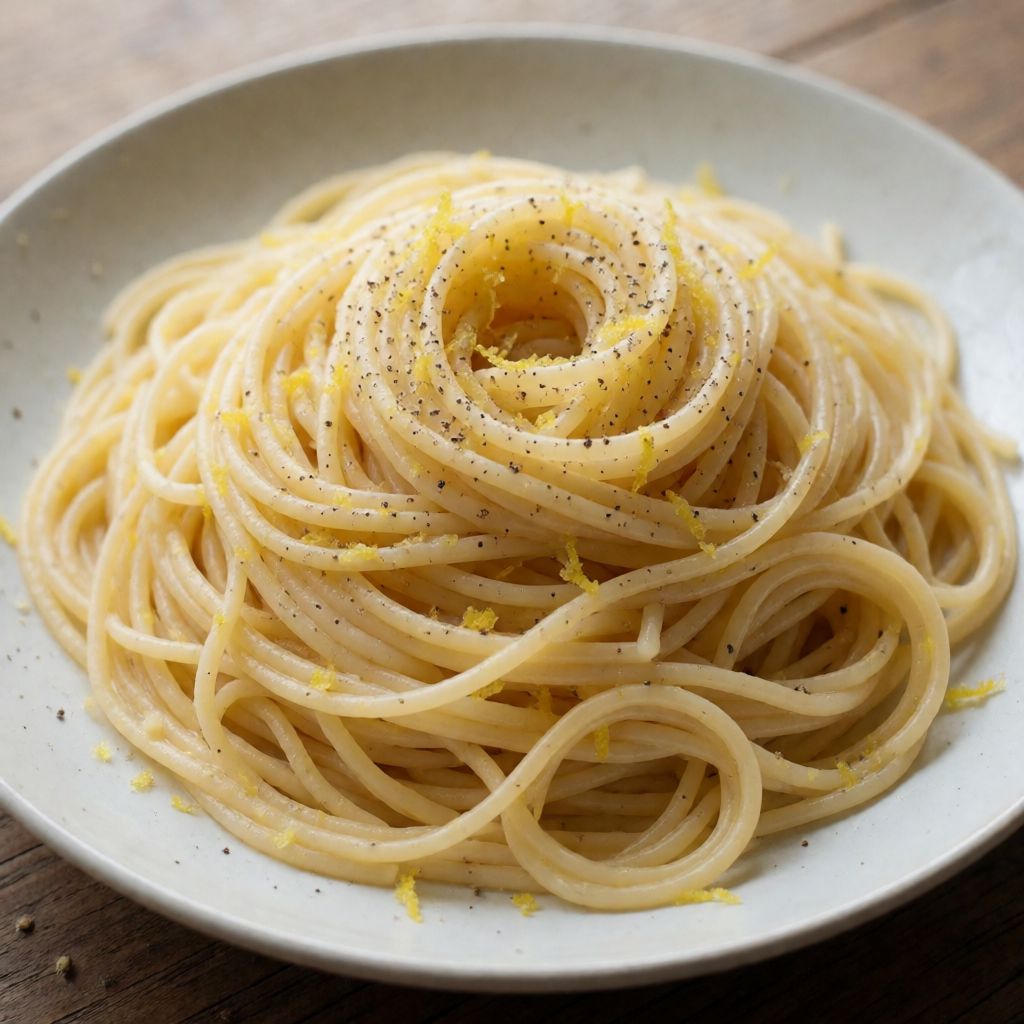
 AI photo
Spaghetti with Lemon
A simple spaghetti dish with lemon, butter and Parmesan.
Labels are worked out automatically from the ingredients and can be wrong. Check the packaging if it matters to you.
Ingredients
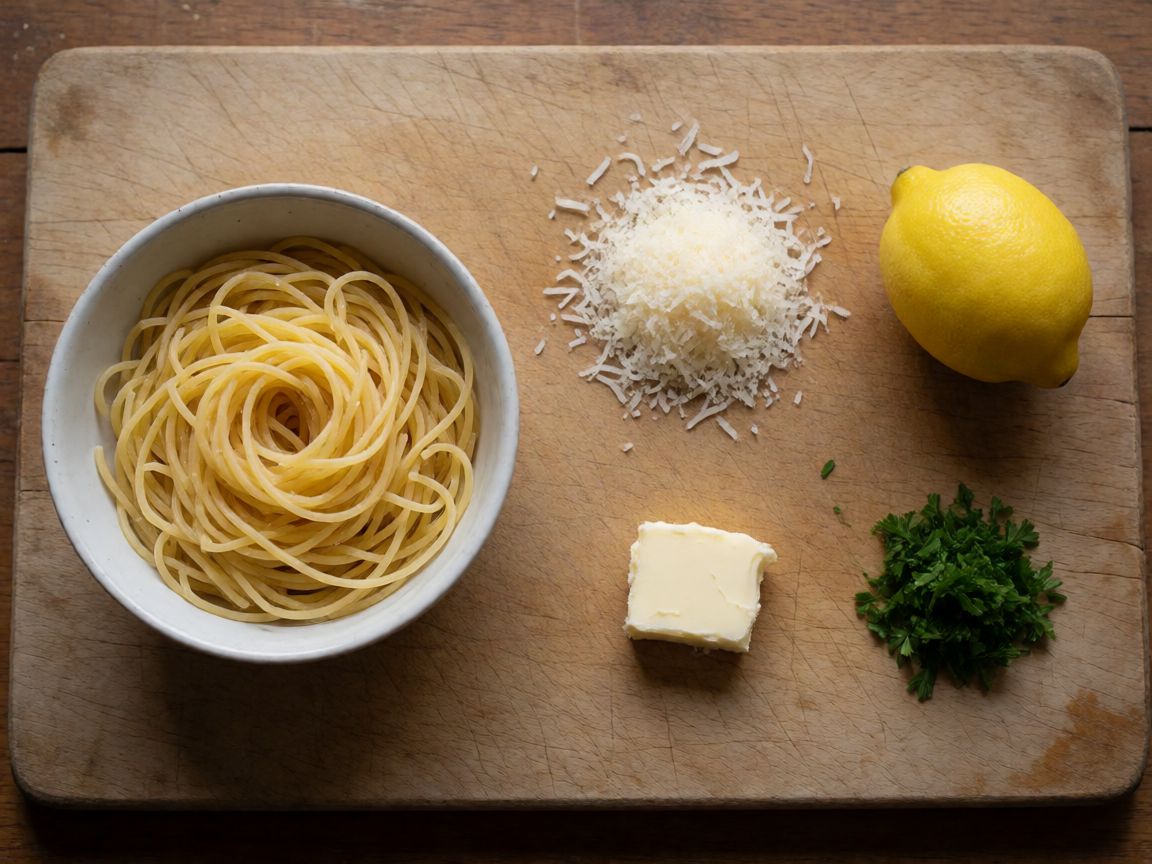







Steps
Squeeze the juice from the lemon, setting the zest aside. Trim away the white pith from the strips of zest, then finely chop the zest.
2 minMelt the butter, add the chopped zest and let it soften gently over low heat, then pour in a spoonful of water and the lemon juice.
3 minCook the pasta in plenty of salted water.
10 minMix the Parmesan with a little of the pasta cooking water and freshly ground black pepper.
2 minDrain the pasta al dente, tip it into the bowl with the cheese mixture and toss with the softened lemon zest until creamy.
2 minSprinkle with chopped parsley and serve immediately.
1 min
This is one of those dishes people file under "simple" and then wreck, because simple is hiding exactly one trick, and it has to go right: an emulsion. You're not making a lemon pasta so much as persuading butter, cheese and starchy water to hang together as a sauce instead of separating into grease at the bottom of the bowl and a dusting of cheese on top.
What decides whether it works is the temperature at the very end, not the start. Melting butter is nothing — anyone can do that. Holding the sauce together once the parmesan goes in is the part that catches people out. Get that wrong and you don't get a creamy coat, you get pasta with a gritty skin floating around it.
The lemon does two separate jobs here, and the recipe keeps them apart on purpose. The zest, warmed gently in the butter, gives you oil — scent without sourness. The juice, added later and cut with a splash of water, gives you acid — brightness without the bitterness that sits in the oil glands' neighbour, the pith. Treat them as one job and you lose control of both.
Some say a lemon pasta needs a splash of cream to round off the sharpness. No — because the starch already dissolved in your pasta water does that rounding for you, turning cheese and butter into something silky without a drop of dairy beyond the butter you've already got. Add cream and you've just muffled the one flavour the dish exists to show off.
Start with the lemon, because it's the one ingredient people mishandle twice. Pick one without wax if you can, or scrub it hard in hot water — wax is there to survive weeks on a lorry and a supermarket shelf, not to be eaten, and it sits between your grater and the oil you actually want. The pith, the white layer under the zest, is the other trap: it's where the genuinely bitter compounds in a citrus peel concentrate. Leave scraps of it on your zest and the sauce turns faintly medicinal instead of fragrant. Trim it off properly and chop the zest fine — you want oil released at the surface, not big curls that chew like rubber bands.
Butter is doing two jobs, not one. It's the carrier that pulls the aromatic oil out of the zest and holds it in suspension, and it's also part of the emulsion itself, because butter is fat, water and milk protein all held together already — a head start on the sauce you're trying to build. That's why you melt it gently rather than letting it foam and brown: brown butter is a different, nuttier flavour that will fight the lemon instead of carrying it. If you've only got oil, use one with no smell of its own — a neutral sunflower or a very mild olive oil — but know the result shifts: without butter's water content the sauce stays looser, closer to an aglio e olio with lemon than to something creamy.
Parmesan is chosen for being dry and granular — it shatters into fine grains rather than melting into strings the way mozzarella would. That matters because the classic failure in any cheese-and-pasta-water sauce, cacio e pepe included, is dumping cheese straight onto pasta that's still too hot: the protein seizes instantly into rubbery little clots instead of dissolving smoothly. Mixing the parmesan with a little pasta water first buys you a buffer — the cheese hydrates gradually instead of shocking. Any hard, aged, low-moisture cheese works on the same logic: Grana Padano, a drier pecorino, even a mature cheddar at a pinch, though cheddar will pull the flavour toward something less sharp and more savoury than you started with.
The pasta water is the real sauce-maker here, and it's easy to underrate because it looks like dirty water going down the sink. It's full of starch washed off the pasta as it cooks, and that starch is what bridges fat and liquid into something that clings rather than pools. This is also why you salt the cooking water generously — the pasta is seasoned from inside out as it swells, and no amount of salt scattered on top afterwards fixes a pot that was under-salted at the start.
Timing is where a domestic kitchen actually differs from a restaurant line. A home hob doesn't hold heat evenly the way a line burner does, so the trick is to let the pasta's own warmth, plus a wide pan off the direct flame, do the melting — tossing hard by hand instead of relying on heat retention a kazan or a professional stove would give you for free. If the sauce looks slow to come together, resist cranking the heat back on to hurry it; that's the single fastest way to turn this dish back into the clumped, grainy mess the pasta-water trick was meant to prevent. Twenty-five minutes, most of it waiting for water to boil — but the last two minutes, the tossing, want your full attention and no rushing. That patience is the actual ingredient the ingredient list leaves out.