
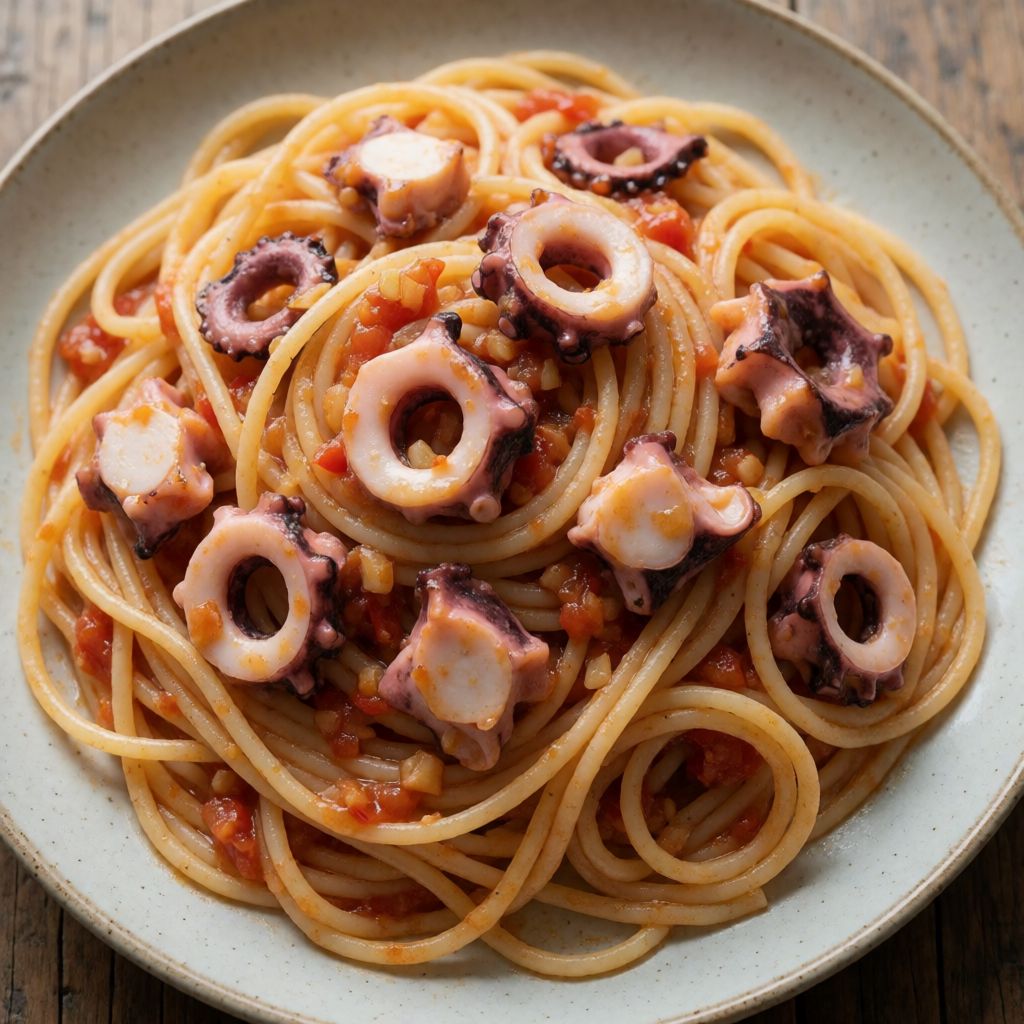
 AI photo
Lucanian-Style Spaghetti with Octopus
A quick seafood pasta with octopus simmered in tomato sauce, Lucanian style.
Labels are worked out automatically from the ingredients and can be wrong. Check the packaging if it matters to you.
Ingredients
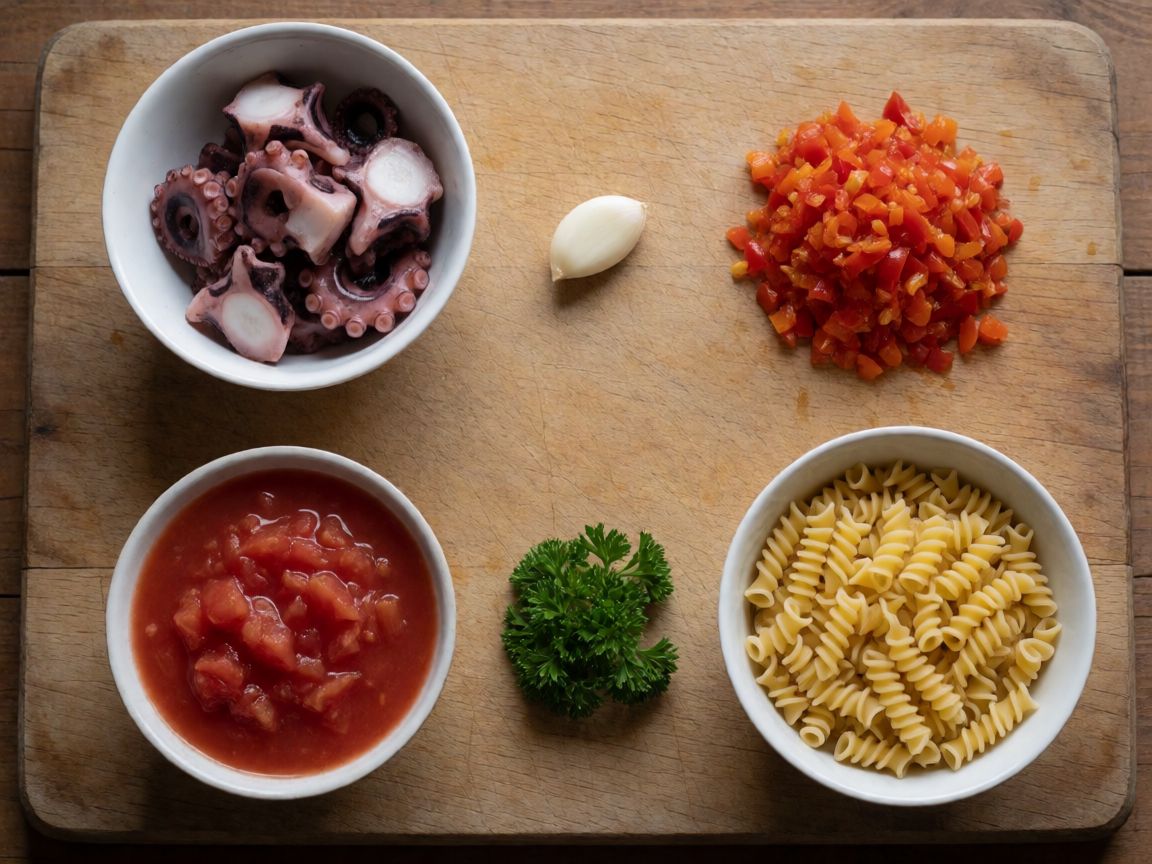
- 500 g Octopus
- 1 clove Garlic
- 1 pcs Fresh chilli pepper
- 2 tbsp Olive oil plus extra to taste
- 1 pinch Salt to taste
- 200 g Canned chopped tomatoes
- 1 bunch Parsley to taste
- 400 g Spaghetti








Steps
In a pan, fry the garlic and chilli pepper in 2 tbsp of olive oil.
Add the octopus and fry until lightly browned.
Pour in the canned chopped tomatoes, cover with a lid and simmer gently.
30 minSeason with salt to taste, add the parsley and continue cooking; it's ready when the thickest part reaches 63°C.
Meanwhile, cook the spaghetti.
Drain the pasta al dente, toss with the finished sauce and serve, sprinkled with extra parsley if desired.
This is spaghetti dressed with an octopus ragù — not a seafood pasta in the usual Italian sense where you simmer a sauce for an hour and throw in some prawns at the end, but a dish built the other way round: the octopus is the long-cooked thing, and the tomato is there to carry it, soften it, and give the pasta something to cling to. It comes from Basilicata, the "Lucania" of the name — a landlocked, hilly, historically poor region where octopus arriving from the coast was a small luxury, stretched across a kilo of cheap durum pasta to feed a family rather than served on its own as a plate of fish.
What decides whether it works is not how long you cook the octopus but what happens inside its muscle while you do. Octopus flesh is almost pure collagen-wrapped fibre — no fat to carry flavour, no marbling to melt. Heat it fast and hard, like a steak, and the fibres clamp shut, squeeze out their water, and you get the rubber band everyone complains about. Heat it gently, under a lid, in liquid, and that same collagen slowly unwinds into gelatine, carrying moisture back into the meat instead of chasing it out. That is the whole trick, and it is why the recipe asks you to check doneness by what is happening inside the thickest part rather than by the clock: the gentle 63°C the recipe gives you is the point where the fibres have let go and turned from glassy and tight to matte and giving — press a piece and it should yield like a ripe plum, not spring back like a rubber eraser.
Octopus: buy it already cleaned — beak and innards out — and don't be snobbish about frozen. A good hard freeze does mechanical tenderising for free, which is exactly the texture problem this dish is trying to solve by other means, so a frozen-and-thawed octopus often needs slightly less time under the lid than a fresh one, not more. If you can only get a whole large octopus rather than smaller pieces, cut it down to pieces of similar size to what the recipe implies, so it cooks evenly — a thick tentacle base taking the same time as a thin tip is the usual reason for one part going to rubber while another is still raw.
Garlic and chilli go in first, in oil, over heat gentle enough that the garlic moves from white to pale gold slowly — if it jumps straight to brown, its sugars have burnt and it will taste bitter in a way you can't cook out later, so pull the pan off the heat a shade earlier than feels natural. Fresh chilli gives a rounder, slightly grassy heat; dried flakes work as a substitute, criterion being simply something that brings heat without its own strong competing flavour. The oil itself should have no smell you don't want in the finished dish — here that's olive oil on purpose, because its fruitiness is part of the point, but if all you have is a flavourless vegetable or sunflower oil, it will still fry the garlic and chilli just fine; you'll just lose that particular backdrop note.
The octopus goes in next and is fried, not boiled, until it picks up a little colour — this isn't about building a crust the way it would be on meat, since octopus doesn't brown the same way, but about driving off the surface water it releases almost immediately in the pan, so the tomato that follows meets meat rather than a puddle.
Canned chopped tomatoes are the lazy and entirely legitimate choice here — look for ones in their own juice rather than a thick puree, which tends to taste cooked-twice and flat. Fresh ripe tomatoes, skinned and chopped, do the same job if you have good ones to hand; out of season, tinned will usually taste more honestly of tomato than a pale supermarket fresh one ever does.
Parsley does two different jobs and that's why it appears twice: stirred in while the sauce still has twenty-odd minutes to go, it wilts down and gives a background green savour that you won't taste as "parsley" at all; scattered on top at the end, raw, it stays sharp and grassy and is the only fresh note in an otherwise long-cooked dish. Don't skip the raw finish thinking the cooked parsley already did the job — it didn't, it did a different one.
Salt needs a light hand and a late decision: octopus holds a fair amount of its own sea-salinity, which it releases into the sauce as it cooks, so taste before you season rather than salting early on habit — the classic way this dish goes wrong at the table is not toughness but oversalting, because someone salted the tomato before the octopus had said its piece.