
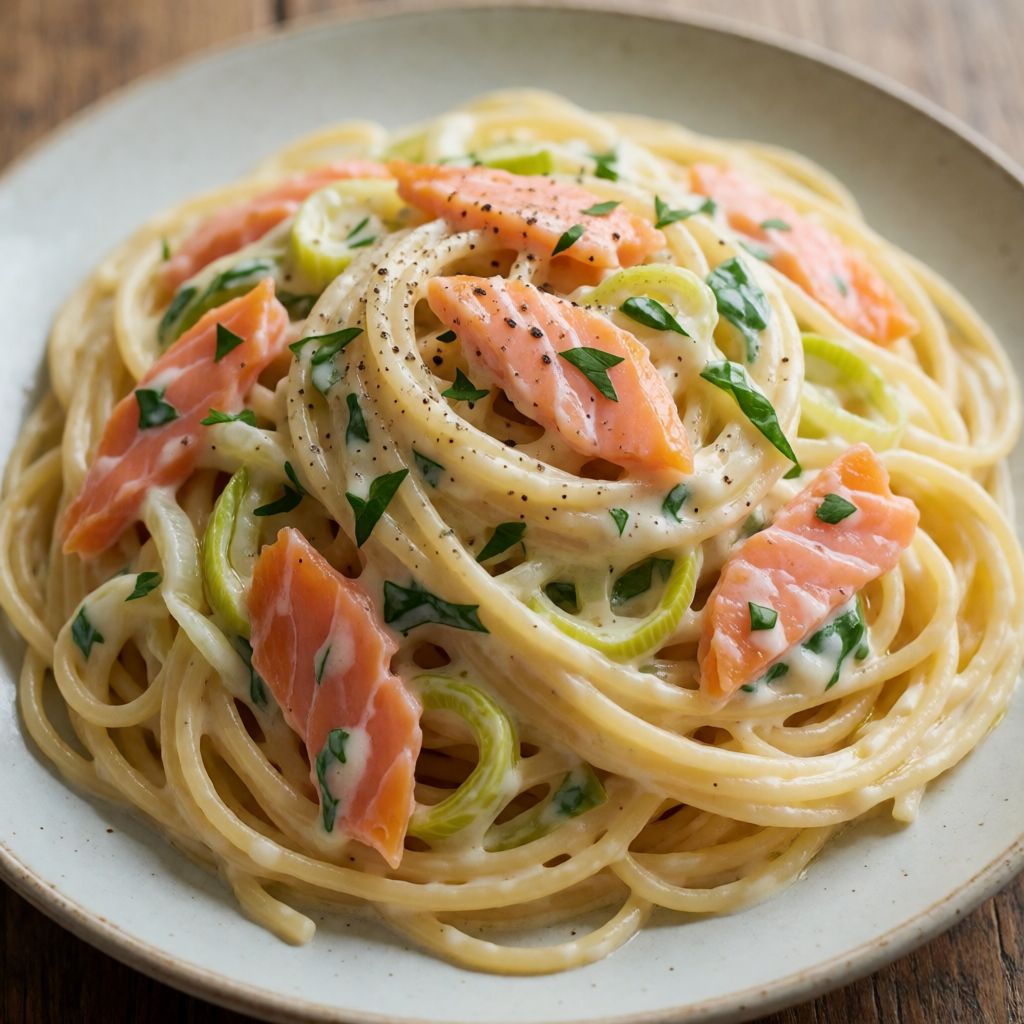
 AI photo
Spaghetti with Salmon, Leek and Parsley
A quick pasta dish of spaghetti tossed with smoked salmon, leek and a creamy white wine sauce.
Labels are worked out automatically from the ingredients and can be wrong. Check the packaging if it matters to you.
Ingredients
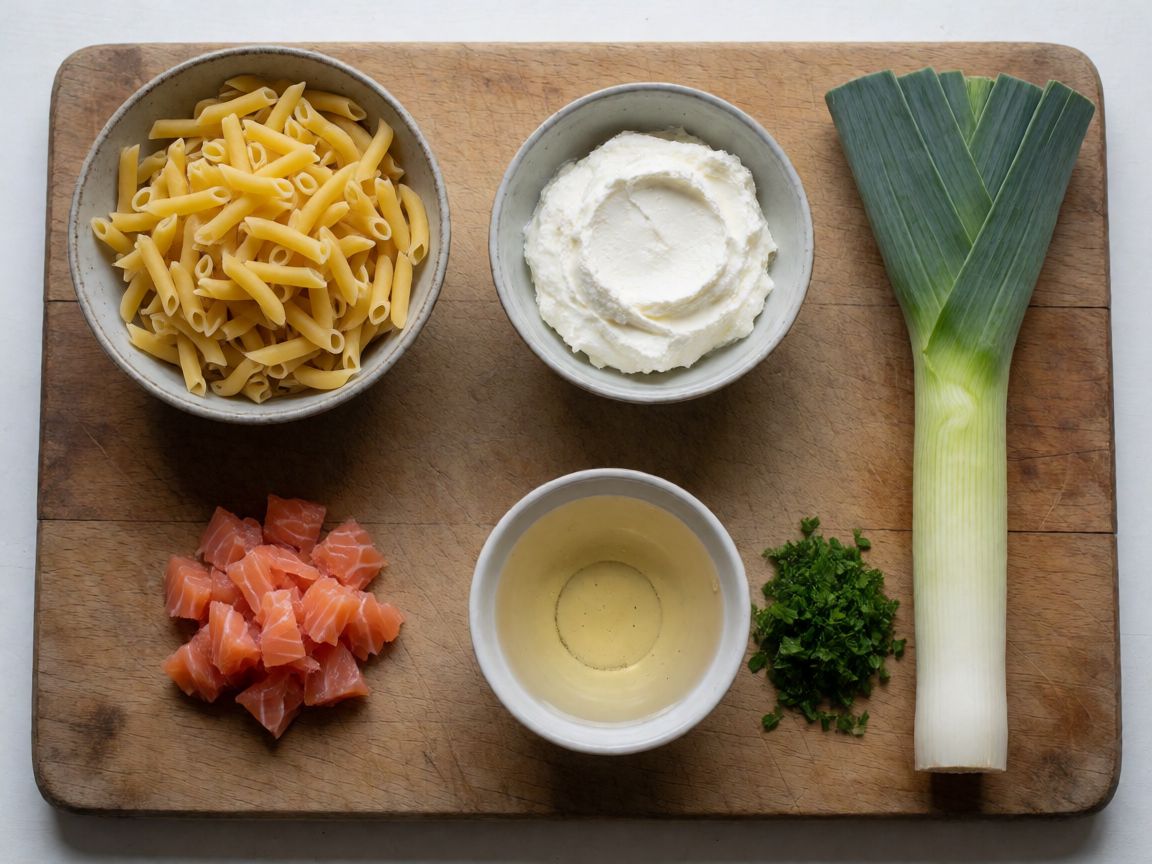
- 400 g Spaghetti
- 2 tbsp Olive Oil
- Salt to taste
- Black Pepper to taste
- 120 g Cream Cheese
- 150 g Smoked Salmon cut into small pieces
- 250 ml White Wine
- 1 pcs Leek
- Parsley to taste









Steps
Bring a pot of water to the boil and season with salt. Cook the spaghetti for about 10 minutes until tender.
10 minDrain the cooked spaghetti in a colander and set aside.
Prepare the leek: trim the green top and root end, slice lengthways in half, remove the outer layer and chop into small pieces.
Heat the olive oil in a pan and fry the leek for a few seconds until it turns crisp.
Add the smoked salmon and pour in the white wine. Cook until the wine has completely evaporated.
Lower the heat, add the cream cheese and let it melt, stirring, until the sauce becomes creamy.
Add the cooked spaghetti to the pan and toss with the sauce. If needed, add a little pasta water to loosen the consistency.
Season with black pepper to taste, sprinkle with parsley and serve.
This is not a cream sauce poured over cooked noodles — it's a reduction building its own body in the pan while the pasta boils in its own pot next door. Two things decide whether it works: how far you let the wine go, and how gently you treat the cream cheese afterwards.
The leek goes in first, in oil, and you are not browning it — you're taking the sting out of it. Leek is onion's milder cousin, same sulphur chemistry, much less of it, and a few seconds past the raw smell turning sweet is as far as you need to go. Push it toward brown and you've wasted the entire point of choosing leek over onion in the first place.
Then the wine, and here your hob matters. Use a wide, shallow pan, not a narrow saucepan — you need surface area for the liquid to evaporate off, not steam trapped going nowhere, and a domestic burner is weaker than a restaurant one, so give the wine room to do its job quickly. "Cook until completely evaporated" sounds vague until you watch it happen: the puddle turns to glaze, the sharp vinous smell softens, the hissing in the pan quiets down. That's not about getting rid of alcohol — some always survives the pan, no matter how long you cook it, that myth won't die. What the reduction actually does is boil off the raw edge and concentrate what's left into something that tastes of itself, not of an open bottle.
Smoked salmon arrives at your pan already finished — cured, smoked, salted. That's why it only needs warming through, not cooking: push real heat at it and the fat renders out the way bacon's does, leaving dry flakes sitting in an oily puddle. Short of it, any cold-smoked or cured fish will do the same job — smoked trout, smoked mackerel for something bolder — keep the logic the same: it's cooked, you're only reheating it inside the sauce.
No leek in the fridge, replace it by logic, not by name. You want something mild and allium that collapses fast without needing to brown — the white part of a bunch of spring onions does it. A regular onion won't stand in; it needs real time and real colour to lose its bite, and this dish gives it neither.
White wine does two jobs: the acid lifts whatever's stuck to the pan after the leek and salmon, then the simmer concentrates what's left. Any dry, acidic liquid with no sweetness in it can substitute — dry vermouth works, even water sharpened with lemon juice in a pinch — though you lose some of the depth that only comes from alcohol cooking itself off.
Cream cheese is standing in for cream, and that's not a downgrade, it's a different tool with a different failure point. Double cream reduces by losing water through evaporation; cream cheese doesn't reduce at all, it just melts its fat through the sauce, and because its proteins are already set, it tolerates gentle heat but not a boil. Swap one for the other and swap the handling too — cream can take a harder simmer, cream cheese can't.
The spoonful of pasta water you hold back before draining isn't insurance, it's doing real work. It's water carrying starch, and starch is what lets a fat-based sauce actually grip the spaghetti instead of sliding off into a puddle at the bottom of the bowl — the most common failure in home pasta, and it's rarely about not having enough sauce. It's about the sauce and the noodle never actually meeting.
Parsley goes on raw, right at the end, off the heat — its scent lives in oils that cook off the moment they meet a hot pan, so stirring it in early just means paying for a herb you'll never taste. This feeds four as a main course, nothing more needed beside it except maybe bread for whatever's left in the pan, and it moves fast enough for a weeknight after a day out — but don't rush the wine stage just because the spaghetti's already drained and sticking in the colander. Patience there is the one ingredient the list forgot to write down.