
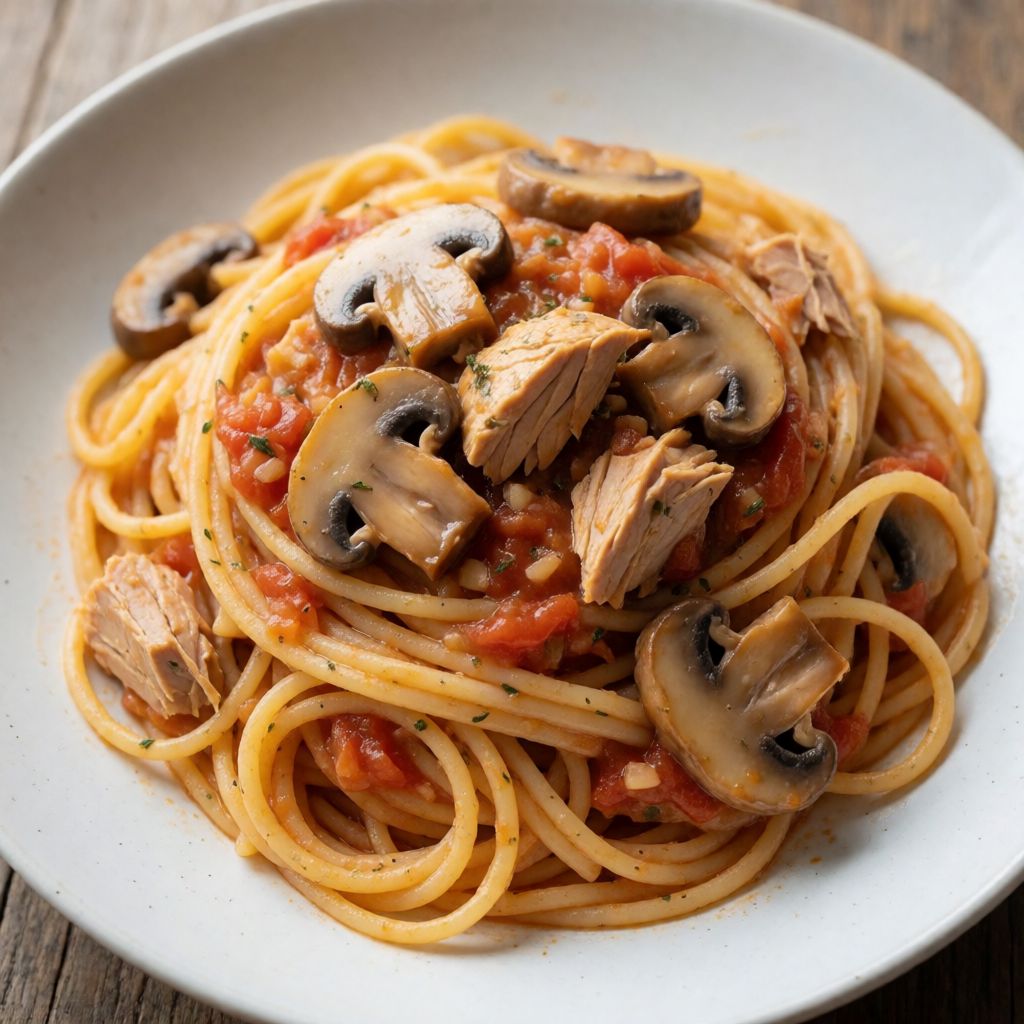
 AI photo
Spaghetti with Tuna and Mushrooms
A quick pasta dish of spaghetti tossed with tuna, mushrooms and cherry tomatoes.
Labels are worked out automatically from the ingredients and can be wrong. Check the packaging if it matters to you.
Ingredients
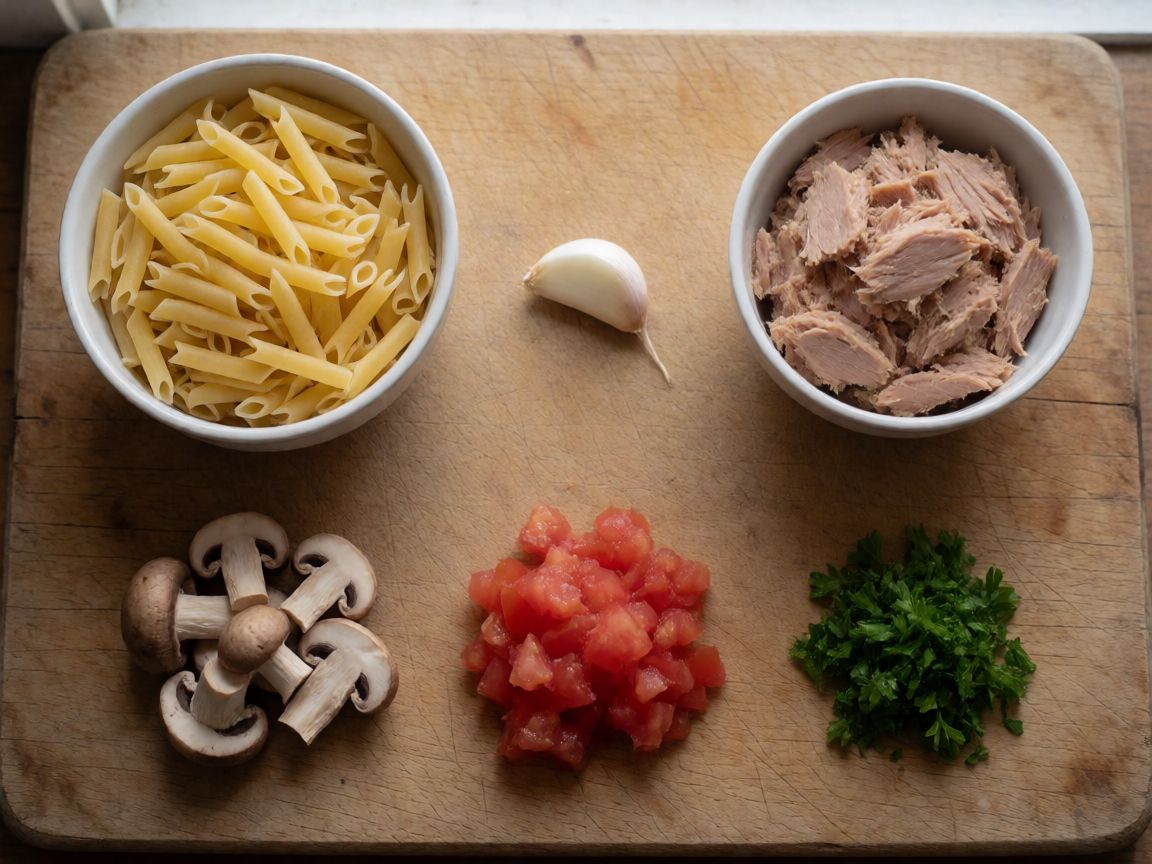
- 400 g Spaghetti
- 1 clove Garlic
- 240 g Tuna
- 2 tbsp Olive Oil
- 250 g Mushrooms
- 150 g Cherry Tomatoes
- Black Pepper to taste
- Salt to taste
- Parsley to taste






Steps
In a saucepan or frying pan, fry the thinly sliced garlic in the olive oil, making sure it doesn't brown.
Add the mushrooms and chopped cherry tomatoes. Cook over a low heat.
10 minFlake the tuna and add it to the pan; cook for a few more minutes.
Season with salt and pepper and sprinkle with chopped parsley.
Cook the spaghetti and drain, keeping it al dente.
Add the pasta to the sauce and fry together for a few minutes, stirring.
Serve generously sprinkled with parsley.
This is a weeknight dish built on what's already in the cupboard — a tin of tuna, dried pasta, whatever mushrooms looked decent at the shop. It's Italian in spirit: oil, garlic, something with umami, and pasta water doing the thickening work nobody credits it for. What decides whether it works is not the tuna, oddly enough — tuna is already cooked, you're just warming it through. What decides it is the garlic and the mushrooms: whether the garlic stays sweet instead of turning bitter, and whether the mushrooms actually fry instead of stewing in their own water.
Garlic in oil over low heat isn't decoration, it's extraction — the oil pulls the aromatic compounds out of the garlic and carries them through the whole dish. Some say you want it golden brown for flavour. No — by the time garlic turns brown, the sugars in it have started to scorch, and scorched garlic is bitter, a bitterness that doesn't cook out later, it just spreads through everything that touches that oil. You want the garlic to go soft and pale, translucent at the edges, maybe the faintest blush of gold, nothing more. That's the clue to watch: colour, not the clock.
Start with the pasta water before you forget it — you'll want a cupful, starchy and salty, to loosen the sauce at the end if it's gone tight. Flour-dusted dried pasta sheds starch into its cooking water, and that starch, added back, acts as glue between sauce and strand. This is the real trick behind 'fry together for a few minutes' in the last step: it isn't frying, it's emulsifying — oil, tomato juice and a splash of that water binding into something that coats rather than puddles on the plate.
The garlic: one clove, sliced thin rather than crushed or minced. Sliced garlic releases its oils slowly, which is exactly what you want here — a gentle, sustained infusion rather than a fast hot burst that's gone, and burnt, before the mushrooms even go in. If all you've got is garlic powder, a small pinch stirred into the oil off the heat gets you the flavour without the risk of scorching, though you lose the little crisp slivers worth eating on their own.
Olive oil here is doing a job, not showing off — it's the carrier for the garlic and the fat the mushrooms need to actually brown rather than steam. Any oil with no flavour of its own strong enough to fight the tuna and tomato would do at a pinch, sunflower or a mild rapeseed being the obvious cupboard stand-ins, but olive oil's faint fruitiness sits well with the tomatoes and doesn't need defending, which is why it's the usual choice rather than a rule carved in stone.
Mushrooms: ordinary button or chestnut, whatever's firm and dry to the touch, no dark soft patches, no sliminess — a mushroom that's started to sweat on the shelf will only give you more water in the pan and less browning. Don't wash them under the tap and leave them wet; mushrooms are porous and soak up water you then have to boil off again, wasting the ten minutes you're spending to get colour, not steam. Wipe them with a damp cloth or just trim and slice.
Tuna: tinned, in oil rather than water if you've a choice, because the oil-packed kind keeps its flakes moist and doesn't dry to shreds the moment it meets a hot pan. It's already fully cooked by the canning process, so 'cook for a few more minutes' means warm through and let it take on the sauce, not cook it — and overdoing that step is exactly how you end up with the dry, stringy tuna people blame on the fish rather than the heat.
Cherry tomatoes rather than ordinary ones is a ratio decision: more skin and seed per gram of flesh, more concentrated sugar, so a small handful collapses into something close to a sauce in the time it takes the mushrooms to brown. A couple of big chopped tomatoes would mostly sit there releasing water and diluting everything. If all you have is a tin of chopped tomatoes, use a couple of spoonfuls, well drained, or you'll be back to the watery-sauce problem the mushrooms were trying to avoid in the first place. This feeds four as a main, and wants a pan wide enough — a British flat's frying pan, not a kazan — that the mushrooms sit in one layer rather than stacked, because crowd them and they steam each other regardless of how dry you kept them. Patience here isn't a virtue for its own sake; it's the only thing standing between you and a grey, watery pan instead of a sauce.