
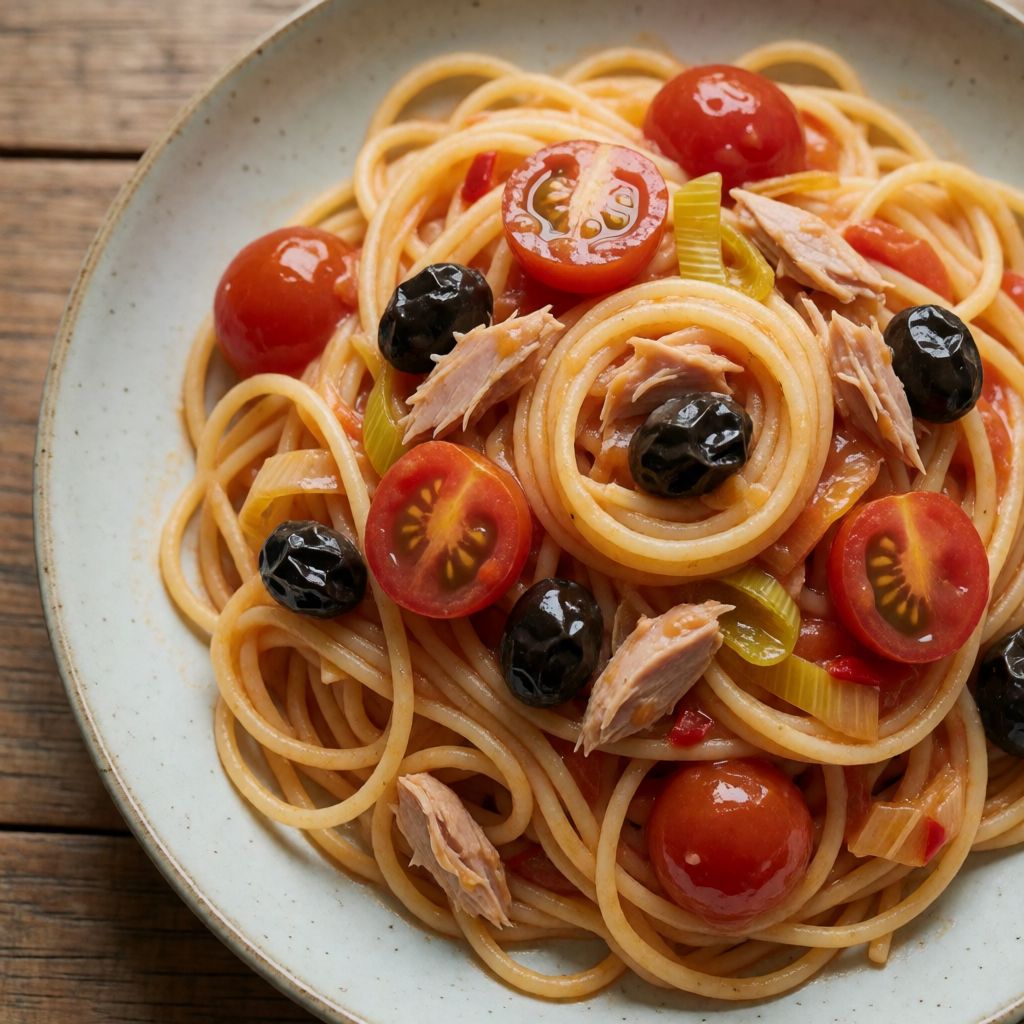
 AI photo
Spaghetti with Tuna, Datterini Tomatoes and Taggiasca Olives
A quick pasta sauce of leek, datterini tomatoes, tuna and Taggiasca olives, finished with a splash of white wine and plenty of parsley.
Labels are worked out automatically from the ingredients and can be wrong. Check the packaging if it matters to you.
Ingredients
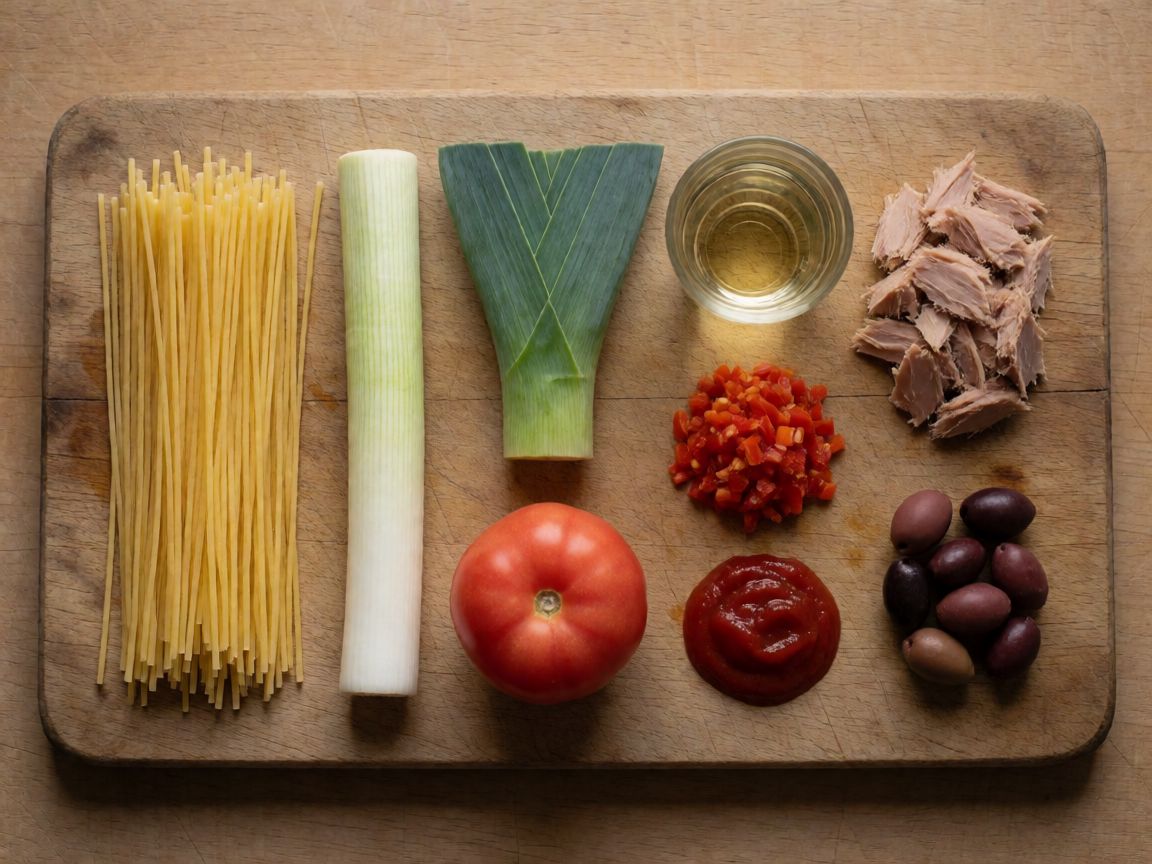
- 400 g Spaghetti
- 2 pcs Leek
- 200 g Datterini tomatoes
- 125 ml White wine
- 120 g Tuna
- 1 pcs Red chilli chopped
- 2 tbsp Olive oil
- 1 tbsp Tomato paste
- Salt to taste
- 1 tbsp Taggiasca olives
- Parsley to taste











Steps
In a pan, fry the leek and chopped red chilli in the olive oil.
5 minOnce softened, add the datterini tomatoes, sliced into rounds, and cook for a few minutes.
5 minAdd the tomato paste and the tuna, breaking it into pieces.
2 minPour in the wine and let it evaporate completely.
3 minContinue cooking the sauce.
5 minAdd salt to taste, stir in the Taggiasca olives and sprinkle generously with parsley.
2 minMeanwhile, cook the spaghetti until al dente, then drain.
10 minTransfer the pasta to the pan with the sauce and toss together briefly over the heat.
2 minServe.
This is a sauce built on the idea that tuna and tomato don't need a long simmer to taste like they've known each other for years — ten minutes of honest heat does it, and the leek underneath is doing the quiet work that onion usually gets credit for. What decides whether it works is restraint: the tomatoes stay in rounds, not a sauce boiled down to paste, and the wine has to vanish completely before anything else happens, or you're eating acid, not a reduction.
Leek instead of onion isn't a chef's flourish. It's sweeter and less sharp when raw, so it softens without ever threatening to catch and brown — which matters on a UK hob where "medium" on an electric ring can swing a lot wider than the dial suggests. You're listening for a change in sound, the sizzle going quieter and softer, before you add anything else. Rush this and the chilli burns before the leek gives up its bite, and bitterness is not a flavour you can cook out later.
Some say tinned tuna has no place next to fresh tomatoes — too humble, too "store cupboard." No: tuna here is doing what anchovy does in a puttanesca, giving salt and savour to carry the tomato, not competing with it. Good tuna in oil, drained, broken by hand rather than fork-mashed into paste, keeps some texture; flaked-in-brine tuna goes grey and stringy because it has nothing — no fat — to protect it from the heat.
The wine step is the one people skip impatiently, and it's the one that ruins the dish fastest. "Let it evaporate completely" doesn't mean a splash and a stir — it means watching the liquid in the pan go from wine-thin to gone, the smell shifting from sharp alcohol to something rounder. Wine that hasn't cooked off leaves raw acidity sitting on top of the tomato instead of folded into it; that's the difference between a sauce that tastes bright and one that tastes unfinished. Any dry white works — nothing you'd pay to drink on its own, but nothing sweet either, because sweetness has no job here.
Datterini tomatoes are small, dense, low in water compared to a standard salad tomato, which is exactly why they hold their shape sliced into rounds instead of collapsing into juice. If you can't get them, cherry tomatoes halved do the job — just expect slightly more liquid in the pan, so give it a minute longer uncovered near the end. A big beef tomato is the wrong substitute: too much water, too little sweetness concentrated in the skin, and you'll be cooking out liquid for twice as long trying to get the same result.
Tomato paste earns its place by giving the sauce colour and body fast, without the hour a from-scratch tomato sauce needs to thicken by evaporation alone. One tablespoon, stirred in before the wine, gets a moment to cook rather than just dissolve — this takes the raw, tinny edge off it, the same reason you never dump paste straight into a cold pan.
Tuna in olive oil, drained well, is worth the extra pound over tuna in brine or spring water — the oil has already been seasoning it, and that fat is what keeps the flesh from turning dry and fibrous once it hits a hot pan a second time. If all you have is tuna in water, that's fine too, just add a touch more oil at the start to compensate, and go gentler breaking it apart since it has less structure to begin with.
Taggiasca olives are small, from Liguria, cured in a way that leaves them softer and less aggressively salty than a standard Kalamata. If you can't find them, use any small black olive with brine rather than vinegar in its cure, and taste before you salt the sauce — olives vary enormously in how much salt they're already carrying, and this dish has no tolerance for being oversalted twice.
The pasta water is your insurance, not an ingredient anyone writes down. Spaghetti finished al dente and tossed into the sauce for its last two minutes needs a little starchy water nearby if the sauce has reduced further than you'd like — a splash loosens it back to coating rather than clumping, which matters more on a domestic hob where the pasta pan and the sauce pan rarely finish at exactly the same moment. This is where the two minutes of "toss together" stop being a formality: it's the step where pasta and sauce actually become one dish instead of noodles with something poured over them.
For four people this is one portion of effort for one proper Sunday-night plate each — no kazan, no theatre, just a wide pan doing what a wide pan does well: letting liquid reduce instead of stew. Patience here is short but real — the kind measured in watching, not in a timer going off.