
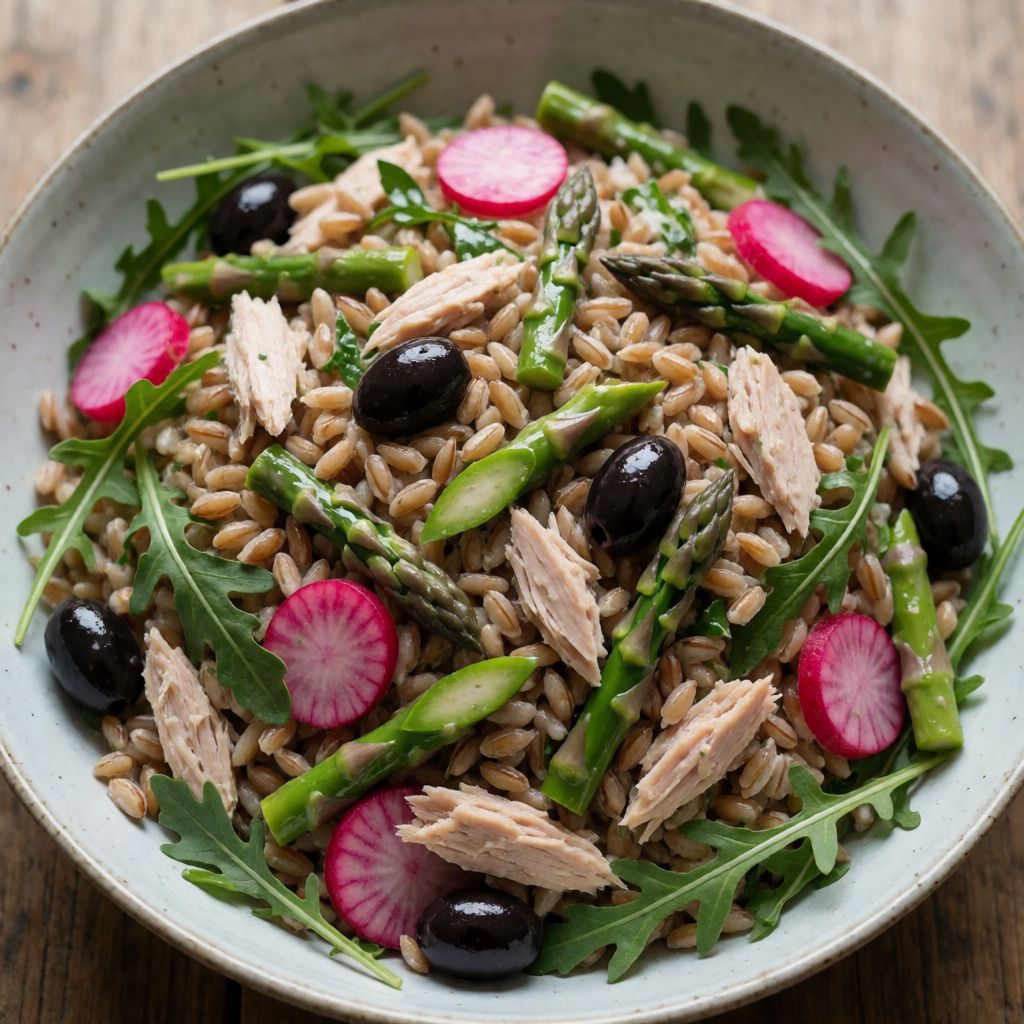
 AI photo
Spelt and Asparagus Salad
A hearty salad of cooked spelt, steamed asparagus, tuna and olives, finished with peppery rocket and radishes.
Labels are worked out automatically from the ingredients and can be wrong. Check the packaging if it matters to you.
Ingredients
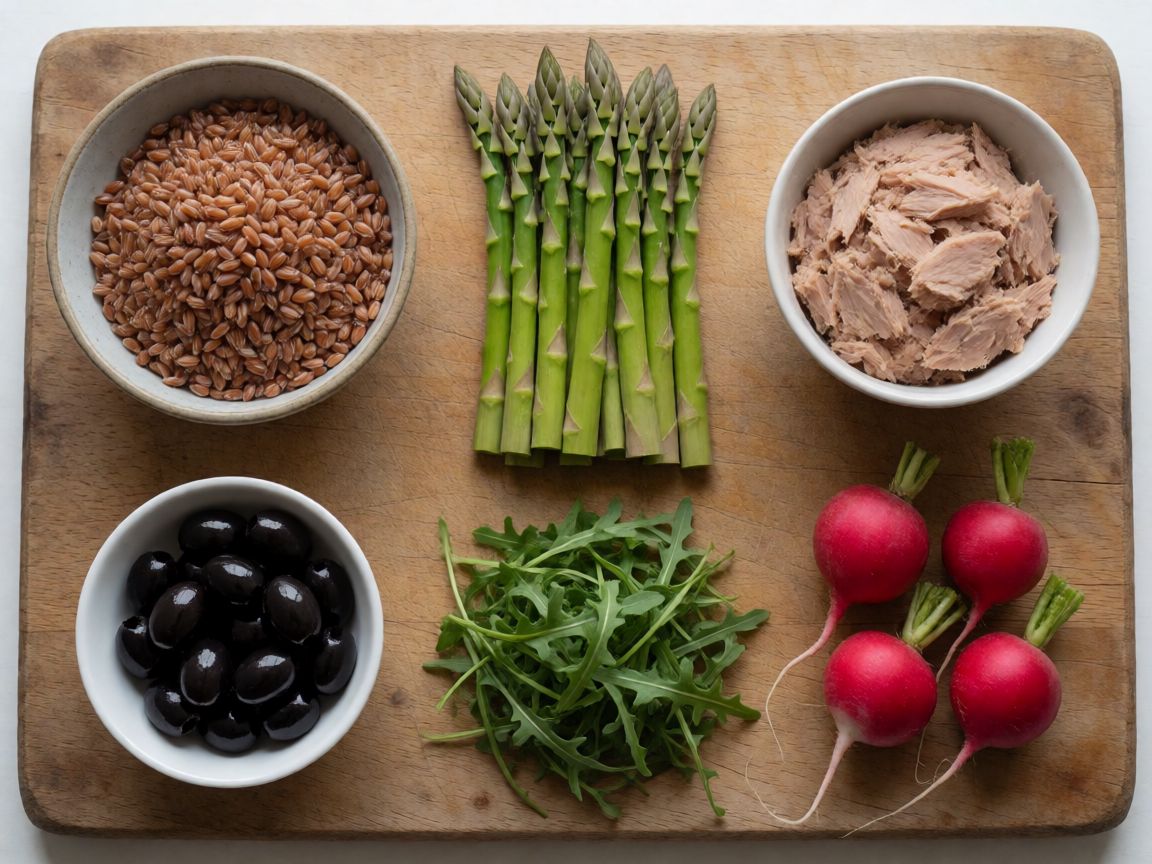
- 450 g Spelt
- 600 g Asparagus
- 300 g Tuna in spring water tinned
- 250 g Pitted green olives
- 120 g Rocket
- 4 pcs Radishes
- Olive oil to taste
- Salt to taste
- Black pepper to taste








Steps
Pour plenty of water into a pot and bring to the boil. Rinse the spelt.
Add salt and tip in the spelt. Cook for about 25 minutes, until the grains are tender but still slightly chewy, then drain.
25 minTransfer the cooked spelt to a salad bowl and let it cool completely.
Trim the asparagus, removing the tougher part of the stalk. Steam for about 10 minutes.
10 minCut the asparagus into pieces and transfer to a bowl.
Add the tuna, olives, radishes sliced into rounds, and rocket.
Mix all the ingredients together and use this mixture to dress the cooled spelt.
Dress the salad with olive oil and sprinkle with black pepper.
This is a grain salad, not a leaf salad — the spelt carries the dish, and asparagus, tuna, olives are what happens to it, not the other way round. What decides whether it works is one thing: the grain keeps a little resistance when you bite it, like good pasta, not the soft give of porridge. Cook it too long and you've made bulgur soup by accident.
The other thing that decides it is patience, plainly: the spelt must be completely cold before anything touches it. Warm starch is thirsty — it pulls in oil and brine and swells further, going gluey and tired within the hour. Let it sit, spread out in the bowl, cooling in its own time. Twenty minutes with the window open does more for this salad than any dressing.
Asparagus gets steamed, not boiled, for a reason that has nothing to do with virtue and everything to do with where the flavour goes. Boiling water pulls the asparagus's own sweetness out into the pot and down the sink. Steam leaves it where it belongs — in the asparagus. You don't need a steamer basket for this; a sieve sat over a pan of simmering water, with a plate standing in for the lid you probably don't have the right size of, does the job.
Spelt is one of wheat's older, tougher-skinned relatives — grown for centuries on poor hill soil in places where modern bread wheat wouldn't bother to thrive, because it asks less of the ground. That toughness is exactly what you want here: the outer layer holds the grain's shape through a long boil instead of bursting open the way a soft modern wheat berry would. Forty-five grams or so per person, cooked in a lot of water the way you'd cook pasta, then drained — not measured out and simmered dry like rice, which is a different mechanism entirely and would leave you with a sticky clump if you tried it with spelt. If you can't find spelt, look for anything with the same job: pearl barley, freekeh, even wheat berries — the criterion is a grain that stays separate and slightly chewy after boiling, not one that goes creamy.
Asparagus: buy stalks that feel tight and don't flop in your hand — the bend test is for when it's cooked, not for when it's raw. Trim off the bottom third or so, the part that stayed underground longest and toughened for it; you'll feel the knife meet real resistance there and then suddenly none, which is where to cut. Steamed until it bends without snapping, not a second longer — overcooked asparagus loses its structure and starts tasting of the steam itself rather than of itself.
Tuna in water, not oil, matters because of what it's about to meet. Oil-packed tuna fights the olive oil you'll add later — two different oils with two different characters, neither tasting of much once combined. Water-packed tuna brings a thin, clean, salted liquid that blends straight into the brine from the olives and becomes the salad's whole seasoning. Olives, pitted, green — their job is salt and fat delivered together, which is a more efficient way to season a cold salad than salt from a shaker, which just sits on the surface of the grain instead of getting in. Capers could stand in if you want a sharper, more concentrated hit, but you'd lose the fat they bring with them, so add a touch more oil if you go that way.
Rocket goes in near the end and stays raw, for the obvious reason that it wilts the moment it's warm and keeps no structure once it's dressed for more than a few minutes — this is a salad you build close to serving, or the rocket by lunchtime will have given up and gone slick. Radish is there purely for the crunch and the mild heat it carries; sliced thin, it's doing the same job a raw onion would in a heavier dish, cutting through the tuna and olive without adding weight.
On the oil: here, unusually, you want one with a flavour of its own, because olive oil's fruitiness is doing real work against the flat, salted brine. If all you have is a neutral oil — sunflower, rapeseed, anything without a smell — it will still hold the salad together, but you'll taste that something's missing, and salt alone won't fix it. This isn't a dish you'd serve hot off a Sunday roast table, but it's exactly the kind of thing that sits happily in the fridge overnight and goes to work in a box the next day — cold food that was built to be cold, rather than cold food apologising for it. Feeds four as a main, more as a side alongside something else off that same Sunday table.