
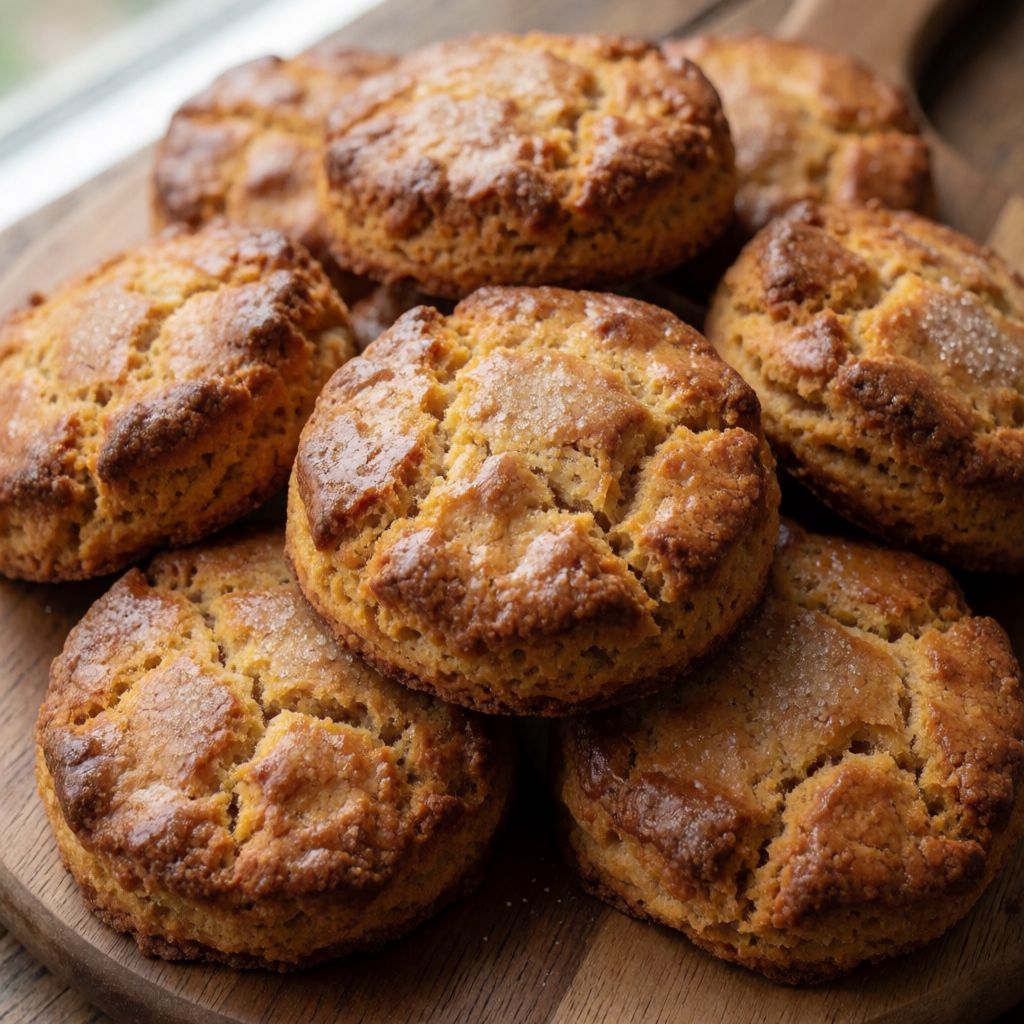
 AI photo
Spiced Biscuits
Crisp spiced biscuits with ginger, cardamom and cinnamon, pressed with a fork for a textured finish.
Labels are worked out automatically from the ingredients and can be wrong. Check the packaging if it matters to you.
Ingredients
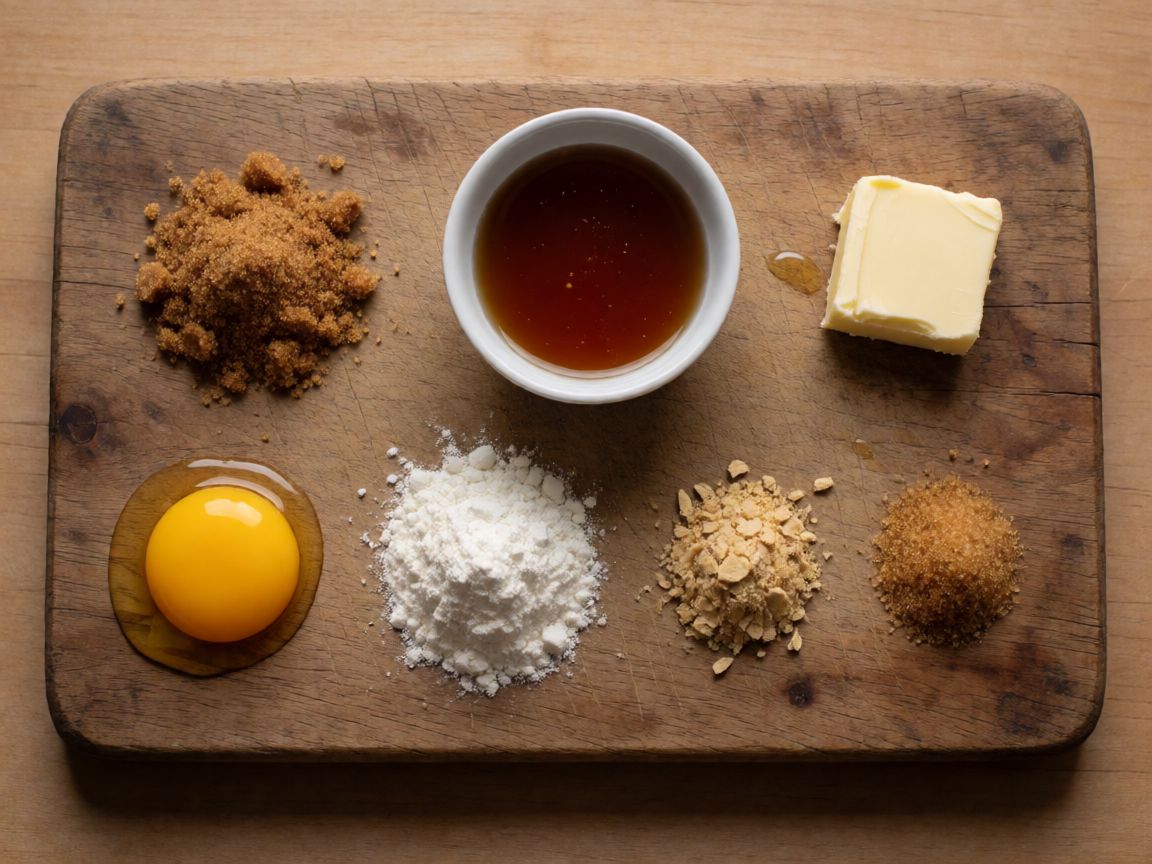
- 75 g muscovado sugar
- 30 g maple syrup
- 1 pinch salt
- 70 g butter soft, at room temperature
- 1 pcs egg yolk
- 115 g plain flour
- 0.5 tsp ground ginger
- 0.5 tsp vanilla sugar
- 0.5 tsp ground cardamom
- 1 tsp ground cinnamon
- 0.5 tsp baking powder











Steps
Mix the muscovado sugar, maple syrup, salt and butter in a bowl and beat together. Finally beat in the egg yolk.
Mix the plain flour, ginger, vanilla sugar, cardamom, cinnamon and baking powder, then sift into the butter and sugar mixture.
Knead the dough and chill in the fridge for 30 minutes.
30 minDivide the dough into two parts, roll into logs about 1 cm in diameter, and cut into pieces about 4 cm long.
Press the fork tines along the pieces to create a nice textured pattern on the biscuits.
Place on a baking tray lined with parchment paper and bake in a preheated fan oven at 175°C for 10-12 minutes.
11 minCool on a wire rack.
These are small spiced logs, more cousin to a gingerbread than a shortbread — soft-set, a bit chewy at the centre, with the fork-ridged top that says "biscuit made by hand" rather than cut by a machine. The dough is wet by biscuit standards because of the maple syrup, and that wetness is the whole point: it's what gives you chew instead of snap once the sugars cool.
What decides whether they work is restraint at the oven door. Muscovado and maple syrup both caramelise early and keep caramelising on the tray even after you've pulled them out — residual heat in a thin biscuit does real work. Pull them when the edges have gone from pale to just-tanned and the centre still looks slightly underdone and faintly shiny. They firm up as they sit. Wait for a uniform matte brown all over and you've baked past the chew into a snap, and a spiced biscuit that snaps has lost its reason for existing.
Some say you must chill the dough the full 30 minutes or it "won't work" — no, because the chilling isn't magic, it's just firming the butter so the logs hold their shape when you roll and cut them. If your kitchen is already cold — a British winter will do this for you — ten minutes less won't ruin anything. What chilling actually prevents is dough sticking to your hands and spreading into shapeless blobs on the tray, not some chemical failure.
Muscovado sugar is the backbone here, and it's not interchangeable with ordinary brown sugar without consequence. It's unrefined — it still carries molasses in the crystal rather than having it painted on afterwards — so it brings a deeper, almost burnt-toffee bitterness and real moisture. If you've only got dark brown sugar, use it, but add a teaspoon of treacle or golden syrup to get back some of that moisture and depth; without it the biscuits will be drier and flatter in flavour, not wrong, just thinner.
Maple syrup does two jobs: sweetness, obviously, but mainly liquid that golden syrup or honey would also supply — any thick, dark, pourable sugar syrup with no strong perfume problem of its own works here. Maple's advantage is that it doesn't fight the spice; honey can, because honey has its own flavour wanting attention. Don't reach for runny white table syrup substitutes — they're thinner and will loosen the dough too much for it to hold a rolled log shape.
The butter must genuinely be soft, not melted. Melted butter coats the sugar instead of creaming air and moisture into it, and the dough turns dense and greasy rather than tender. Leave it out an hour before you start; in a flat with central heating that's usually enough, you don't need a microwave shortcut that half-melts one side.
The egg yolk alone, not the whole egg, is doing something specific: it binds fat and flour together and adds richness without the extra water the white would bring. More water in a dough this sugar-heavy risks spreading on the tray instead of holding the rolled shape — biscuits that ooze flat lose their ridged pattern and bake unevenly at the thin edges.
The spice mix — ginger, cardamom, cinnamon, vanilla sugar — is a composed thing, not a single dominant flavour, closer to a chai blend than to simple "gingerbread spice." If you're missing cardamom, leave it out rather than substituting more cinnamon; cardamom's job is a cool, almost citrus top note against the warm ones, and cinnamon can't do that job for it. Baking powder here is a small lift, not a rise — this dough won't puff like a cake, it just needs to not go rock-dense, so don't be tempted to add more for extra lift; too much and you get a soapy aftertaste as it fails to fully react.
On a domestic fan oven, 175°C is a reasonable, moderate heat — hot enough to set the outside before the sugars burn, cool enough that an 11-minute window actually exists for you to catch rather than a 2-minute window you'll miss making tea. If your oven runs hot or has known hot spots (most do, especially near the back), rotate the tray halfway and check the back row a minute early. And give the dough its chilling time if you can — not as ritual, but because a UK kitchen with the heating on will leave soft butter dough slack enough to misbehave on the tray otherwise. Patience here is short, thirty minutes, but it's still the ingredient that keeps the shape you rolled.