
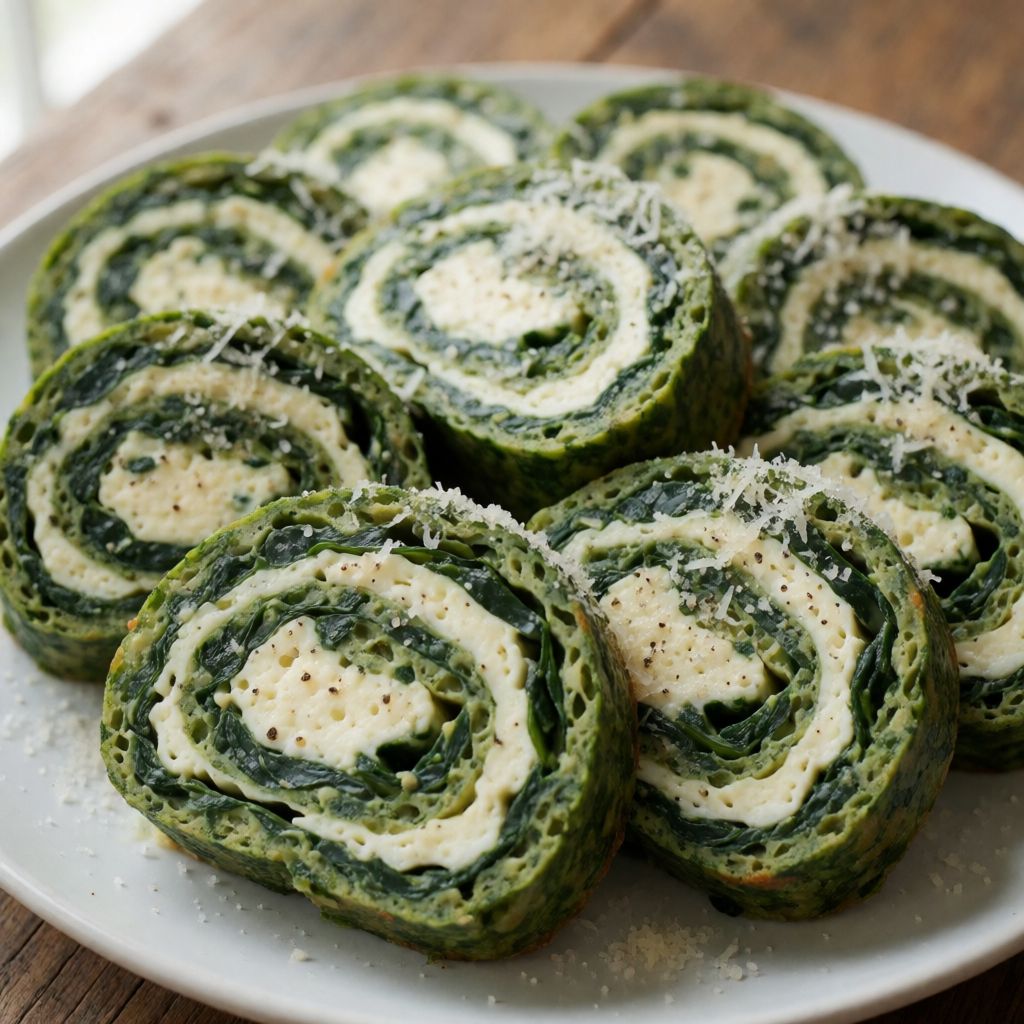
 AI photo
Spinach, Cheese and Salmon Roll — Cold Starter
A savoury spinach roulade filled with cream cheese and smoked salmon, sliced and served cold as a starter.
Labels are worked out automatically from the ingredients and can be wrong. Check the packaging if it matters to you.
Ingredients
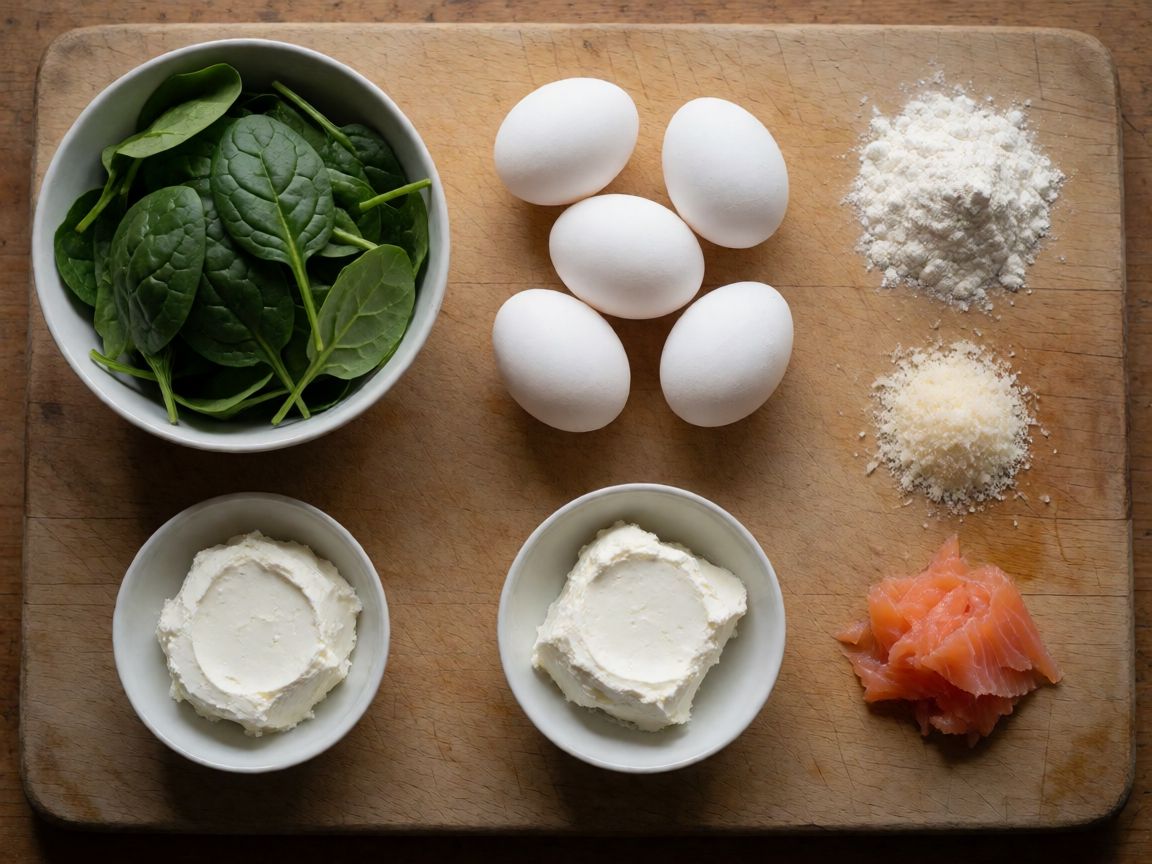
- 300 g Spinach
- 5 pcs Eggs
- 40 g Plain flour
- 40 g Parmesan
- Salt to taste
- Black pepper to taste
- 350 g Cream cheese
- 250 g Smoked salmon








Steps
In a blender, combine the spinach and eggs and blend well until smooth.
Add the flour, parmesan, a pinch of salt and pepper, and blend again until the mixture is smooth and even.
Pour the batter onto a baking tray lined with baking paper, spread it evenly and bake in a preheated oven at 180°C for 15 minutes.
15 minCover the baked sponge with a second sheet of baking paper, roll it up into a roulade and leave to cool, first at room temperature and then in the fridge.
60 minUnroll the roulade over cling film, spread with the cream cheese and lay the smoked salmon on top.
Roll the roulade back up, wrap tightly in the cling film and chill in the fridge for at least 2 hours.
120 minSlice the chilled roulade and serve.
This is not a rolled omelette with salmon tucked inside — it's a savoury version of a Swiss roll. Same mechanism, different flavours: a thin sheet of batter, baked flat, rolled while still warm around a filling, then left to set in that curled shape. Here the sponge is egg and spinach instead of flour and sugar, and the filling is cream cheese and smoked salmon instead of jam. Slice it and you get a green-and-pink spiral, which is the whole point of doing it this way rather than just layering everything in a dish.
What decides whether this works is timing, not flavour. You roll the baked sheet while it's still warm, with paper inside it, before you've even added the filling. Some cooks skip this and let the sponge cool flat first, meaning to roll it later when it's filled — don't. Egg sets as it cools; a flat sheet that's gone cold and firm will crack the moment you try to bend it, because the protein has already locked into a flat shape. Rolling it warm, empty, around paper teaches the sponge to hold a curl before it's asked to do any real work.
The double cooling — room temperature, then fridge — isn't fussiness either. A hot, damp sponge going straight into a cold fridge sweats, and that sweat under cling film is what makes the surface split when you unroll it. Let it come down gently first and the roll keeps its shape without you having to think about it again.
Spinach does less than people assume. It's not there for iron or virtue — it's there for colour and a little moisture, both of which disappear into the egg once blended. If you use frozen spinach, thaw it and squeeze it properly dry first; the extra water it holds will thin the batter and the sponge won't set firm enough to roll, it'll stay closer to scrambled egg than to a sheet.
Eggs are the actual structure of this dish, not a supporting ingredient. Blending them with the spinach rather than folding chopped leaves through a batter means the mixture cooks into one even, flexible layer instead of a lumpy one with weak points where it'll tear on the roll. The flour and parmesan are both small-quantity ingredients doing specific, modest jobs: the flour mops up the extra liquid the spinach brings so you get a sheet and not a puddle, and the parmesan brings salt and a savoury edge, because egg and spinach on their own taste of not much. Some recipes push the flour up thinking more flour means a sturdier, less crack-prone roll — no, because it's the egg protein that gives flexibility, and too much flour just makes the sponge dense and a bit rubbery, which is worse for rolling, not better.
Bake it at 180°C until it stops looking wet and springs back lightly when you touch the centre — the edges pulling slightly from the paper is a good second cue. Fifteen minutes is where most domestic ovens land, but ovens lie about their own temperature more than any other appliance in the kitchen, so trust the look of the surface over the clock.
For the filling, cream cheese needs one quality above all: it has to spread cold straight from the fridge without weeping or tearing the sponge as the knife drags across it. A regular block-style cream cheese does this; a whipped or very soft one will spread more easily but sits wetter against the salmon and asks for a longer chill before slicing. Mascarpone works too, though it's softer and slower to firm up again.
Smoked salmon here wants to be sliced thin enough to drape and overlap rather than sit in a thick clump — that's about texture in the slice, not about buying the most expensive side you can find. If salmon isn't to hand or the price puts you off, smoked trout or mackerel do the same job: a cured, salted, smoked fish laid thin against a bland cheese.
When you finally slice the chilled roll, use a sharp thin knife and wipe it clean between cuts. A dirty blade drags cheese through the next cut and tears the spinach sheet with it — that ragged edge isn't the sponge's fault, it's the knife's. This is a good dish to build the day before a Sunday roast takes over your one oven: all the work is done in advance, and it sits in the fridge needing nothing from you until it's time to slice and put it on the table. Six people, as a starter, each getting two or three slices — plan the roll's width with that in mind.