
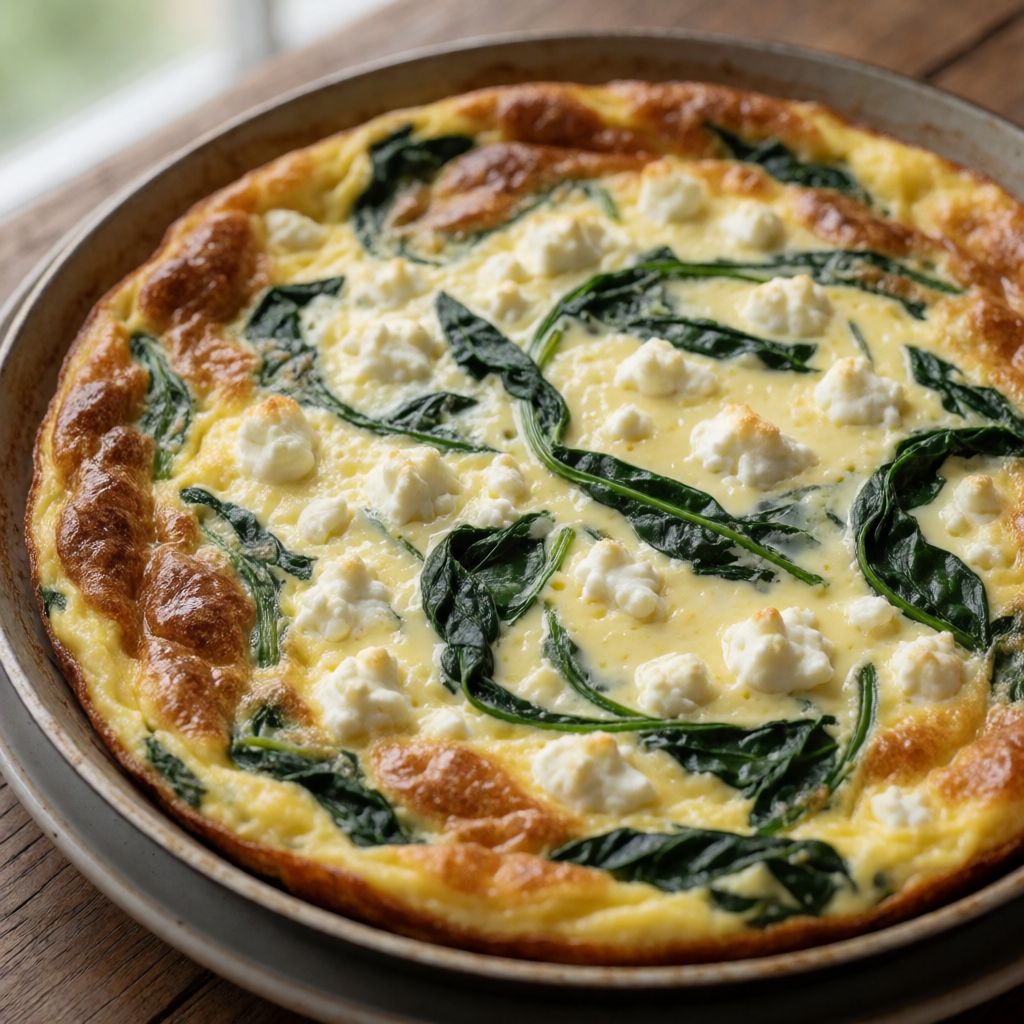
 AI photo
Baked Spinach and Feta Frittata
A baked egg frittata with spinach, feta and parmesan, cut into squares before serving.
Labels are worked out automatically from the ingredients and can be wrong. Check the packaging if it matters to you.
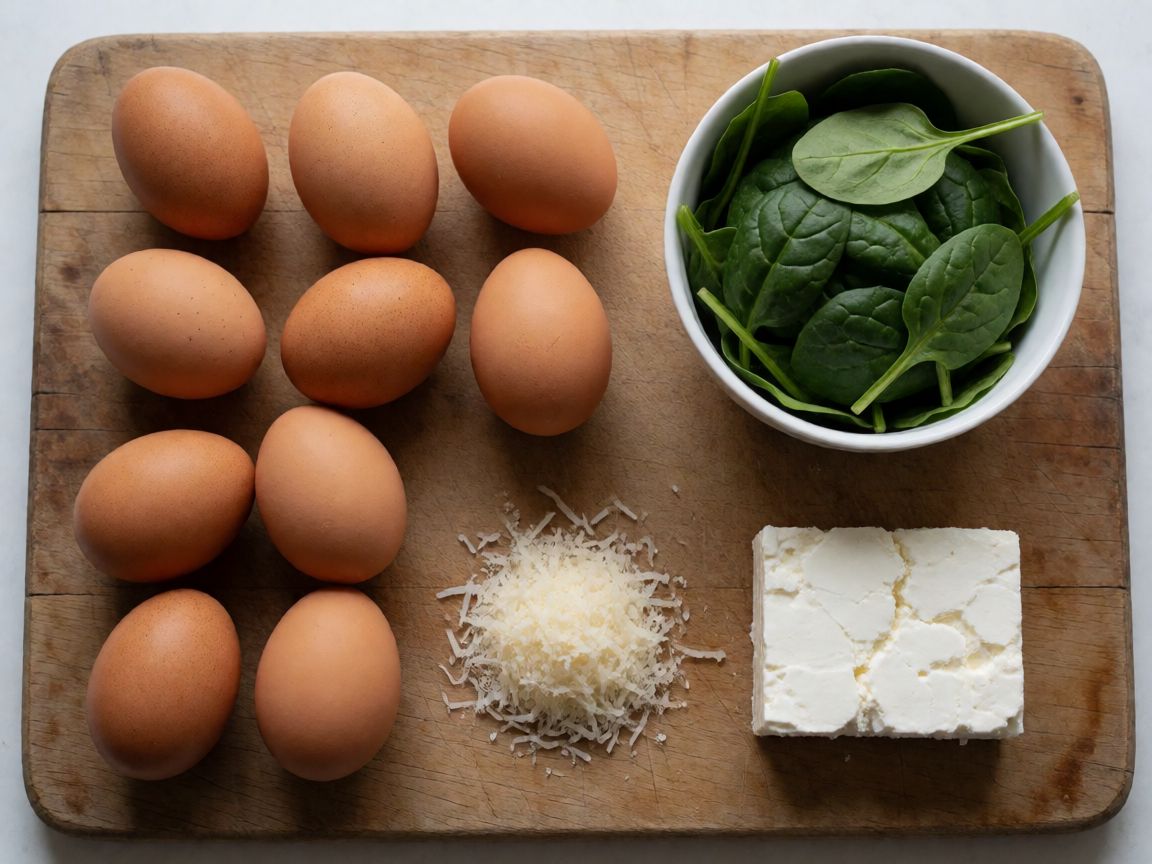
Ingredients






Steps
Wash the spinach, pick it over, and steam it in a pan with a little water until soft.
Drain the spinach well and chop it finely on a board.
Crack the eggs into a bowl, add salt, black pepper and the parmesan.
Mix well and add the cooled, chopped spinach.
Add the feta and gently fold in all the ingredients.
Spread the mixture into a tin lined with baking parchment and smooth the top.
Bake the frittata in the oven at 180°C for 40 minutes.
40 minRemove from the oven and cut into squares before serving.
A frittata is an egg dish with no pastry and no apology for it — eggs baked solid around greens and cheese, then cut into squares like a cake. Think of it as the lazy cousin of a quiche: all the custard, none of the blind-baking.
What decides whether this works is water, and only water. Spinach is almost nothing but water held together by a bit of green. If that water goes into the egg mixture unmanaged, you don't get a frittata — you get a wet layer under a dry crust, because the egg protein can't set properly while it's swimming. Every early step in this recipe — steam it, drain it, squeeze it, let it cool, then chop it — exists to solve that one problem before it reaches the bowl.
Some say you should fry a frittata in a pan on the hob, Italian-style, and flip it like an omelette. No — not here, because most flats don't have a wide, shallow pan with a lid tight enough, or the nerve for the flip. Baking it in a lined tin gives you heat from every direction at once, so the middle sets at the same pace as the edges, without you doing anything acrobatic.
180°C is not "medium oven" — it's the point where egg protein tightens slowly and evenly instead of seizing and weeping, the way it does under a hard, fast heat. That slow set is what gives you a clean cut rather than a crumbly, watery one. Forty minutes is where to start checking, not where to stop: the real test is a centre that no longer wobbles when you nudge the tin, and a knife that comes out without egg clinging to it.
Eight eggs for four people is two each — generous, because eggs here aren't flavouring, they're the structure. Everything else is suspended in them. There's no real substitute for egg in an egg dish; what you can vary is size, and a standard large egg from the supermarket is what this recipe is built around. Too small and you're short on the liquid that has to set around the spinach and cheese; the mixture ends up patchy instead of whole.
300g of raw spinach looks like a lot and cooks down to almost nothing — that's the plant giving up its water, which is the entire point of steaming it first. A pan with a splash of water and a plate on top as a makeshift lid does the job; you don't need a steamer basket to trap heat, you just need to stop it escaping too fast. Drain it properly afterwards, pressing with the back of a spoon or squeezing in your hand — don't trust gravity alone. And let it cool before it meets the eggs: hot spinach dropped into raw egg starts cooking it on contact, and you get little cooked threads through the mixture instead of a smooth set. That's patience doing real work, not ceremony.
Feta earns its place because it doesn't melt the way mozzarella or cheddar would — it softens and holds its shape, so you get little salty pockets through the bake instead of the cheese dissolving into the egg. That's also why you go easy on added salt: feta is already salted hard, by design, because it's a brined cheese made to keep. Taste before you reach for more. If you've no feta, look for anything with the same brief — salty, crumbly, doesn't ooze — a firm goat's cheese will do.
Parmesan, in a smaller amount, isn't there to be noticed on its own — it's there for the savoury depth that eggs and spinach don't have by themselves, and it helps bind the mixture a touch as it melts into the egg. Any hard, aged cheese with a strong character does the same job — pecorino, grana padano, whatever's sitting in the fridge drawer going slightly dry at the edges anyway.
The parchment lining in the tin isn't fussiness. Egg protein bonds to bare metal as it cooks, which is how you end up scraping half your frittata off the base instead of lifting it out whole. Paper solves that without you needing a tin with a non-stick coating you can trust.