
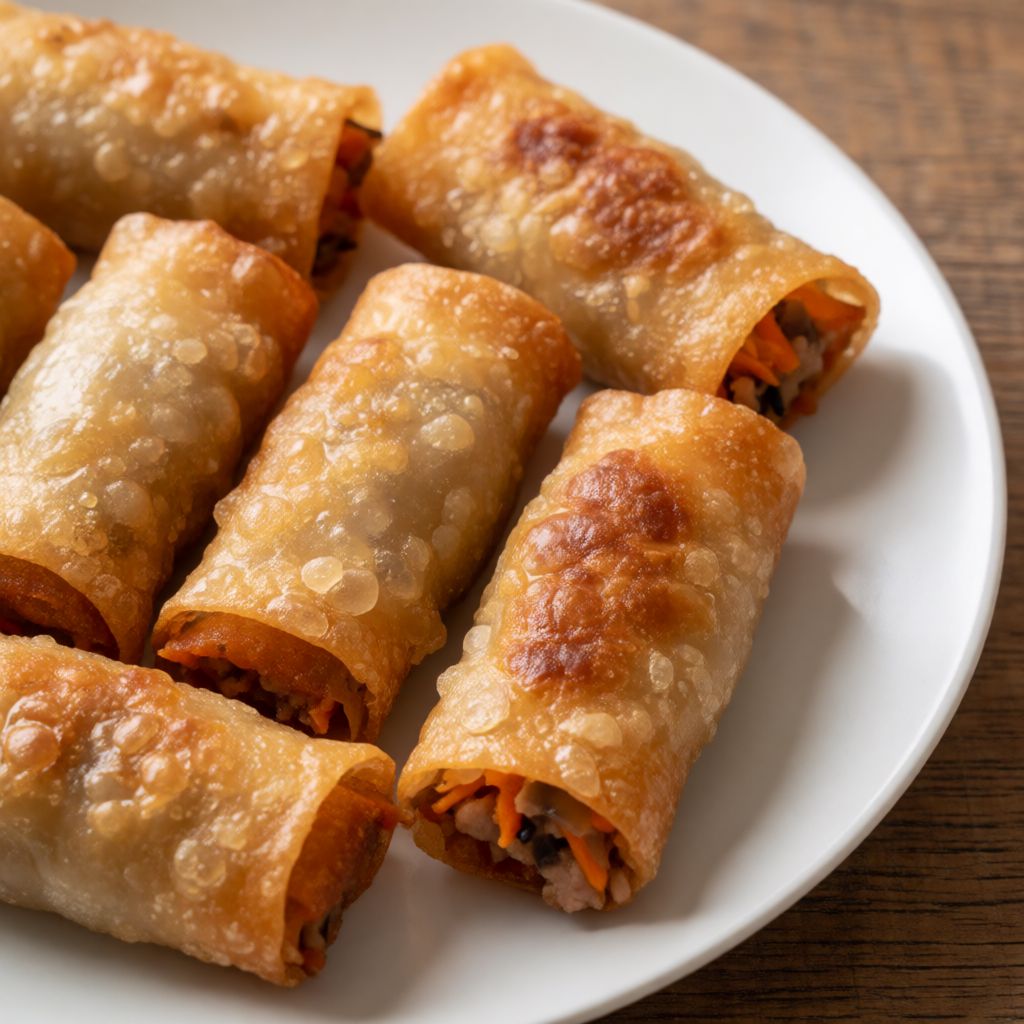
 AI photo
Crispy Spring Rolls
Crispy pork and mushroom spring rolls with glass noodles, fried until golden.
Labels are worked out automatically from the ingredients and can be wrong. Check the packaging if it matters to you.
Ingredients
- 1 pcs Onion finely chopped
- 3 clove Garlic finely chopped
- 250 g Mushrooms finely chopped
- 400 g Minced pork
- 1 pcs Carrot coarsely grated
- 1 tsp Red chilli finely chopped
- 1 tbsp Ginger finely grated
- 1 tbsp Fish sauce
- 1 tbsp Soy sauce
- 1 tsp Sugar
- 1 tsp Sesame oil or another oil for frying
- 35 g Glass noodles
- 30 pcs Spring roll wrappers
- Water for brushing
- 1 l Vegetable oil












Steps
Fry the onion, garlic and mushrooms in oil over high heat. Add the minced pork and the rest of the filling ingredients and fry until the pork is fully cooked. Season to taste with fish sauce, ginger and freshly ground pepper.
10 minPour boiling water over the glass noodles and leave for half a minute.
1 minPlace 1 tbsp of filling diagonally on a spring roll wrapper, adding a little noodle. Fold one corner over the filling, fold in the two side corners to seal the sides, then roll up the last corner.
Brush with cold water or egg white and place the spring rolls seam-side down so they hold well until frying time. Continue with the rest of the filling.
Heat the oil in a pan and check the temperature by dipping a wooden stick into the hot oil — a light sizzle around it means the oil is perfectly heated.
Fry 5-6 spring rolls at a time.
Let the spring rolls drain on kitchen paper before serving.
3 min
A spring roll is a management problem before it's a cooking one: you have wet filling, a dry wrapper, and hot oil, and your whole job is to stop those three from fighting each other. Get the balance wrong and you know it instantly — the roll weeps oil, the wrapper blisters and splits, or the filling stays cold while the outside goes the colour of a conker. None of that is bad luck. It's moisture going where you didn't want it.
The filling here is pork and mushroom doing two different jobs. The mushroom brings back some of the savoury depth that comes from slow, patient cooking — the kind you don't have time for in a 10-minute fry — so it's a shortcut to umami, not a vegetable garnish. The glass noodles are there to drink up any liquid that the pork and mushroom let go of as they cool, because a filling that's even slightly wet is the single most common reason a wrapper tears or a roll turns soggy. Get the filling properly dry and cold before you wrap it, and you've already won most of the battle.
Myth worth killing: some say spring rolls need a wok and real heat to go crisp. No — crisping is about water leaving fast enough for the surface starch to set rigid before the roll burns. A wide pan with enough oil depth does that job fine in a British kitchen; a kazan or wok just does it over a bigger area at once, which matters for a restaurant, not for you doing six at a time.
Start with the wrapper. It's rice paper or wheat-starch pastry, and its whole character is that it's basically a dry film with almost no moisture of its own — which is exactly why water is the glue, not egg white out of habit. A smear of water softens the edge just enough to bond to itself when pressed; too much water and the wrapper turns gluey and tears when you try to fold it; too little and the seam pops open in the oil, which is the fastest way to lose your filling to the pan instead of your plate. If a recipe tells you egg white works too, that's fine — it sets firmer and seals a slightly more stubborn seam — but water is cheaper and does the job for most wrappers, so there's no need to crack an egg just for this.
Onion and garlic go in first because they need the longest to lose their raw harshness, and high heat here isn't about macho cooking — it's about getting moisture out of them fast so they don't turn the pan into a stew. Mushrooms follow for the same reason: they're mostly water, and if you let them sit over a gentle heat they'll just steam in their own liquid rather than concentrate. Pushed hard and fast, that water evaporates and what's left behind is flavour, not puddle. This is also where the "high heat" instruction earns its place — not a vague "turn it up," but specifically: hot enough that liquid hisses off as it hits the pan rather than pooling.
The pork wants to be fully cooked through, obviously, but also dry — any fat or juice it releases should mostly cook off in that same hot pan, otherwise it ends up soaking the wrapper from inside out during frying, and that's your blistering, oil-weeping roll. Carrot stays coarsely grated rather than fine, because fine shreds go limp and watery almost immediately — coarse keeps a little bite and doesn't flood the mix. Ginger, chilli and garlic aren't about heat in the Scoville sense here so much as backbone; fish sauce and soy sauce are both salt-plus-depth, doing a job your Sunday roast gravy does with meat drippings — concentrated savoury liquid standing in for a long braise you don't have time for.
Glass noodles are soaked, not cooked, for half a minute in just-boiled water — any longer and they turn to glass-noodle porridge, too soft to hold shape and useless at absorbing the filling's moisture, which was their whole purpose. If you've no glass noodles to hand, any noodle that cooks to a similarly slippery, neutral state and can be chopped short will do the same absorbing job — the point is a starchy sponge, not a specific brand.
On the oil: a wooden stick with a light sizzle is a real, useful test, because it tells you the oil is hot enough to start crisping the wrapper's surface starch immediately on contact, before the roll has time to soak oil up like a sponge. Too cool, and the roll just marinates in fat rather than frying — that's where "greasy spring roll" actually comes from, not from using "too much oil." Frying 5–6 at a time isn't fussiness either — too many rolls dropped in together cool the oil down in seconds, and you're back to marinating, not frying. On a domestic hob, your pan loses heat recovery speed fast compared to a professional fryer, so working in small batches is the honest adjustment, not a compromise.
One litre of vegetable oil sounds like a lot for a flat kitchen, but shallow-frying thirty small rolls needs real depth to float them, not just coat them — and any flavourless oil with a high smoke point does the job: sunflower, groundnut, rapeseed, whatever's cheapest and doesn't smell of itself. Sesame oil in the filling is there for aroma, not frying, which is why the recipe rightly treats it as optional against "any other oil" — it's seasoning, not structure.
Last thing: patience is the actual ingredient holding this together. Rushing the filling while it's still hot into cold wrappers, or crowding the fryer because you're hungry now, is how thirty good rolls turn into ten good ones and twenty sad ones.