
 AI photo
Courgette and Seed Rolls
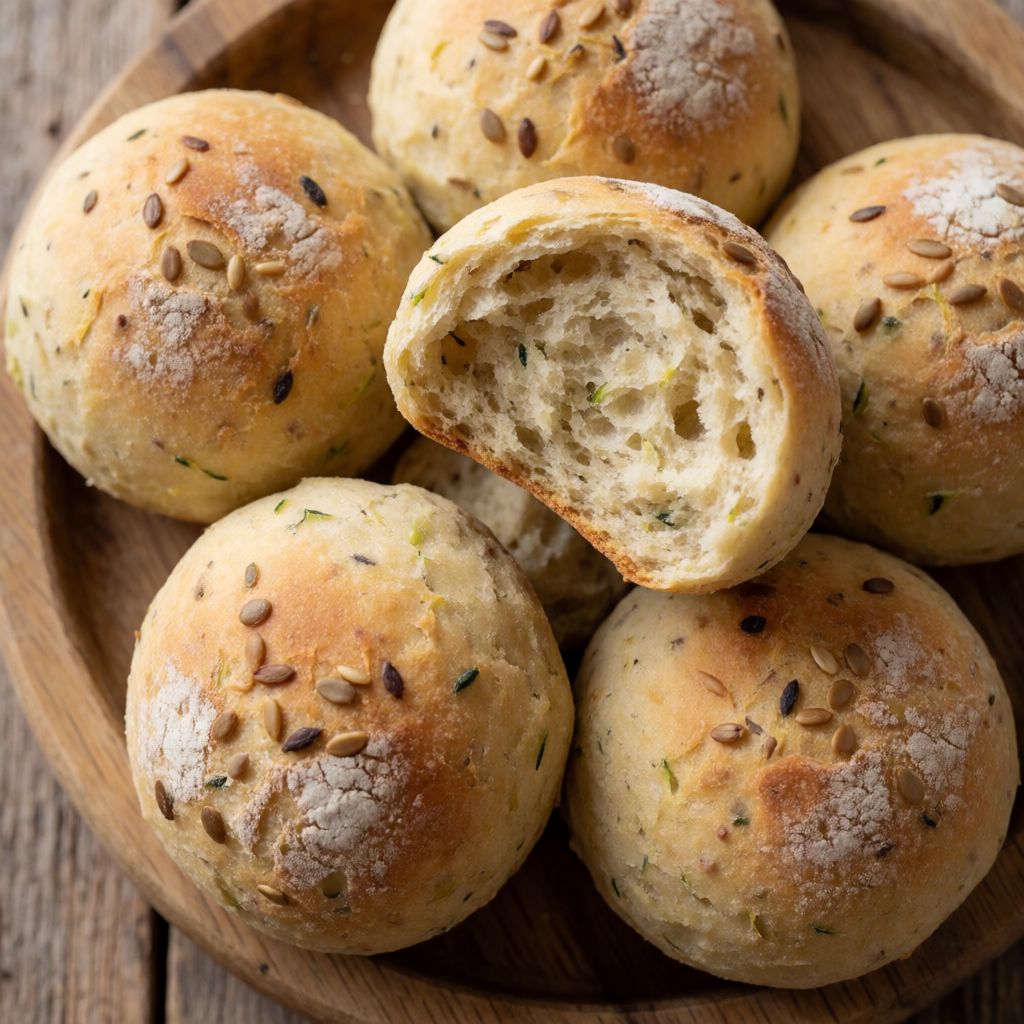
Soft rolls with grated courgette and a trio of seeds kneaded through.
Labels are worked out automatically from the ingredients and can be wrong. Check the packaging if it matters to you.
Ingredients
- 20 g Yeast
- 300 ml Water
- 1 tbsp Sugar
- 1 tsp Salt
- 100 g Wholemeal Flour
- 400 g Plain Flour
- 50 g Butter
- 1 pcs Egg
- 30 g Flax Seeds
- 30 g Sunflower Seeds
- 30 g Sesame Seeds
- 200 g Courgette coarsely grated












Steps
Dissolve the yeast in room-temperature water in a bowl, add the sugar, salt and wholemeal flour. Mix with a stand mixer.
2 minAdd the plain flour and knead the dough for 5 minutes.
5 minAdd the butter, cut into small cubes, and knead the dough for a further 5 minutes.
5 minLeave the dough to rise on the worktop for an hour and a half.
90 minTip the dough onto a lightly floured surface and make a well in the centre. Crack the egg into the well, add the courgette and seeds.
3 minUsing a dough scraper, fold the dough around the filling and chop into small pieces. Mix the dough with the filling and chop again.
5 minDivide the chopped dough into 12 rolls and place each piece on a lined baking tray.
3 minLeave the rolls to rise for 1 hour under a clean tea towel.
60 minBake in a preheated oven at 200°C (fan) for about 15-17 minutes, until golden.
16 minBefore serving, let the rolls cool slightly on a wire rack.
5 min
These are soft, savoury-leaning rolls with the courgette doing something you don't expect from a vegetable in bread: it's not flavour, it's moisture. The grated courgette, mixed in raw with egg and three kinds of seed, bleeds water slowly into the dough as it bakes, which is why the crumb stays tender rather than going dry and cottony the way a plain enriched roll can the day after. What decides whether this works is not the courgette's taste — it's barely there — but whether you squeeze or don't squeeze it before it goes in. Don't squeeze it. The water you'd press out is the water doing the work.
The second thing that decides this is the two risings, and you can't shortcut either by cranking the heat. Some say putting dough somewhere warm speeds things up usefully — no, because yeast has a ceiling: push it much past the temperature of a proofing drawer and you get a fast, boozy, uneven rise with big holes, not a better one. A worktop in an ordinary British kitchen, even a cool one, is fine. It just means the hour and a half means hour and a half, not forty minutes because you're impatient. Patience here isn't a virtue word, it's the ingredient that builds the gluten structure strong enough to hold wet grated veg and three seeds without the roll collapsing into a flat disc.
Yeast first, dissolved in water that's genuinely room temperature — not warm, not hot from the tap. Some people still believe you need to "wake up" yeast with heat; no, because yeast that's already alive in a sachet or cube doesn't need waking, and water much above hand-warm starts killing the very cells you want multiplying. Room temperature water just gives it time to get going evenly through the whole mix. If your flat runs cold in winter, give it slightly longer rather than warmer water — time is the fix, not heat.
The wholemeal flour mixed in at the start and the plain flour added after is a two-stage build, not a fussy habit. Wholemeal has bran in it, which is basically ground-up abrasive, and bran cuts gluten strands the longer it sits in a dough. Getting it in early with the yeast and letting the plain flour's cleaner gluten do the main structural work afterwards means you get the flavour and fibre of wholemeal without it sabotaging the rise. If you only have plain flour, use it for both measures — you'll lose a little nuttiness, not the roll.
Butter goes in cubed, after the first knead, not melted and not at the start. Cold-ish cube butter worked into an already-formed gluten network coats the strands rather than drowning them in fat before they've linked up — fat added too early can stop gluten developing at all, which is why very rich doughs (brioche, panettone) build structure first and enrich second. Any butter at fridge-firm-but-not-rock-hard texture will do the job; margarine works as a substitute if you need dairy-free, since what matters is fat that can be worked in piece by piece, not butter specifically.
The three seeds — flax, sunflower, sesame — aren't interchangeable with each other in function, only in total weight if you're substituting. Flax and sesame are mostly there for crunch and a faint toasted bitterness that offsets the sweetness of the dough; sunflower brings a softer bite and some fat of its own. If you're out of one, swap by weight for pumpkin seeds or poppy seeds — anything small, dry, and without a wet or strongly perfumed character. What you shouldn't swap in is anything oily and large like whole almonds; they won't distribute through the chop-and-fold step the same way and you'll get lumps instead of flecks.
The egg cracked raw into the well with the courgette is doing binding work, not enrichment — it's there so the grated vegetable and seeds don't just sit as loose debris through the dough but actually hold together once baked. One egg for this amount of flour is a small amount; don't be tempted to add a second for richness, because more egg means more liquid, and the courgette is already supplying liquid you're accounting for.
On courgette itself: coarse grating rather than fine is the right call because fine shreds release water almost instantly and go mushy before they're even in the dough; coarse strands hold their shape through the chopping step and release their moisture gradually in the oven instead, which is the slow basting effect that keeps the crumb soft. If courgette's out of season or you've only got a marrow gone slightly woody, grate it the same way but expect a bit more water — don't add it, just know the dough may feel a touch wetter at the chop stage, and that's fine, it'll bake out.
The 200°C fan bake is hot enough to set a crust fast, which matters because these rolls are shaped by hand into pieces rather than tins, and a slow oven lets shaped dough slump before it sets. Golden is the actual cue, not the clock; ovens vary enough between flats that "about 15–17 minutes" is a floor, not a verdict. Letting them sit on a rack rather than straight on a plate for those last few minutes stops steam condensing underneath and turning the base soggy — a plate with no air under it is the single easiest way to undo good crust work at the last step.