
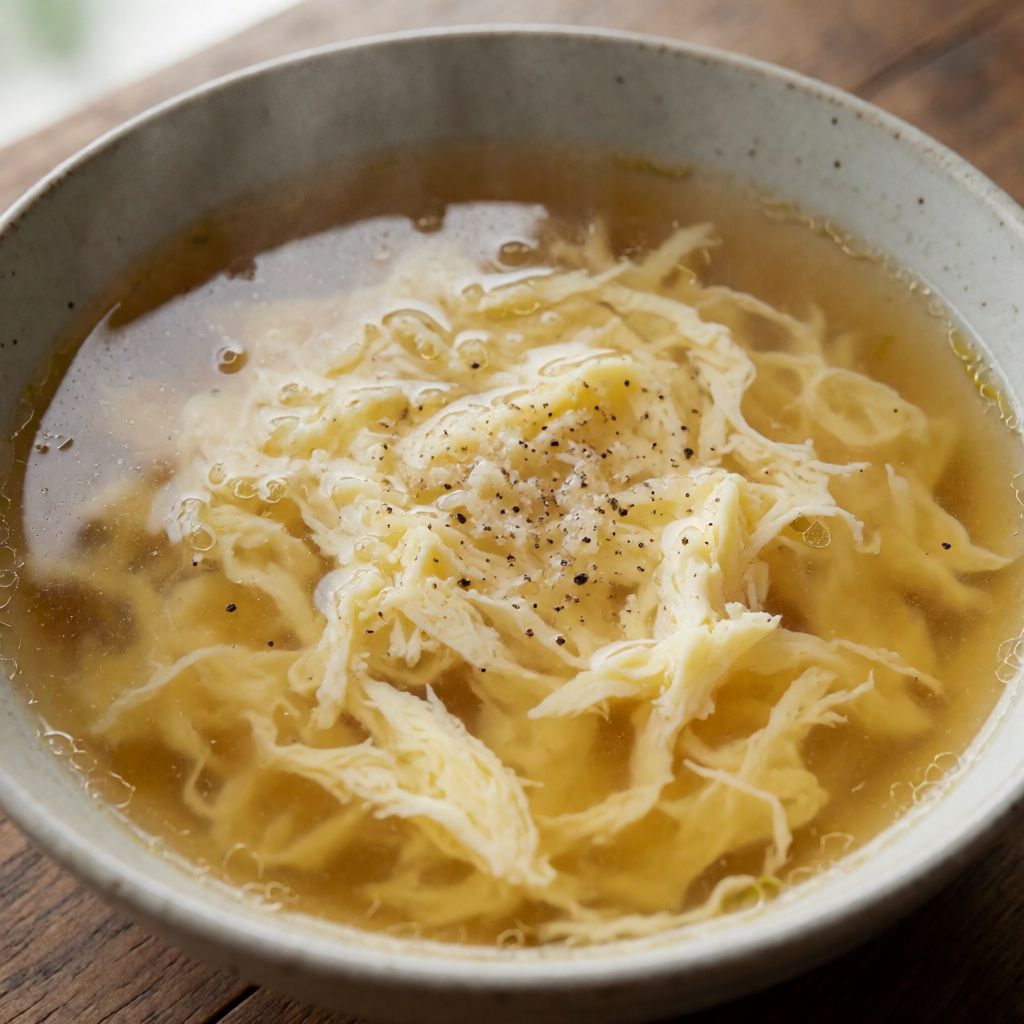
 AI photo
Roman Stracciatella Soup
A simple Roman soup of whisked egg and parmesan stirred into hot stock.
Labels are worked out automatically from the ingredients and can be wrong. Check the packaging if it matters to you.
Ingredients
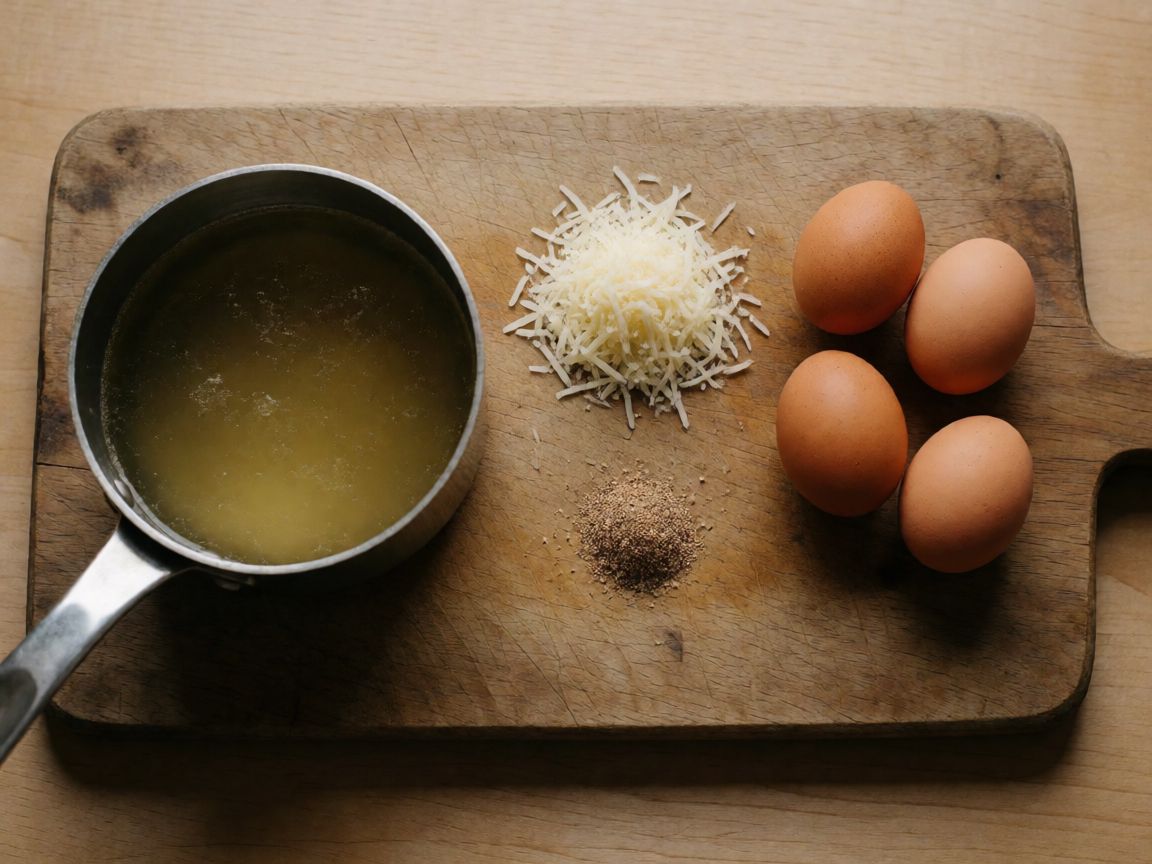
- 1 l Beef Stock
- 4 pcs Eggs
- 80 g Parmesan grated
- Nutmeg to taste
- Salt to taste
- Black Pepper to taste






Steps
Crack the eggs into a bowl, add the salt, black pepper and nutmeg. Beat with a fork, then add the grated parmesan and mix until thick and creamy.
5 minIn a saucepan, bring the beef stock almost to the boil.
Pour the egg and cheese mixture into the stock and whisk immediately.
Simmer the stracciatella for about 5 minutes, stirring occasionally, so the egg forms fine ribbons.
5 minLadle the stracciatella into bowls and, if you like, finish with freshly ground black pepper.
Stracciatella is Italian for "little rags" — not some chef's flourish, just the literal description of what happens when egg and cheese hit hot stock and torn-up ribbons form. So this soup is really one small piece of kitchen physics wearing a dinner costume.
What decides whether it works isn't the eggs or the cheese — it's the heat of the stock at the exact second you pour the egg mixture in. Too hot, full rolling boil, and the egg seizes into tight hard beads, the same rubbery curds you get in a badly made egg-drop soup. Too cool, and the egg never quite sets — it just clouds the broth into slimy strings. You want the stock trembling at the surface, not breaking into bubbles: hot enough to set the egg slowly, so it has time to spread into thin sheets before it firms, instead of clenching shut on contact.
Some say any soup with egg needs a hard boil first, the way you'd blanch vegetables. No — that's exactly the mistake that turns silk into scrambled egg. Egg proteins set fast, and past a certain heat they curl tight no matter how quickly you whisk. "Almost to the boil" isn't fussy phrasing here, it's the one number in the whole recipe that actually matters.
Parmesan isn't just flavour sitting on top — it's doing structural work. It thickens the beaten egg so it falls into the stock in sheets rather than scattering as fine threads. That extra body is what gives you ribbons wide enough to see on a spoon, instead of a broth full of grainy specks.
Stock is the measure of this soup, more than any other ingredient. It needs real body — the slight wobble you get when gelatin from bones has gone into the water, not a thin, watery liquid. A Sunday roast leaves you with beef bones most people throw out; simmer them down and you've got exactly the stock this wants, with enough substance that the egg has something to cling to rather than sinking through it. If you're working from a stock cube, use less water than the packet says and let it reduce a little on the hob first — concentrate it, because a thin stock makes the whole soup taste like egg floating in hot water.
Eggs should be at room temperature before they meet the cheese, and ideally not fridge-cold when they go into the pot. A cold egg hits hot stock and shocks into small hard curds before your whisk can spread it out — the same clumping fault as boiling the stock too hard, just caused from the other direction.
Parmesan: look for a hard, aged cheese, low in moisture — the kind that grates into fine dry crumbs, not one that balls up under the grater. True parmesan aged a couple of years is the standard, but grana padano is a fair, cheaper stand-in with a gentler bite. Pecorino romano turns up in some versions too, but it's saltier, so pull back the added salt if you use it. Avoid the pre-grated cheese sold in tubs — it's usually dusted with starch to stop it sticking together, and that same starch stops it melting smoothly into the egg, so you get little lumps instead of a creamy mixture.
Nutmeg is an old habit, not a flavour statement — a pinch to round off the raw-egg smell before it cooks, the way a splash of milk softens tea rather than announcing itself. Use a trace, grated fresh if you can; the tin stuff loses its edge fast once opened.
Season the egg mixture itself, not the finished soup. Once it's whisked into the stock as ribbons, you can't fix the seasoning evenly — salt dissolves into broth, but the egg shreds are little sealed parcels, and if they're under-seasoned they stay that way no matter what you do to the liquid around them.
And patience matters more than a stopwatch here. Those five minutes of simmering aren't about hitting a number — they're about leaving the ribbons alone long enough to actually form. Stir constantly and you tear the sheets apart before they set, and you end up with fine egg dust instead of rags. Stir it the way you'd let tea steep: a gentle pass now and then, not a continuous fight with the spoon.