
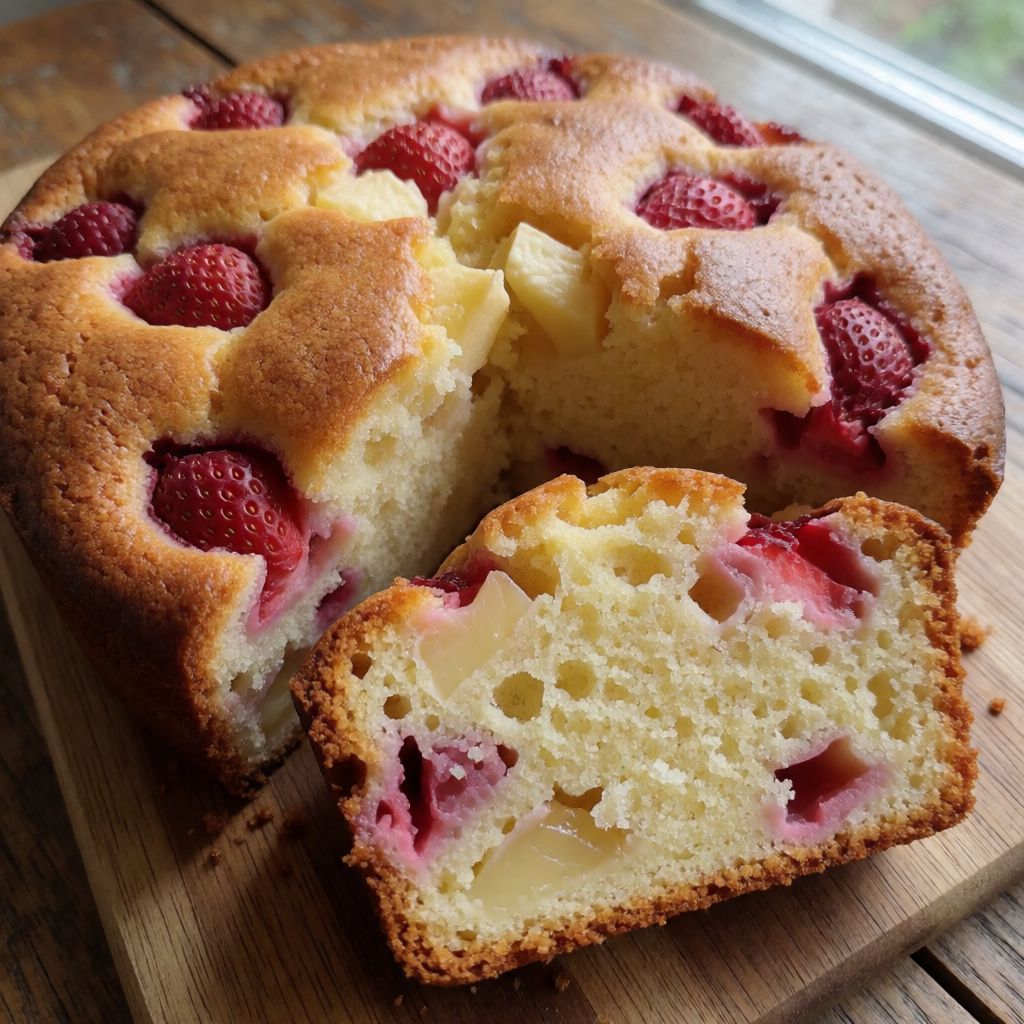
 AI photo
Strawberry and Apple Cake
A soft cake with juicy strawberries and apple, light and easy to make.
Labels are worked out automatically from the ingredients and can be wrong. Check the packaging if it matters to you.
Ingredients
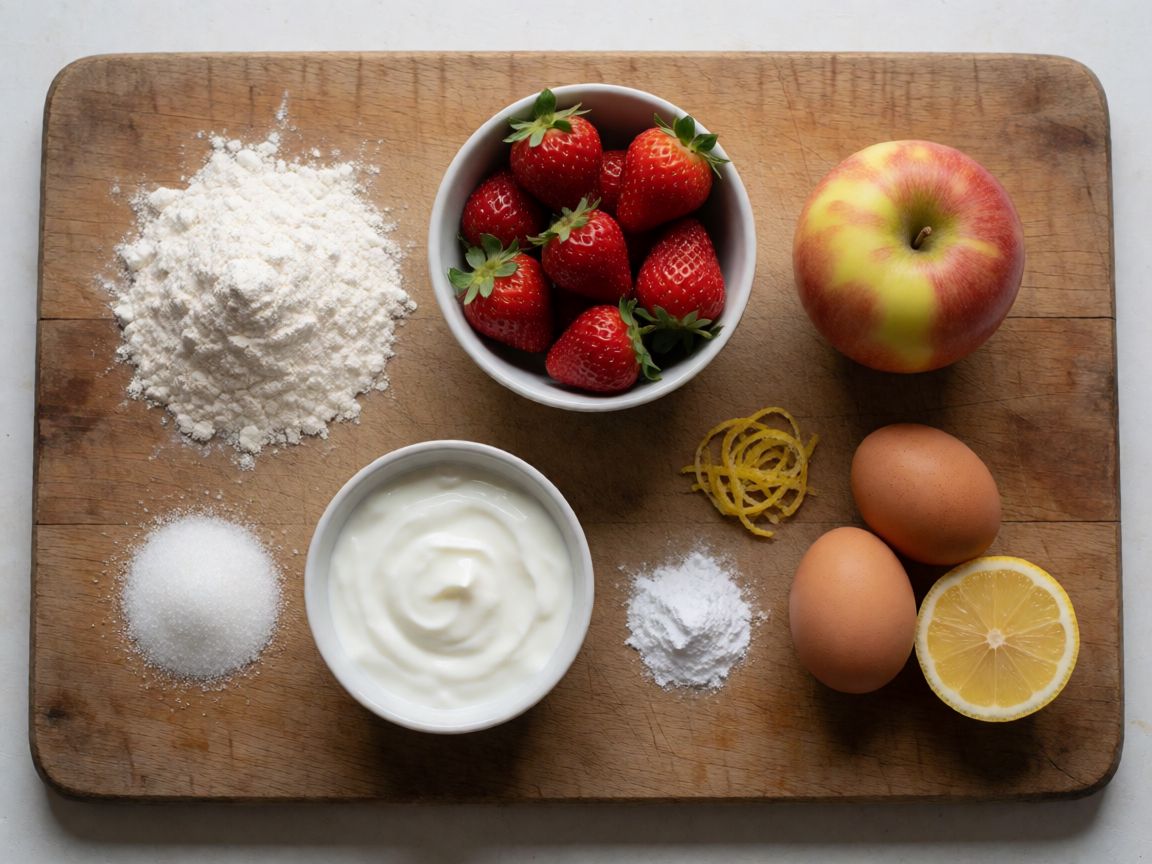
- 80 g Plain flour
- 150 g Strawberries
- 1 pcs Apple
- 140 g Caster sugar
- 125 g Yogurt
- 45 g Vegetable oil
- 2 pcs Eggs
- 1 tsp Baking powder
- 1 pinch Salt
- 1/2 pcs Lemon zest
- 1/2 pcs Lemon juice
- 1 pinch Butter for greasing








Steps
Preheat the oven to 170°C.
Grease the baking tin with butter and dust with flour, or line with baking paper.
Hull the strawberries, rinse and cut into small cubes.
Peel the apple, cut into cubes, place in a bowl and pour over the lemon juice.
In a bowl, whisk the eggs with the sugar using a mixer, add a pinch of salt and the lemon zest.
Add the vegetable oil, then the yogurt, and mix well.
Sift in the flour with the baking powder and add to the mixture, stirring until smooth.
Fold the apple cubes into the batter and mix.
Transfer the batter to the prepared tin, smooth the surface and arrange the strawberries on top.
Bake at 170°C.
35 minCheck with a toothpick to see if it's done.
Let the cake cool before serving.
This is a yogurt cake, not a sponge and not a butter cake — and that distinction decides everything about how it behaves. A sponge gets its lift from whipped egg foam holding its shape in the oven. A butter cake gets its tenderness from fat coating the flour before liquid arrives. This one gets both its moisture and most of its structure from yogurt plus a modest amount of oil, which is why it stays damp for days instead of drying out the way a Victoria sponge does by Tuesday. The baking powder does the actual rising; the eggs here are mostly for richness and a bit of binding, not for trapping air.
What decides whether it works is the apple cubes going into the batter and the strawberry cubes staying on top — not mixed in. Apple, cooked inside the crumb, softens and more or less disappears into the structure, giving moisture from the inside. Strawberry, sitting on the surface, keeps its shape, blisters a little, and gives you fruit you can actually see and bite into rather than a pink smear through grey crumb. Swap them — strawberries buried, apple on top — and you get a soggier middle and fruit on top that doesn't cook properly. The placement isn't decorative. It's physics: strawberry is mostly water and collapses fast if it sits in wet batter too long; apple holds its cube shape under heat far better.
Flour here is just structure — 80 g is deliberately light, because yogurt and oil are already doing the moisture work and too much flour would turn this dense and cottony. Plain flour, not self-raising — you want to control the rise yourself with a measured teaspoon of baking powder rather than guess what's already in the bag. If you've only got self-raising in the cupboard, drop the baking powder entirely; otherwise you'll get too much lift too fast and the top domes, cracks, and the middle lags behind.
Yogurt: any natural, unsweetened yogurt with real tang does the job — Greek-style is fine, just loosen it with a spoon of milk if it's thick enough to stand a spoon up in, since 125 g by weight should pour, not plop. Its acidity reacts with the baking powder for extra lift and it coats the flour's proteins, which is the actual reason this stays tender rather than tough. No yogurt, no problem — soured cream or even buttermilk does the same acidic, fat-light job; plain milk won't, because it has none of that tang to react with the raising agent.
Vegetable oil — the brief here is "any oil with no smell of its own," so sunflower, rapeseed, light grapeseed, whatever's cheapest and neutral. Olive oil is the wrong choice unless you actively want its flavour sitting under strawberry — it will. Oil instead of butter is also why the crumb stays soft even cold from the fridge; butter solidifies as it cools and tightens the crumb, oil stays liquid at room temperature and keeps everything supple. This is economics as much as texture: oil is cheaper, keeps longer, and needs no softening time — handy on a Sunday when the oven's already earmarked for the roast and you don't want to be waiting on butter to come to room temperature.
Sugar — caster, not granulated, because its finer crystals dissolve into the egg during whisking instead of sitting gritty. The amount here (140 g against only 150 g strawberries and one apple) tells you this cake is not meant to taste intensely of fruit; it's a tender, mildly fruited bake, with the strawberries on top doing the sharp, fresh work your palate actually registers as "fruity."
Eggs — two, whisked with the sugar until the mixture pales and thickens slightly. You're not after stiff peaks or ribbon stage like a genoise; you just want air folded in and the sugar partly dissolved before the oil goes in. Over-whip and you build a foam structure this batter isn't designed to support once oil and yogurt deflate it anyway — wasted effort.
On your own hob: no kazan, no fan-forced even heat, so 170°C means knowing your oven's quirks — if it runs hot at the back, turn the tin halfway through. The toothpick test matters more than the clock here: thirty-five minutes is where to start checking, not where to stop baking. Push it into the centre, where the apple sits thickest and is slowest to set; if it comes out with wet batter clinging, give it more time in five-minute stretches rather than guessing a new total.
Letting it cool before serving isn't fussiness — it's patience as an ingredient. Cut it warm and the crumb is still setting around the apple pockets; it'll look undercooked and feel gummy even when it's actually done. Give it the time to firm up on a rack, and the texture settles into what it's meant to be. Good with tea, which in your kitchen probably already has the milk in it before the cake arrives.