
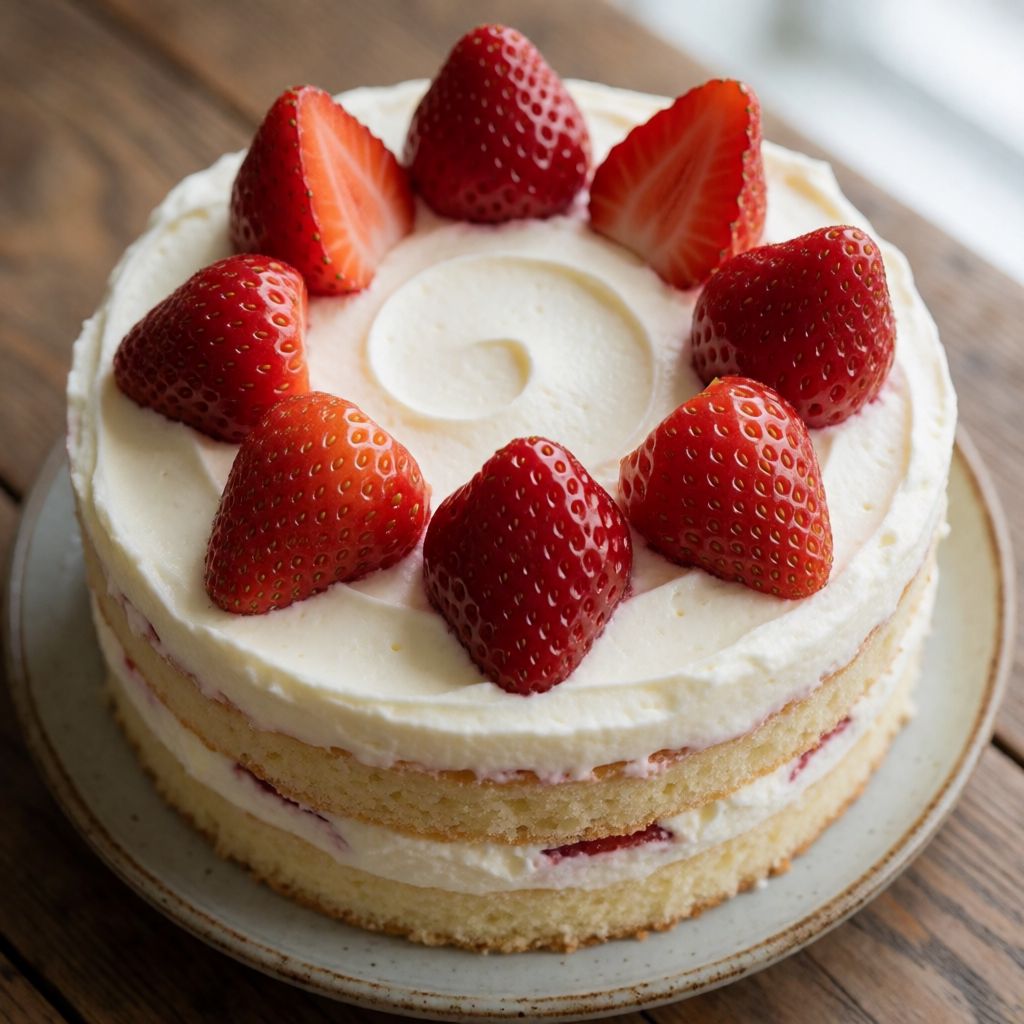
 AI photo
Cream and Strawberry Cake
A light sponge layered with whipped cream and a sweet strawberry sauce.
Labels are worked out automatically from the ingredients and can be wrong. Check the packaging if it matters to you.
Ingredients
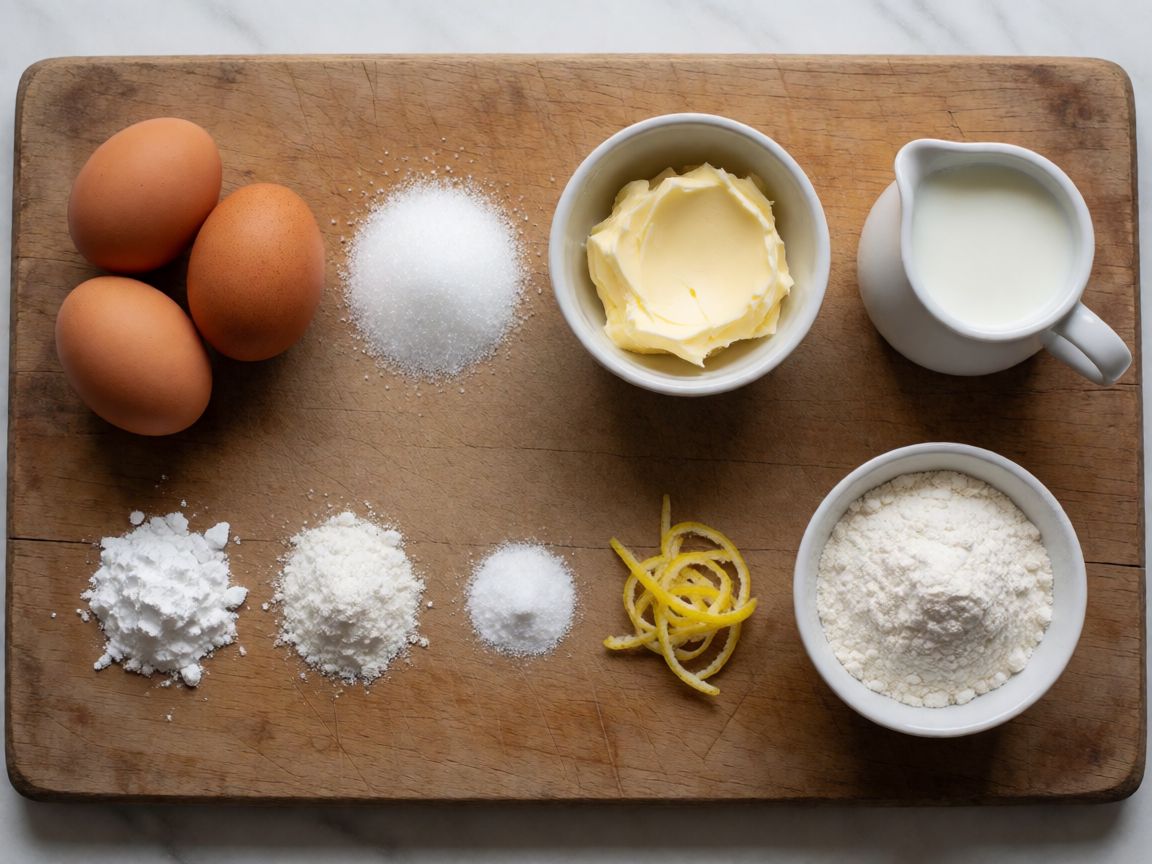
- 3 pcs Eggs
- 150 g Caster sugar
- 100 g Butter softened
- 60 ml Milk
- 120 g Potato starch
- 120 g Plain flour
- 16 g Baking powder
- 1 pcs Lemon zest
- 400 g Strawberries
- 150 g Caster sugar
- 800 ml Double cream
- 100 g Caster sugar









Steps
Beat the softened butter with the sugar until smooth, then add the eggs one at a time, mixing well.
Pour in the milk and mix with an electric whisk.
Sift in the flour, potato starch and baking powder, folding in with a spatula.
Flavour the batter with the lemon zest.
Transfer the batter into a 20 cm springform tin, greased and dusted with flour.
Bake in a preheated oven at 180°C for 30-35 minutes.
33 minLeave the sponge to cool completely.
Wash the strawberries, cut into pieces and place in a saucepan with the sugar.
Simmer the strawberries over low heat for about 10 minutes, stirring, until the sugar dissolves and the berries become very soft.
10 minRemove from the heat and blend until smooth, then let the sauce cool.
Whip the double cream with the sugar until thick, having first chilled the bowl and whisk.
Using a sharp serrated knife, slice the sponge horizontally into three even layers.
Place the first layer on a plate and brush with milk.
Spread a layer of whipped cream and cover with the second layer.
Brush the second layer with milk and spread a layer of strawberry sauce.
Cover with the third layer, brush with milk, then cover the whole cake on top and sides with whipped cream.
Pipe vertical stripes and rosettes with the remaining cream using a piping bag fitted with a star nozzle.
If you like, decorate the cake with fresh strawberries.
Chill the cake in the fridge until ready to serve.
This is a three-layer sponge cake stacked with whipped cream and a strawberry sauce running through the middle, then wrapped in more cream. What decides whether it works isn't the sponge recipe - it's whether you let two things cool down properly before you touch them with cream: the sponge, and the strawberry sauce. Both go in warm and you get a cake that slides apart on the plate, cream weeping at the base, sauce bleeding pink into white.
The starch in the sponge is doing a specific job, not just bulking out the flour. Potato starch has no gluten and breaks the protein network that plain flour builds on its own, so the crumb stays soft and a little short rather than chewy - closer to a Victoria sponge than a dense loaf cake. Some say you can just use more flour instead. No, because then you lose the tenderness that lets a serrated knife slide through three thin layers without tearing them.
Splitting one sponge into three layers rather than baking three thin ones is the practical choice in a home kitchen: one bowl, one bake, one washing-up, and you avoid the gamble of three separate tins rising unevenly. The trade-off is that your knife becomes the one tool that can ruin the cake - go in at an angle and your layers taper, so the top tips when you stack it.
Eggs here are structure, not just richness - three whole eggs beaten in one at a time with the butter and sugar are what lift this sponge without extra baking powder doing all the work. Add them too fast, all at once, and the mixture splits, curdles into little flecks of fat, and you bake air pockets of unevenness into the crumb instead of a fine one. One at a time is patience, and patience here is the ingredient, not the eggs.
Butter wants to be properly softened, not melted - melted butter won't hold air when you beat it with sugar, and that air is half of what makes the sponge light before the baking powder ever gets involved. Leave it out of the fridge an hour before you start; don't microwave it unless you want a dense disc instead of a cake.
The lemon zest is there to cut the flatness of flour and sugar, not to make a lemon cake - you want the oil from the zest, not the bitter white pith underneath, so grate lightly and stop. If you've no lemon, a few drops of vanilla does the same lifting job, just a different direction.
Double cream, chilled along with the bowl and whisk before whipping, is non-negotiable for a reason rooted in physics, not fussiness: cream whips by trapping air in fat that's still partly solid. Warm cream fat is too soft to hold a bubble, so it collapses into butter and liquid under the whisk instead of standing in peaks. In a British kitchen this is easy - ten minutes in the fridge for the bowl while you deal with something else is no hardship.
The strawberries get cooked down with sugar rather than used raw for a reason beyond flavour concentration: raw berries sitting between cream layers release juice over hours in the fridge, and that juice thins the cream and soaks the sponge into mush by the time anyone cuts a slice. Simmering, then blending, gives you a sauce with its water already driven off, so it sits in the cake instead of leaching through it. If strawberries are poor or out of season, raspberries or any berry that softens readily under heat will do the same job - the mechanism is "fruit cooked to a thick purée," not "strawberry" specifically.
Potato starch is the one ingredient worth not substituting carelessly. Cornflour behaves similarly and will work at a pinch, in the same quantity, but plain flour alone in its place gives you back the gluten the recipe was built to avoid, and the cake turns from tender to tough.
This feeds six generously, which in practical terms means: don't be tempted to skip the chilling at the end. The cream needs time in the cold to firm back up after piping, and the layers need time to settle against each other - cut it straight after assembly and the top layer slides on the cream like a car braking on ice.