
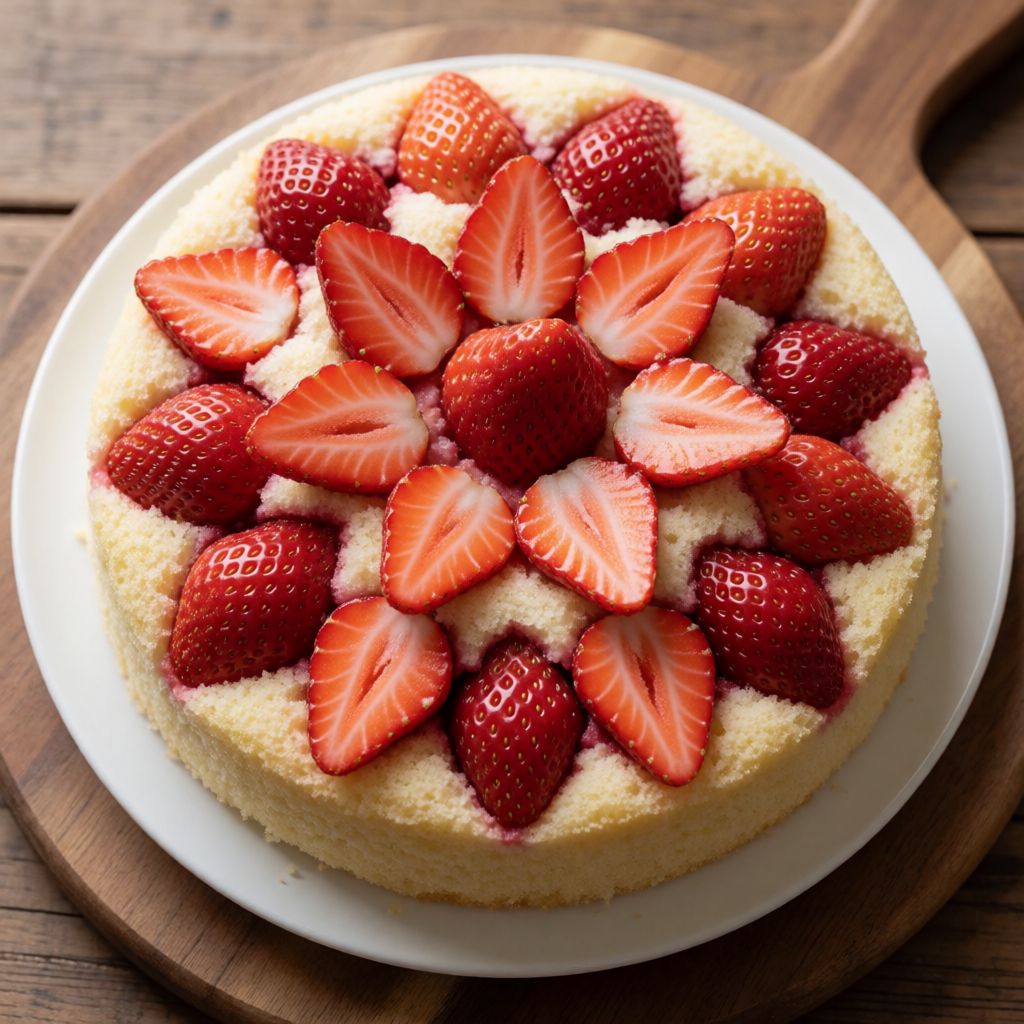
 AI photo
Strawberry Cake
A simple strawberry sponge cake, light and pink, made in a blender.
Labels are worked out automatically from the ingredients and can be wrong. Check the packaging if it matters to you.
Ingredients
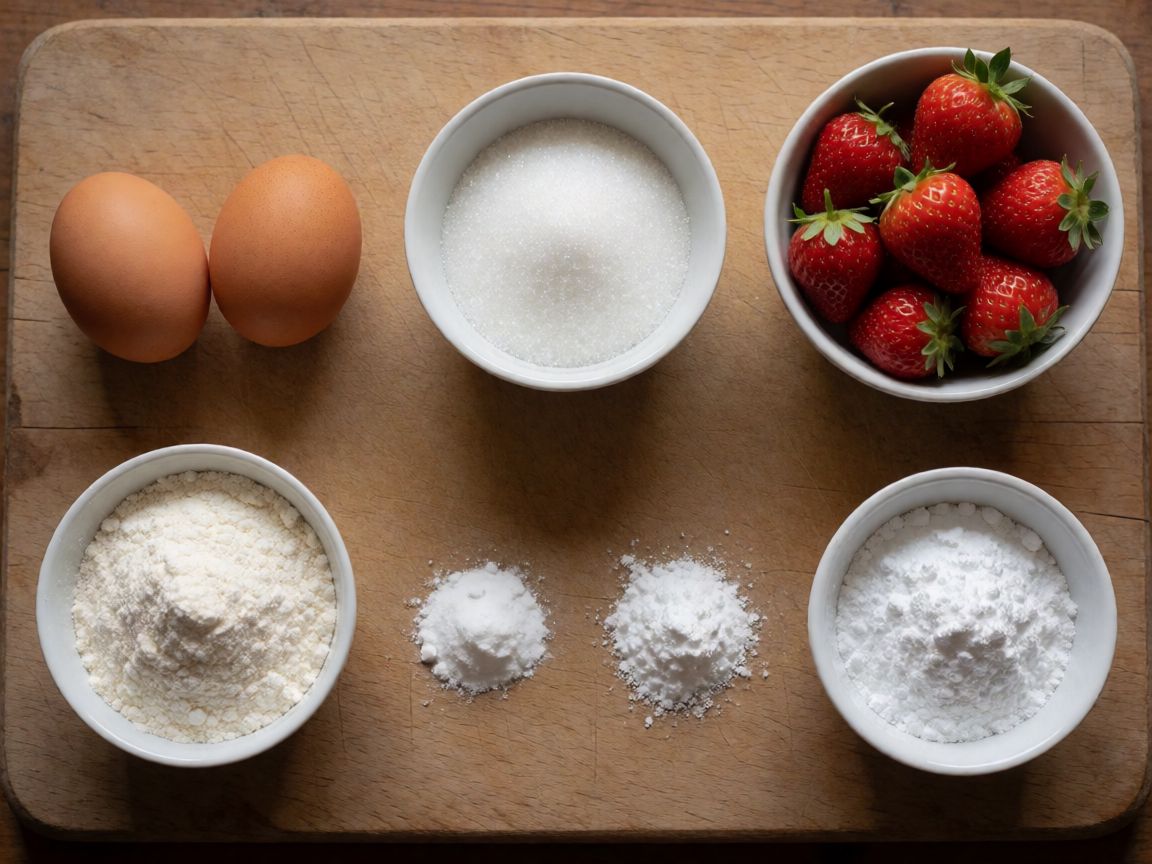
- 2 pcs Eggs
- 250 g Caster sugar
- 300 g Strawberries
- 80 g Vegetable oil
- 300 g Plain flour
- 50 g Potato starch
- 16 g Baking powder
- Icing sugar to taste






Steps
Whisk the eggs and sugar for a few seconds, then add the vegetable oil.
Sift in the flour, potato starch and baking powder. Add them gradually to the mixture.
Wash the strawberries, pat dry with a paper towel, remove the stalks and cut into pieces.
Add the strawberries to the ingredients in the blender.
Blend everything until the mixture turns pink and smooth.
Grease a 22 cm baking tin with butter or line it with baking parchment.
Pour the batter into the tin.
Bake in a fan oven preheated to 180°C for about 40 minutes.
40 minIf using a conventional oven without a fan, bake for a further 5-10 minutes.
7 minTest with a wooden skewer; if the batter sticks, bake for another 5 minutes.
5 minRemove the cake from the tin and let it cool.
Dust with icing sugar.
This is a pink sponge — not a strawberry cake with fruit sitting on top or folded in whole, but a cake where the strawberries become the cake. You blend them straight into the batter, flesh and juice and all, so the fruit isn't a filling, it's a liquid ingredient alongside the eggs and oil. That's the whole trick and the whole risk: strawberries are mostly water, and water is the enemy of rise.
What decides whether this works is the flour-to-starch-to-fruit balance, and the oven's actual behaviour, not the clock. 300 g strawberries is a lot of extra moisture for 300 g flour to absorb — the potato starch is doing real work here, not padding. It sets the crumb lighter and drier than flour alone would, because starch gels and firms without the stretchy gluten structure that flour builds, which in a wet batter like this would otherwise turn gluey. Drop the starch and swap it for more flour and you'll get a denser, slightly rubbery result — it'll still taste fine, it just won't be this cake.
Some say you should fold strawberry pieces in by hand at the end, to keep "real fruit" in the slices. No — because whole pieces sink in a thin, wet batter like this one, and you'd get a soggy red layer at the bottom and dry cake above it. Blending the fruit in means the moisture, colour and flavour spread evenly through the whole structure instead of pooling. The colour you're chasing — "the mixture turns pink" — is your actual doneness marker at the batter stage, more useful than watching a clock.
The eggs and sugar get whisked only "for a few seconds" — not whipped to ribbon stage like a Victoria sponge. This isn't that kind of cake; it doesn't rely on trapped air for its lift, it relies on the baking powder and the starch. Over-whisking here just wastes your arm and doesn't buy you anything, because the strawberry puree coming in later will knock any delicate foam back down anyway.
The vegetable oil is there for moisture that stays moist. Butter would set hard as it cools and the cake would firm up and dry slightly at the edges; oil stays liquid at room temperature, so the crumb stays soft the next day too. Use any oil with no smell of its own — sunflower, rapeseed, a neutral light olive oil — never one that tastes of itself, or you'll be eating strawberry-and-olive cake by accident.
Flour and potato starch together, sifted and added gradually: the sifting isn't fussiness, it's to stop lumps of baking powder sitting undissolved in one bite and giving you a bitter metallic patch while the rest of the slice has none. If you've no potato starch, cornflour does the same gelling job — same principle, slightly different texture, close enough. Don't replace it with more flour; you'll lose the lightness the whole method is built around.
The strawberries themselves: wash them, yes, but pat them properly dry before cutting. This isn't about appearances — a wet berry carries extra surface water into a batter that's already carrying the berries' own juice as its main liquid, and that's the water this recipe is trying to manage, not add to. Out of season, frozen strawberries work if you thaw and drain them hard first — squeeze out what you can, or you're adding meltwater on top of fruit water and the sponge turns heavy and gummy in the middle.
Baking powder at 16 g for 300 g flour is a strong dose — strawberry batter needs the extra push because it's heavier and wetter than a plain sponge mix, and a timid amount of raising agent just gives you a flat, dense disc with pink speckles in it.
On the oven: "180°C fan for about 40 minutes" is a fan-oven instruction, and the recipe itself admits a conventional oven needs longer — heat without a fan moves by convection alone and reaches the centre of a wet batter more slowly, so add that extra 5–10 minutes rather than trusting the fan-oven number on a non-fan cooker. The skewer test matters more than either number: push it into the middle, and if batter clings to it, it needs more time, full stop, regardless of what the clock says. Time here is only ever your lower bound — the skewer is the real answer. Let the cake sit and cool properly before you turn it out; a warm sponge this moist is fragile and will tear or collapse at the edges if you rush it out of the tin, and the icing sugar at the end is finishing, not disguise — dust it once the cake's fully cool or it just melts into the surface and vanishes.