
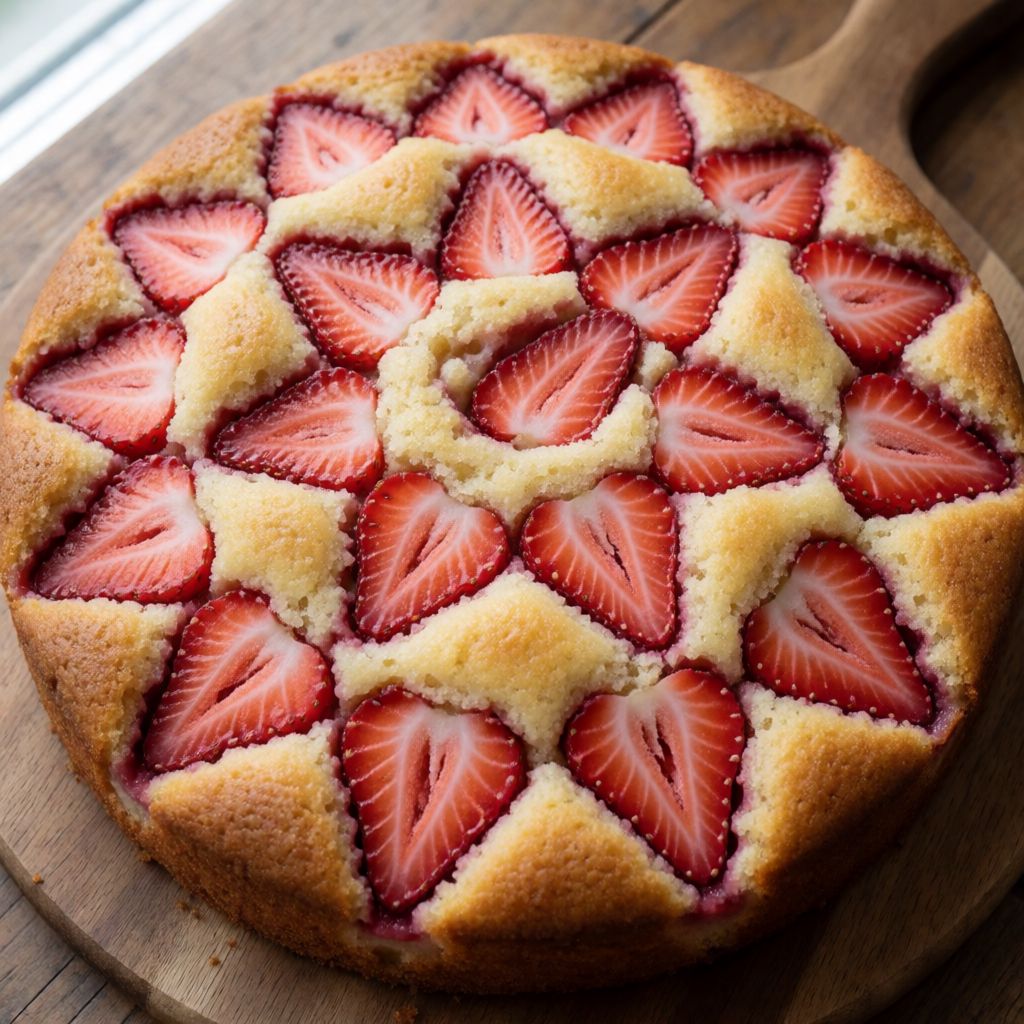
 AI photo
Strawberry Cake
A soft cake with fresh strawberries, almond flour and lemon zest.
Labels are worked out automatically from the ingredients and can be wrong. Check the packaging if it matters to you.
Ingredients
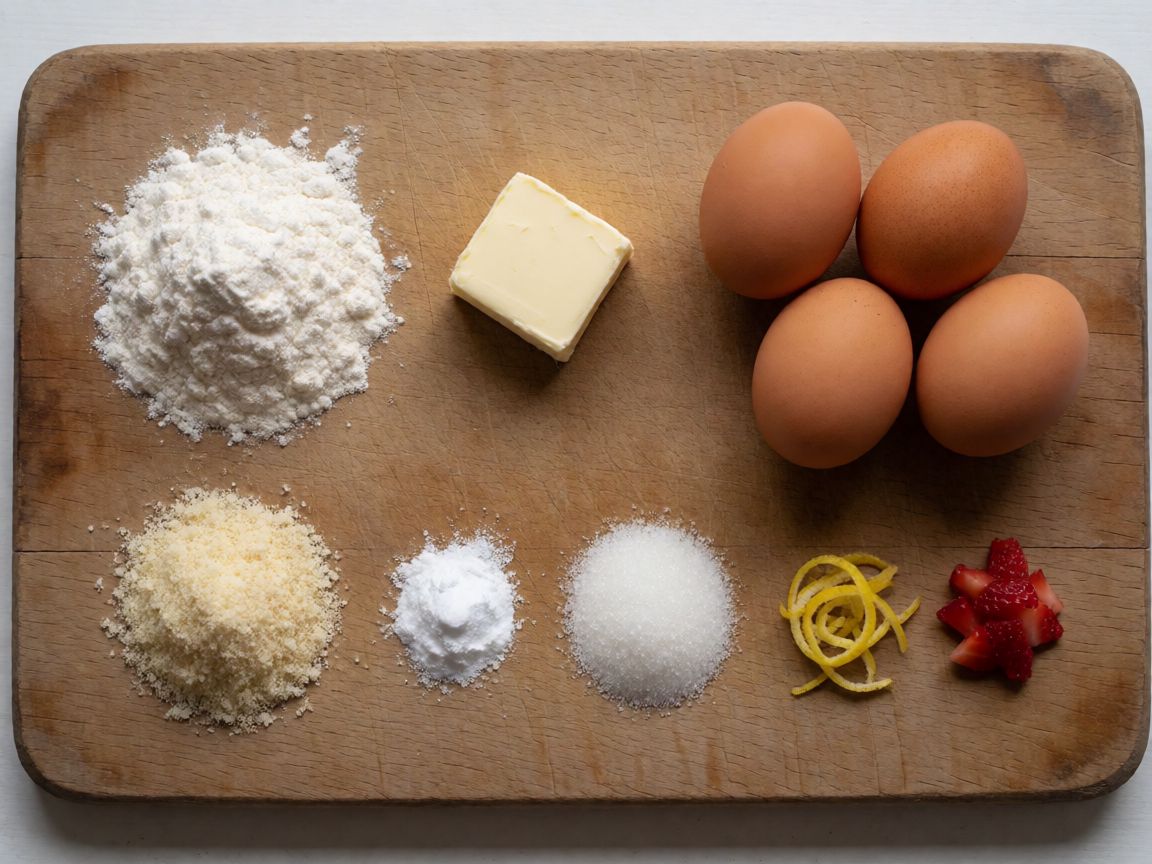
- 250 g Plain flour
- 200 g Butter
- 4 pcs Eggs
- 50 g Almond flour
- 200 g Caster sugar
- 1 pcs Baking powder
- 1 pcs Lemon zest
- 400 g Strawberries
- Strawberries for decoration
- Almonds for decoration
- 1 pcs Icing sugar a pinch, for dusting









Steps
In a bowl, whisk the eggs with the sugar until you get a smooth, pale cream; add the melted butter and keep whisking.
5 minAdd the lemon zest, mix, then gradually fold in the sifted flour, baking powder and almond flour.
Add the strawberries, washed, dried and cut into pieces, and mix the whole batter well.
Grease a 24 cm baking tin with butter, dust with flour, pour in the batter and level it with a spatula.
If you like, decorate with extra strawberries and whole almonds, and sprinkle with sugar.
Bake in a preheated fan oven at 170°C for about 55-60 minutes (or at 180°C in a conventional oven for about 60-65 minutes).
58 minCheck with a wooden skewer; because of the strawberries the cake will stay slightly moist, which is normal.
Let the cake cool, remove from the tin, dust with icing sugar and decorate with sliced strawberries.
What was changed
Both oven temperatures from the original were kept: for the fan setting and for a conventional oven.
This is a butter cake that happens to carry strawberries, not a strawberry cake that happens to have flour in it. The ratio tells you so: 250 g flour and 200 g butter against 400 g fruit means the fruit is a guest, not the host. If you try to tip that balance and throw in more berries because "more fruit, more flavour," the batter can't hold the water they release, and you get a wet lens in the middle instead of a cake.
What decides whether it works is the egg-and-sugar stage at the start. Whisking eggs with sugar until pale and thick isn't decoration — it's beating air into the mixture, and that air is most of your rise, because this cake has only a modest amount of baking powder to help. Some say you can skip straight to mixing everything together to save time — no, because without that trapped air the crumb comes out dense and short, more shortbread-with-fruit than cake.
The almond flour earns its place quietly: it has no gluten, so it doesn't fight the rise, but it does soak up moisture, which matters a great deal once 400 g of strawberries start weeping into the batter as they bake. Leave it out and you're relying on plain flour alone to mop up that juice — it can do it, just with a slightly closer, wetter crumb.
Doneness here is not a clock question. The skewer test still works, but you have to read it differently than for a plain sponge: a little moist residue is the strawberry juice talking, not raw batter. Pull it the moment you'd normally call it "nearly done" rather than "fully dry," because this one keeps cooking a touch from its own heat once it's out.
Butter: melted, not creamed, which is why the eggs do the aerating work instead. Use unsalted if you can — salted butter varies batch to batch and you don't want a stray salty note fighting the lemon zest. Any butter will do as long as it's the kind that smells of milk and nothing else; margarine will get you a cake, just not this one, because its water content throws off how the crumb sets.
Eggs: four of them is a lot of structure and a lot of air-carrying capacity for 250 g of flour — this is deliberate, since the cake needs that lift to counter the weight of the fruit. Room temperature eggs whip to a better volume than cold ones straight from the fridge; cold egg proteins are stiffer and trap less air, so if yours have been sitting in the fridge, give them ten minutes out before you start.
Flour: plain, not self-raising, because the recipe wants its own measured amount of baking powder rather than whatever a self-raising bag happens to contain. Sift it in gradually with the almond flour and raising agent together — not to look professional, but because dumping it all in at once makes you overmix trying to break up pockets, and overmixing develops gluten you don't want in a cake meant to stay tender.
Almond flour: ground almonds, essentially. Its job is fat and moisture management — it carries its own oil, so it keeps the crumb from drying out, and it has no gluten to toughen things. If you haven't got any, ground hazelnuts work on the same principle; failing that, a little extra plain flour will do the structural job but the cake loses some of that moist, nutty backbone.
Strawberries: fresh, ripe but not mushy — mushy ones have already lost structure and will collapse into pure liquid in the oven rather than holding their shape as pieces in the crumb. If strawberries are out of season or flavourless (which happens often enough in a British supermarket in winter), frozen ones work, but thaw and drain them well first — unthawed fruit chills the batter locally and slows its rise exactly where the cold fruit sits, giving you a sunken, denser patch.
Lemon zest: this isn't flavour so much as contrast — strawberries baked in sugar turn sweet and a bit flat, and the zest's sharpness is what stops the whole cake tasting one-note. Use the zest only, no pith, because the white pith is what brings bitterness, not brightness.
A note on the tin, since most UK kitchens run a fan oven: the given temperatures already account for that, so don't add the usual "fan ovens run hotter" adjustment on top — it's built in. Grease and flour the tin properly; strawberries release sugar and juice as they cook, and a sugary juice that touches bare metal is what glues a cake to its tin. Butter alone sometimes isn't enough once that juice gets going — the flour dusting on top of the butter is doing real work, not just tradition for its own sake.
Patience shows up twice here, and both times people skip it. First, in the eggs-and-sugar whisking — five minutes is the lower bound, and if your cream isn't properly pale and thick yet, keep going rather than watching the clock. Second, after baking: let the cake cool properly in the tin before you try to turn it out. Hot, juice-laden crumb has no structural backbone yet; it firms up as it cools, and a cake pulled out warm will tear where the strawberries sit.