
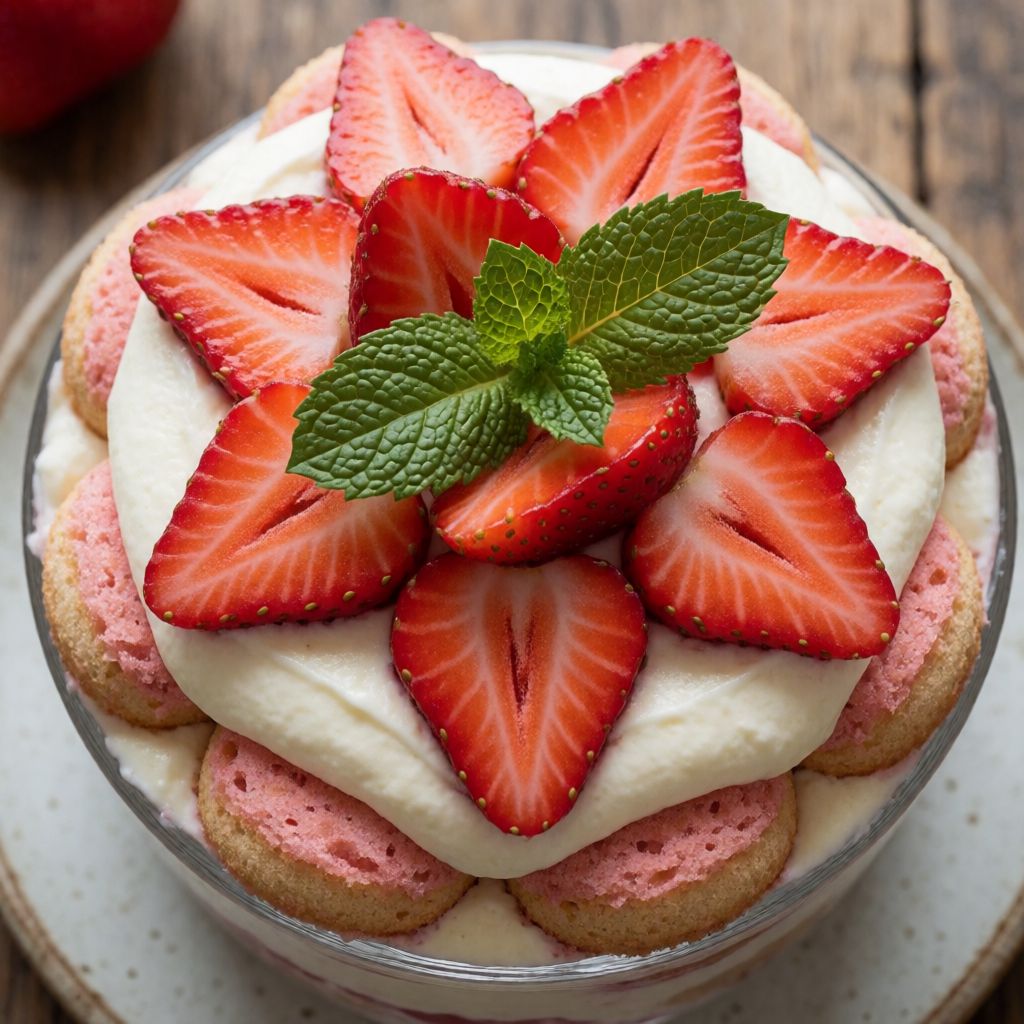
 AI photo
Strawberry Tiramisu (No Eggs, 10 Minutes)
A quick egg-free strawberry tiramisu you can put together in just ten minutes.
Labels are worked out automatically from the ingredients and can be wrong. Check the packaging if it matters to you.
Ingredients
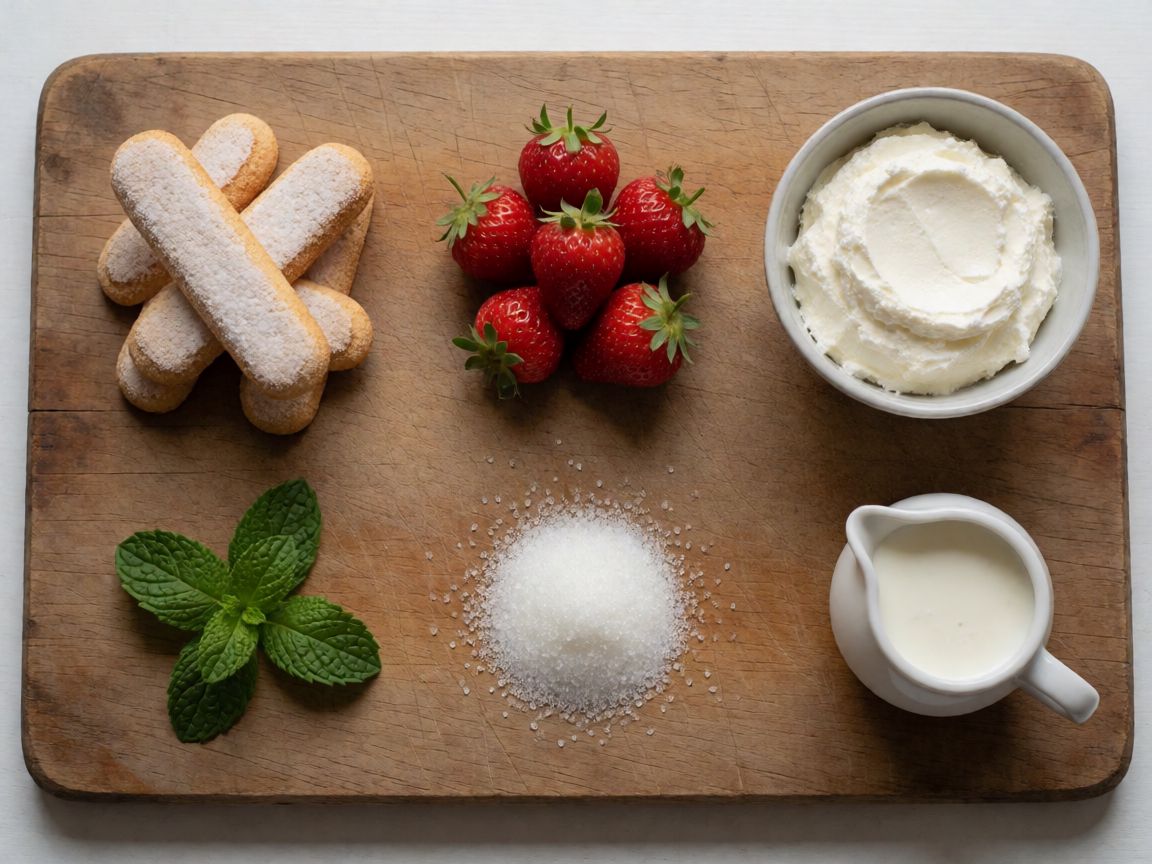
- 100 g Sponge Fingers (Savoiardi)
- 200 g Strawberries
- 180 g Caster Sugar
- 250 g Mascarpone
- 200 ml Double Cream
- Mint to taste





Steps
In a small saucepan, combine the chopped strawberries and 100g of the sugar. Stir well and cook over low heat for about 7–8 minutes.
8 minRemove from the heat, blend until smooth, then strain. Leave the sauce to cool completely.
Using a mixer, beat the mascarpone to soften it, then add the remaining sugar.
Whip the double cream until thick and fold it gently into the mascarpone with an up-and-down motion.
Spoon a first layer of the cream mixture into individual glasses or one large dish.
Dip the sponge fingers in the strawberry sauce and arrange them on top, then keep alternating layers of cream and biscuits.
Finish the dessert with pieces of fresh strawberry and a mint leaf, or an extra spoonful of strawberry sauce.
Keep in the fridge until ready to serve.
This isn't tiramisu with egg replaced by cream out of fear — it's tiramisu built on a different mechanism entirely. The classic version relies on egg yolk beaten with sugar into a custard-like base: that's what gives it body and richness. Here the job is done by mascarpone fat plus whipped double cream air. No cooking of eggs, no raw yolk sitting in a cold dessert for two days. What decides whether this works isn't the strawberries, pretty as they are — it's whether the biscuit layer is wet enough to soften but not so wet it collapses into paste, and whether the cream keeps its air through folding and chilling.
The strawberry sauce is the one place real cooking happens, and the mechanism is simple osmosis: sugar pulls water out of the strawberry cells, the mixture loosens, then reduces and thickens as that water evaporates on low heat. Low heat matters here for a boring but real reason — in a thin domestic saucepan, sugar catches at the edges where the metal is hottest first, and once it starts to caramelise unevenly you get bitter specks through a dessert that's supposed to taste of fruit, not scorched sugar. You're not looking for jam-set. You want a sauce that drips slowly off the spoon rather than running — strawberries collapsed, not reduced to syrup.
Sponge fingers (savoiardi) are built for exactly this job — they're an egg-leavened, deliberately dry biscuit, baked to have enough structure to survive a dip in liquid without turning to mush, unlike ordinary sponge cake, which collapses the moment it meets moisture. If you can't get savoiardi, look for anything dry, slightly crisp, with an open crumb that can soak and still hold a shape — a plain rusk-type biscuit works better than a soft cake ever will. Dip them quickly in the cooled strawberry sauce; the outside should darken and soften while the centre keeps a trace of resistance. Linger too long and the biscuit falls apart in your hand before it even reaches the glass.
Strawberries: ripe, soft, slightly overripe ones are actually better here than the perfect unblemished punnet, because what you want is maximum juice release, and overripe fruit gives it up fastest. Out of season, frozen strawberries work fine for the sauce — they've already been through a freeze-thaw that ruptures the cell walls for you, so the sugar draws out juice even faster. Save your firmest, prettiest fresh strawberries for the garnish on top, where only looks matter.
Caster sugar is chosen for how fast it dissolves — finer crystals mean less time cooking before the strawberries break down, and less time means less chance of scorching. Granulated will work, it just asks for a bit more patience and stirring. The sugar is split for a reason: half goes into the fruit to pull out juice and sweeten the sauce, half goes into the mascarpone to sweeten the cream layer — different jobs, so don't try to do it all in one pot.
Mascarpone needs softening before anything else touches it, because cold mascarpone straight from the fridge is stiff and will trap the sugar in lumps rather than dissolving it smoothly. A minute with a mixer on its own, before the sugar goes in, saves you from picking grit out of a finished dessert. If mascarpone isn't available or is expensive where you are, a thick cream cheese loosened with a spoonful of double cream gets you close, though it will taste sharper and less milky — mascarpone, being essentially cream curdled with acid and nothing else, has almost no tang to fight against.
Double cream is doing the structural work the egg yolk used to do, so the fat content matters more than the brand: anything whippable to soft, stable peaks will hold here, which in the UK means double cream rather than single or half-fat, since those simply don't have the fat to trap air properly. Whip it until it holds its shape on the beater but stops short of looking grainy — overwhipped cream starts separating into butter and buttermilk, and once that happens folding it into the mascarpone won't fix it.
Mint at the end is garnish, not flavour — it's there for a flash of green against the pink and white, and because a bruised mint leaf dropped on top smells sweeter for the first minute than it does sitting in a bowl on the counter. If you don't have it, a few whole strawberry slices do the same visual job. None of this is a long cook — the only real patience required is afterwards, in the fridge, waiting for the thing to become what it's going to be.