
 AI photo
Savoury Struffoli
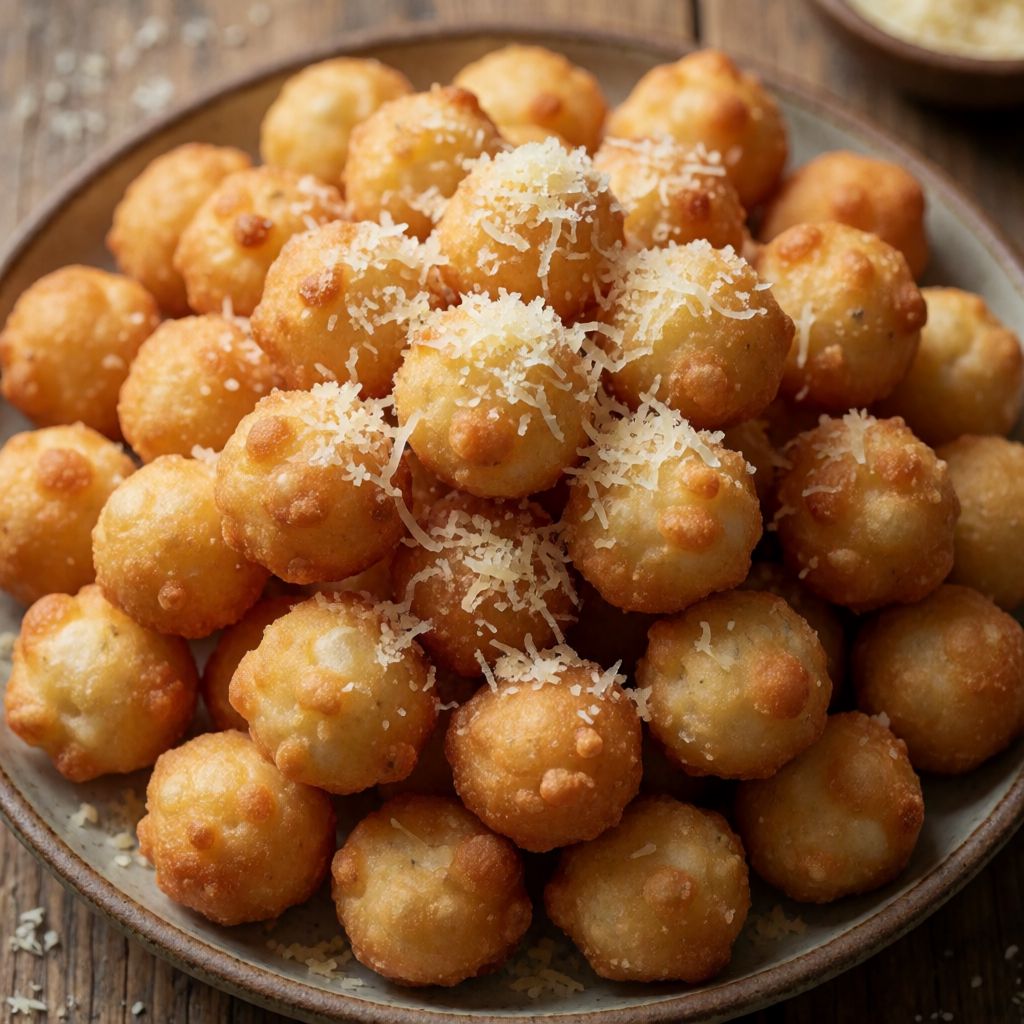
A savoury version of struffoli, little dough pieces flavoured with pecorino and black pepper, deep-fried until golden.
Labels are worked out automatically from the ingredients and can be wrong. Check the packaging if it matters to you.
Ingredients
- 250 g Plain flour
- 2 pcs Eggs
- 30 g White wine
- 60 g Lard or butter
- 100 g Pecorino grated
- Salt to taste
- Black pepper to taste
- Vegetable oil for frying






Steps
Pour the flour onto a work surface in a mound and make a well in the centre. Add the eggs and white wine.
Add the lard, a pinch of salt and the grated pecorino.
Work the dough with your fingertips, bringing all the ingredients together.
Knead the dough for a few minutes until it is smooth and even.
Divide the dough into portions and roll each into a thin rope about the width of a finger.
Cut the ropes into small pieces.
Heat plenty of oil in a pan and fry the struffoli in small batches.
Turn them often and, as soon as they are lightly golden, lift them onto kitchen paper.
Serve the struffoli sprinkled with freshly ground black pepper, pecorino and oregano.
Struffoli, in Naples, are small fried knobs of dough drenched in honey at Christmas — a dessert the Greeks probably started with loukoumades and the Neapolitans made their own with citrus and sprinkles. This version throws out the honey and the occasion. Keep the shape, the dough, the oil — swap the sugar for pecorino and black pepper, and you've gone from a once-a-year sweet to something you'd put out with drinks before Sunday lunch, the way you'd otherwise reach for crisps.
What decides whether these work isn't the recipe, it's two things happening at once: the dough has to stay short, not elastic, and the oil has to be hot enough to seal each piece the moment it goes in. Get either wrong and you don't get struffoli, you get little fried dumplings heavy with oil, sad and greasy on the kitchen paper.
Some say frying needs a thermometer or it's guesswork. No — because dough tells you itself. Drop a scrap in before you commit the batch: it should hiss straightaway and bob up within a couple of seconds. If it sits on the bottom sulking, your oil isn't ready and every piece you add after that will drink oil instead of frying in it. That's the real reason for small batches, by the way — not tidiness, but heat. Too much cold dough dropped in at once drags the oil's temperature down below the point where it can seal anything, and from there you're basically poaching your struffoli in fat.
Doneness is colour and sound, nothing else: lightly golden, and they stop hissing as hard. Time is just the fact that this takes a few minutes per batch, not a number to set a timer by.
Start with the flour — plain, not strong bread flour. You don't want gluten here; gluten is what gives bread its chew, and chew is exactly what ruins a struffolo, which should give way with a short, sandy snap, not stretch. The egg does the opposite job: it's the thing holding the dough together once the gluten isn't doing much of that work, so don't skip it hoping to save thirty grams of weight — you'll get crumbs that won't rope.
The wine earns its place by being wet without acting wet. Some think it's there purely for flavour. No — because its alcohol content means it brings moisture to the dough and then leaves fast, evaporating out in the heat of the pan before it can hydrate the flour the way water would and build toughness. It's a shortcut to a tender dough that a splash of water can't give you. If you're out of white wine, a dry cider or even a spoon of water with a squeeze of lemon will do a version of the same job, just without the aromatic lift.
Lard is there for shortness and for flavour that butter doesn't quite have — a slight savouriness, almost meaty, which is why it suits a cheese-and-pepper dough better than butter's milkiness does. It's also the historical answer: lard was the fat every Southern Italian larder had, cheap and rendered at home, long before anyone bought butter by choice. Use butter if that's what's in the fridge — the dough will be a shade more delicate, a shade less rustic, and nobody will complain.
Pecorino is doing two jobs: salt and bite. It's a hard sheep's cheese, sharper and saltier than parmesan, and that sharpness is what makes the savoury version worth making rather than just a bland fried biscuit. If pecorino isn't to hand, a well-aged parmesan works as a stand-in, criterion being: hard, grateable, assertively salty — young cheeses just melt and go gluey in hot fat instead of holding their edge.
For the oil, you want something with no voice of its own — sunflower or groundnut, anything neutral enough that it fries and gets out of the way. Olive oil will compete with the pepper and cheese for your attention, and that's not what you want in a snack this small. In a British kitchen without a deep-fat fryer, a solid-based saucepan with oil two or three fingers deep does the job fine — you don't need a kazan's volume for dough pieces the size of a fingertip. A splatter guard or just standing a little back saves you the usual hot-oil drama, and a slotted spoon plus a double layer of kitchen paper does what a proper fryer's basket and rack would.
The only patience this recipe asks for is at the stove, not before it: working in small batches, letting the oil come back up to temperature between them rather than tipping the whole lot in because you're hungry. Rush that part and you'll have done everything else right and still end up with oil-logged dough. Four people is a fair serving for this — as a nibble, not a meal, which is rather the point.