
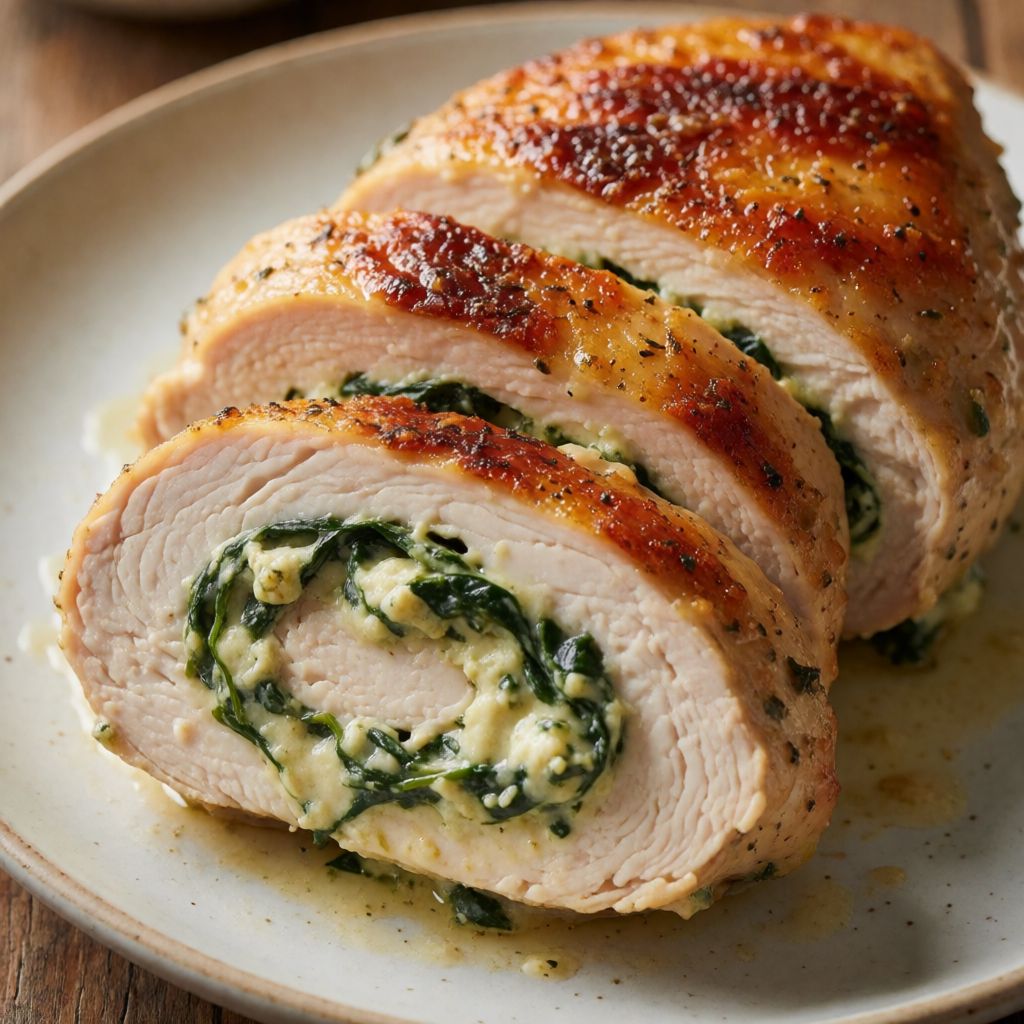
 AI photo
Stuffed Chicken Breast
A quick stuffed chicken breast filled with spinach, ricotta and parmesan, pan-seared then baked until tender.
Labels are worked out automatically from the ingredients and can be wrong. Check the packaging if it matters to you.
Ingredients
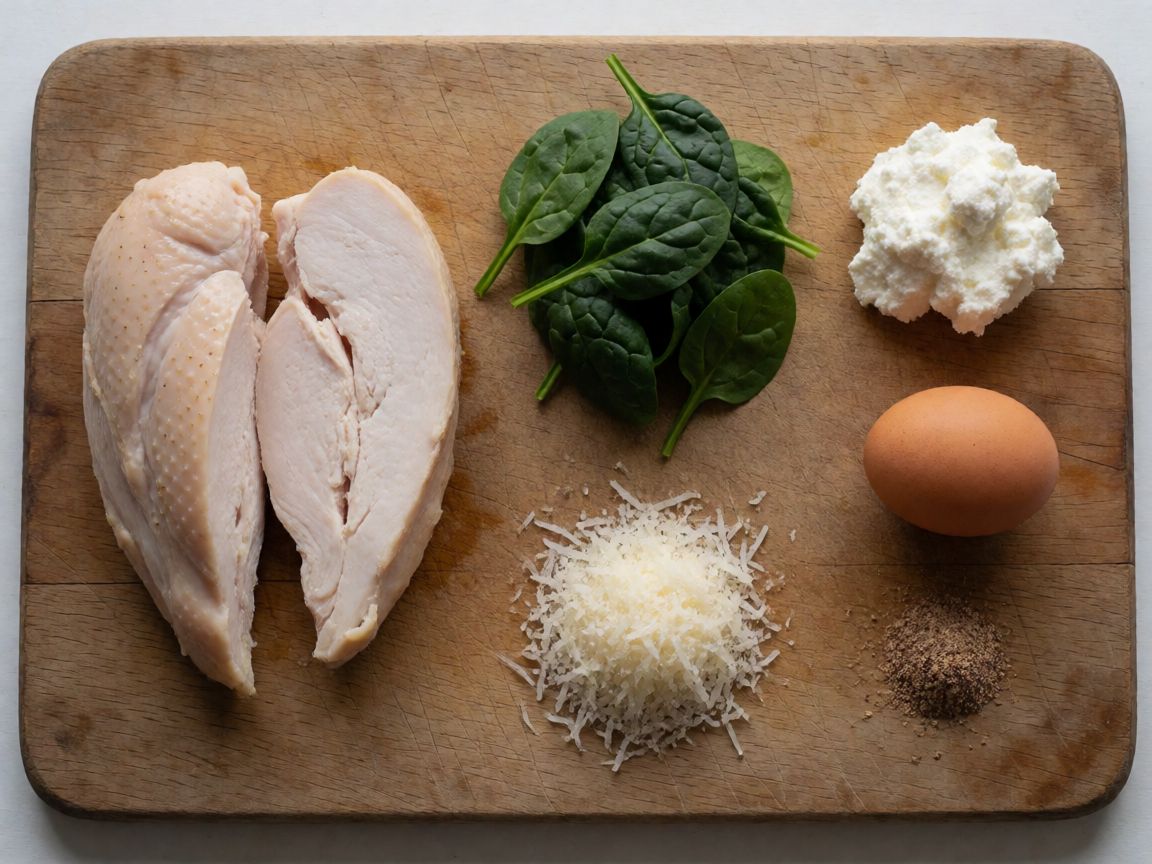
- 1 pcs Chicken Breast halved, trimmed of fat and cartilage
- 120 g Spinach
- 120 g Ricotta
- 1 pcs Egg
- 30 g Parmesan
- Nutmeg to taste
- Salt to taste
- Black Pepper to taste
- Olive Oil to taste









Steps
Combine the cooked, chopped spinach with the ricotta, then add the parmesan, salt, pepper and nutmeg, followed by the egg; mix well and transfer to a piping bag.
Cut a pocket into each chicken breast by slicing lengthways through the fillet.
Using the piping bag, fill the pockets with the stuffing and secure with toothpicks.
Heat the olive oil in a frying pan and sear the chicken breasts on both sides, seasoning with salt and pepper.
Transfer the breasts to a baking dish and bake in a fan oven at 170°C for about 15 minutes (or on steam-convection mode for 20-22 minutes).
15 minServe the chicken breast sliced, drizzled with olive oil.
This is chicken breast turned inside out: instead of meat around nothing, you get meat around a soft, savoury middle. The idea only works because chicken breast is lean — no fat to baste it, no connective tissue to melt and keep it moist — so the filling has to do the job that fat does in a leg or thigh. You're not cooking two things, you're cooking one thing with two different tolerances for heat, and that's the whole difficulty of the dish.
What decides whether it works is not the filling, it's the pocket and the clock. Cut the pocket wrong — too shallow, or cut right through to the far side — and the filling either has nowhere to sit or pours straight out the back the moment it's warm. Cut it through meat with any sinew left in and the sinew tightens unevenly as it heats, twisting the pocket shut on one side and tearing it open on the other — which is why trimming comes before cutting, not after. And chicken breast gives you almost no warning on the way to overcooked: it goes from springy and moist to tight and dry within a couple of minutes, with no fat there to hide the mistake the way it would on a thigh.
Chicken breast: buy it with the skin off if you can, since the skin won't crisp properly once it's in a filled, closed shape anyway and just gets in the way of the sear. Trim every bit of white sinew and fat before you cut the pocket — leave it, and it shrinks unevenly under heat and distorts the pocket just when you need it to hold its shape. Slice lengthways, not across, because across the grain you'd be cutting toward the hinge of the muscle and risk going straight through.
Spinach: cooked and squeezed dry is the part worth saying out loud, even though the method just says "cooked, chopped." Spinach holds water the way a sponge does, and any water left in it turns to steam inside a sealed pocket, which either thins the filling to a slurry or builds enough pressure to split your seam. Squeeze it in your fist like you're wringing a cloth before it goes anywhere near the ricotta. No fresh spinach — frozen, thawed and squeezed works at least as well, since it's been through that water-releasing process already by freezing.
Ricotta is there for softness and a mild dairy note that won't fight the spinach. The criterion for a substitute is a soft, low-moisture curd cheese — cottage cheese pressed through a sieve to break the lumps and shed the whey will do the same job, just drier and less sweet. Parmesan is doing a different job: salt and a savoury edge that lets you use less plain salt. Any hard, aged grating cheese that melts rather than turns rubbery covers it — a mature pecorino, an aged Grana, whatever's dry enough to grate.
The egg is the one ingredient here with a mechanism, not just a flavour: raw, it's liquid and binds the mix together; cooked, it sets and holds the filling as a solid piece rather than a paste that could run. Without it the filling stays loose no matter how thick the cheese, so there's no honest swap — if you've no egg, press the cheese mixture harder and drain it longer, and accept it'll be softer-set.
Nutmeg wants restraint — a scrape, not a spoonful. Past a pinch it stops reading as warmth and starts reading as medicine, and spinach and nutmeg together is old enough a pairing in Italian cooking that it's basically shorthand now, not an experiment.
For the sear, any oil with no smell of its own will carry the heat fine — a plain vegetable or sunflower oil does the job just as well as olive oil here, since at searing heat olive oil's own flavour burns off anyway. Save the olive oil's actual character — its smell, its bite — for the drizzle at the end, raw, where it's the only place in the whole dish you'll actually taste it. And take the toothpicks out before you slice and serve — obvious, but it's the step people forget once the dish looks finished and they relax too early.