
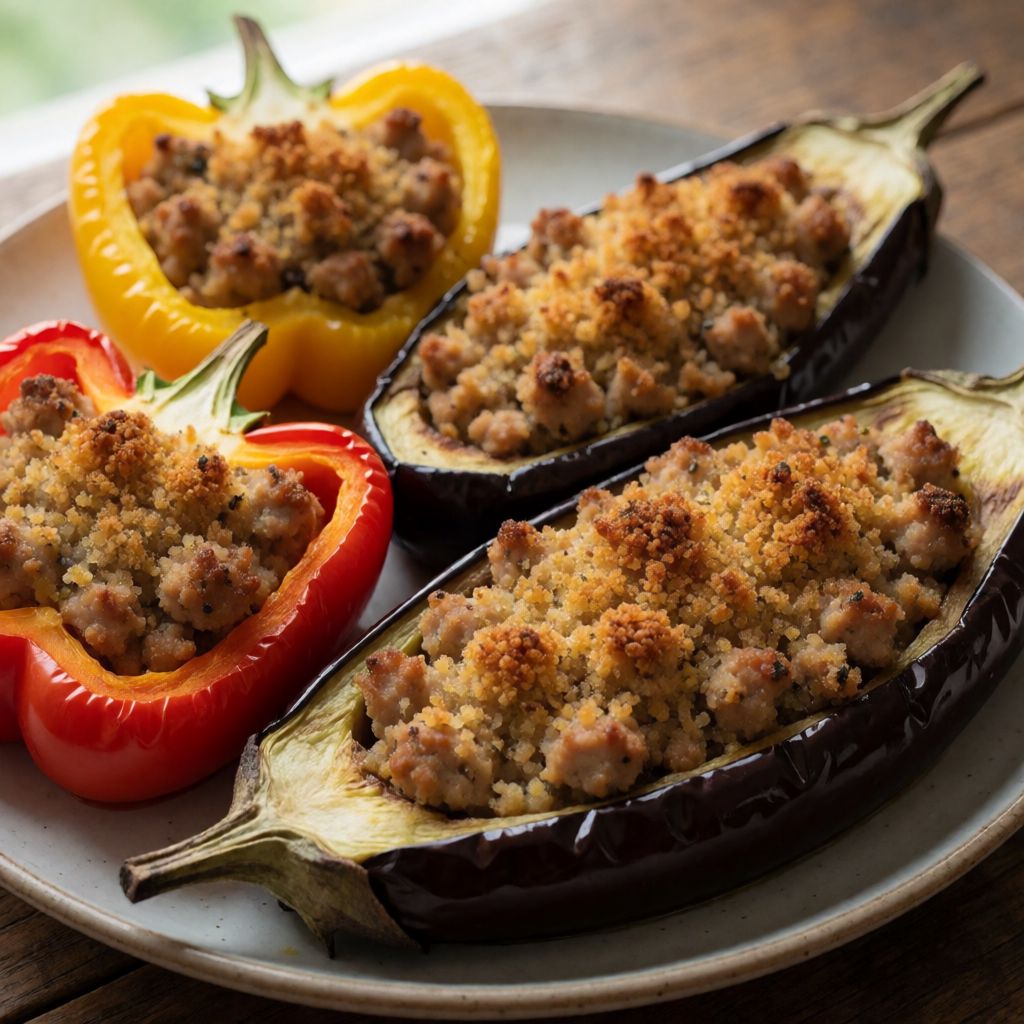
 AI photo
Stuffed Peppers and Aubergines
A colourful antipasto of peppers and aubergines filled with a savoury chicken and sausage stuffing, topped with mozzarella.
Labels are worked out automatically from the ingredients and can be wrong. Check the packaging if it matters to you.
Ingredients
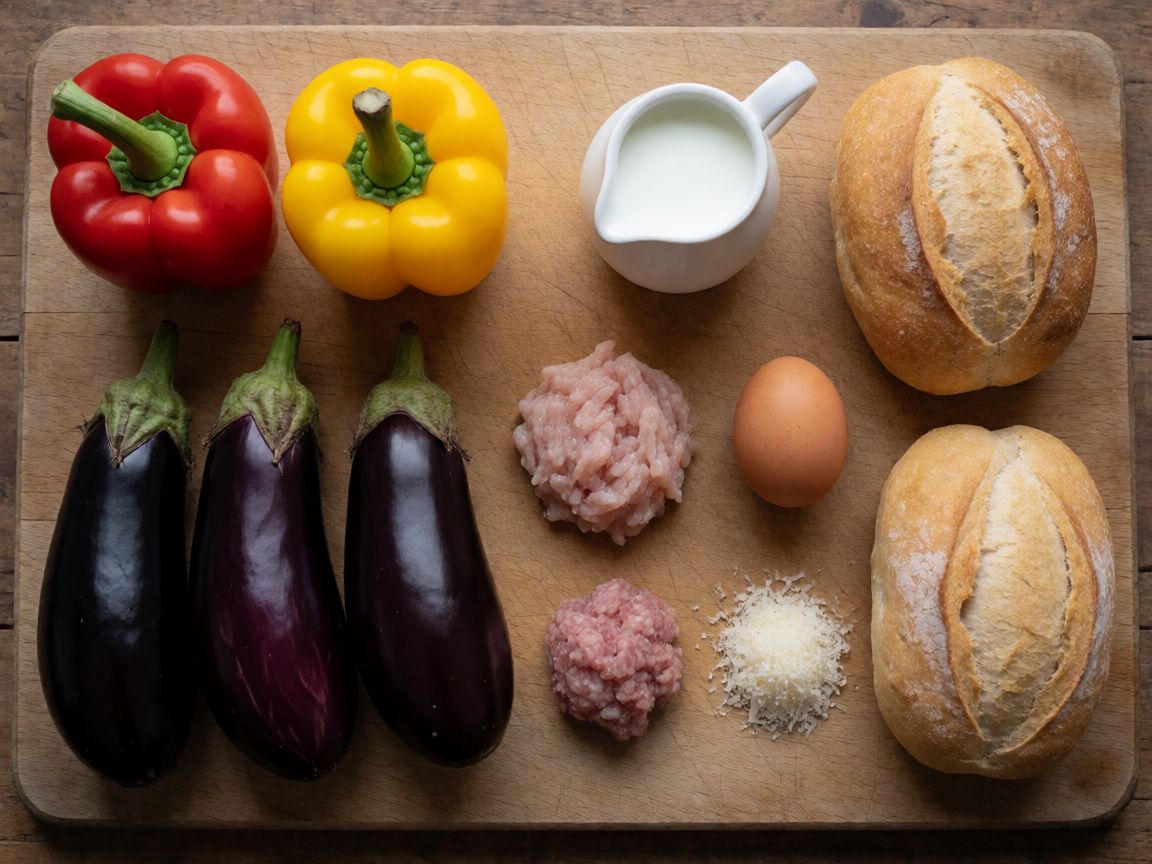
- 2 pcs Bell pepper different colours, medium-sized
- 3 pcs Aubergine
- 200 g Chicken mince
- 150 g fresh sausage, casing removed
- 1 pcs Egg
- 2 pcs sliced bread
- Milk a splash
- Parmesan to taste
- 1 pcs fior di latte mozzarella
- 2 tbsp Breadcrumbs dried
- 1 clove Garlic
- Parsley to taste
- Olive oil to taste
- Salt to taste
- Black pepper to taste














Steps
Mix the chicken mince, chopped sausage, Parmesan, parsley, egg and the bread soaked in milk.
Add the diced mozzarella, salt and black pepper to taste. Mix well and let stand for a few minutes.
Cut the peppers and aubergines in half and scoop out the insides. Dust the inside with breadcrumbs.
Fill the vegetable boats with the prepared stuffing, then top with a mixture of breadcrumbs, Parmesan and parsley.
Place the vegetables on a baking tray lined with baking paper.
Bake in an oven preheated to 180°C.
30 minCheck that the chicken mince reaches 74°C.
Check that the sausage reaches 70°C.
Serve hot with mashed potatoes or grilled vegetables.
This is two vegetables turned into little ovens inside your oven: you empty out a pepper and an aubergine, pack the hollow with a bound, cheesy meat filling, and let the walls of the vegetable do the slow work of steaming the inside while the top goes dry and gold in the air. Called antipasti on the menu only because the portion looks modest next to a Sunday joint — historically this was a way to make a small amount of meat feed more mouths by stretching it with bread, egg and cheese, not because the dish itself is light work.
What decides whether it works is that you are baking two different objects as one and asking them to finish together. Pepper flesh is thin and gives up its water fast; aubergine is thicker and holds its water stubbornly. Pick peppers with real wall thickness, not the thin-skinned ones that go limp in ten minutes, and pick aubergines heavy for their size — that weight is flesh, not seed and sponge. Put the thinner-walled vegetable toward whatever corner of your oven runs cooler, the way you'd already shuffle a roasting tray to even out the hot spot you know is there.
The filling runs on two meats doing two different jobs. Chicken mince on its own is lean to the point of dullness — no fat to carry flavour, and it dries out fast under heat because there's nothing in it to render slowly. Fresh sausage, casing removed, brings that fat along with seasoning someone else already worked out for you — garlic, fennel, pepper, whatever the butcher put in. You're not adding ten spices to the bowl; you're borrowing a seasoned fat source and letting it carry the lean meat. This is the actual reason the two are mixed rather than using one or the other: economics dressed up as a recipe, same as it's always been with forcemeats.
The egg and the milk-soaked bread are a panade, the same trick that keeps a meatball from turning to rubber. Torn bread swells with milk until it's a paste, and that paste sits between the strands of meat protein as they tighten under heat, keeping them from knotting into a dense, dry mass. Any soft white bread with no flavour of its own will do this — nothing seeded, nothing sweet, because its job is to disappear, not to announce itself.
The mozzarella goes in diced, not grated, because you want pockets of melt inside the filling rather than a layer of stretch running through it. Fior di latte is the fresh cow's-milk mozzarella — mild, high moisture, melts to a soft pool rather than a chewy skin. If you can't get it, any mild, low-salt melting cheese that holds a cube shape will stand in; pat it dry on paper first so it doesn't add its own flood to a filling that's already managing moisture.
Parmesan, in the filling and in the topping, is doing a salt-and-savour job that a bland chicken mince needs. The criterion for a substitute is simple: any hard, aged, salty cheese that grates to crumbs rather than strings when melted — grana padano, a sharp pecorino if you want more bite, even a mature cheddar in a pinch, though it'll push the flavour sweeter and nuttier than the original intends. The garlic clove wants to be minced fine, not chopped rough — one clove is small on purpose, because raw garlic in a dish this size overwhelms if it's left in pieces big enough to bite into whole.
The oven at 180°C is doing a slow, even job: it's hot enough to brown the crumb-and-parmesan topping to a crust before the filling or the vegetable walls scorch, but not so hot that the outside of a thick aubengine half colours before the centre has had time to soften. The two internal temperatures — 74°C for the chicken mince, 70°C for the sausage — aren't about taste, they're a floor under safety: ground poultry has more surface area exposed to whatever was on it before mincing, so it needs to run hotter to be sure. A probe thermometer pushed into the thickest part of the filling is the only honest way to know this; past that, go by sense — the vegetable flesh should give like a ripe fruit, not resist like raw, and the top should be the colour of toast, not pale.
Olive oil here is a finishing and anti-stick player, not a frying medium, so there's no need to reach for anything expensive — any oil with no smell of its own loud enough to fight the cheese will do. Save the good, grassy, peppery oil for a drizzle at the table if you have it; the oven doesn't need it to do its job.