
 AI photo
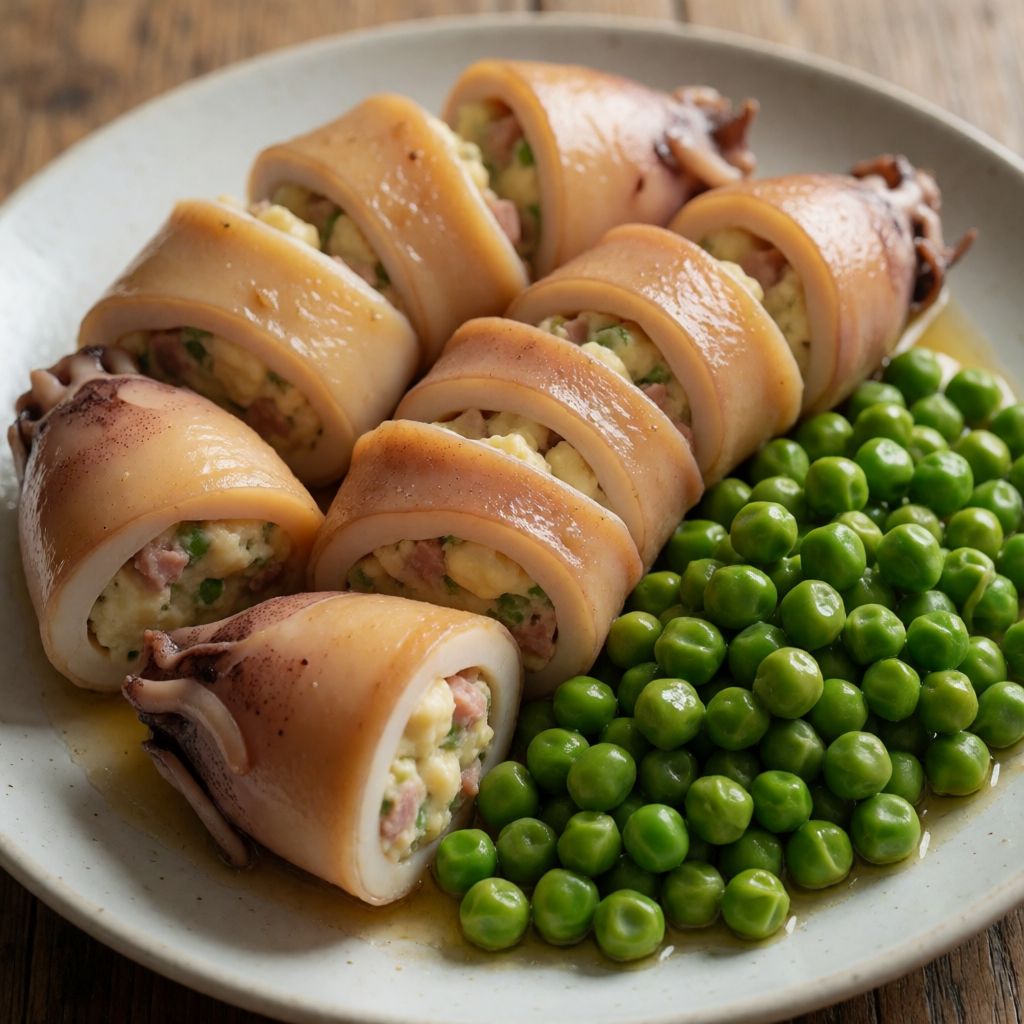
Stuffed Squid with Peas
Squid stuffed with mozzarella, ham, omelette and parsley, braised with white wine, tomato and peas.
Labels are worked out automatically from the ingredients and can be wrong. Check the packaging if it matters to you.
Ingredients
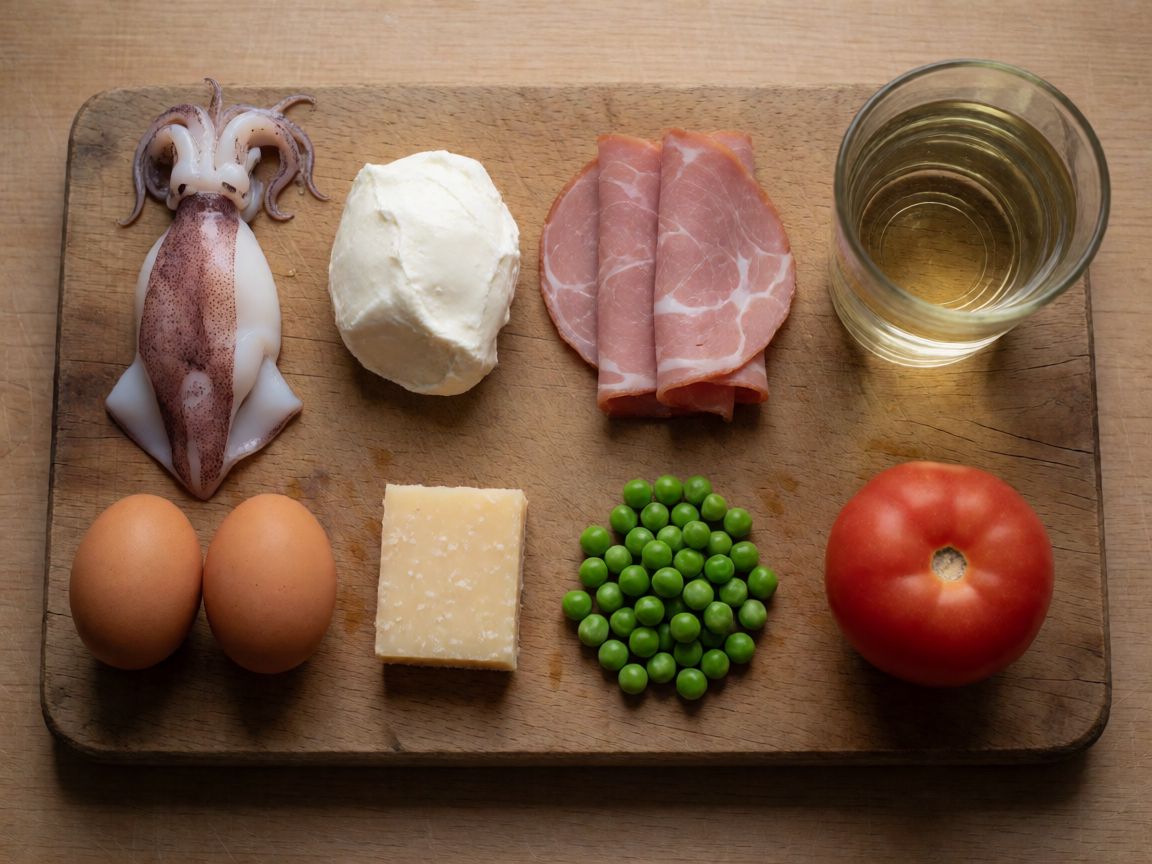
- 4 pcs Squid
- 125 g Mozzarella
- 2 pcs Ham slices
- 1 pcs Eggs
- 30 g Parmesan
- 250 g Peas frozen
- 240 ml White wine
- 2 tbsp Chopped tomato
- 1 clove Garlic
- 1 bunch Parsley to taste
- 1 pinch Salt to taste
- 1 pinch Chilli flakes to taste
- 1 tbsp Sunflower oil to taste













Steps
Make a thin omelette from the egg and Parmesan.
5 minClean the squid, removing the beak, eyes and tentacles. Stuff each squid with mozzarella, strips of ham, the omelette and parsley leaves, then close with a cocktail stick.
10 minPour oil into a pan, add chopped parsley, garlic and chilli flakes, and fry gently.
2 minAdd the squid and tentacles to the pan, fry, then pour in the white wine and let it evaporate.
5 minAdd the chopped tomato and peas, season with salt to taste and cook for about 20 minutes. Done when the thickest part reaches 63°C.
20 minAt the end, season with salt to taste once more.
1 min
Squid is a muscle that closes a door on you if you're impatient. It has two states: raw-and-tender, or cooked-to-death-and-rubbery, with a short window of nothing useful in between — this is why the dish is built the way it is, cooking the body low and slow in liquid rather than hitting it hard in a pan. You're essentially braising it, which forgives timing in a way frying never would.
What decides whether this works is the stuffing staying put. A squid pouch is slippery on the inside and shrinks as it cooks — it tightens around whatever's inside, which is exactly why you close it with a cocktail stick rather than trusting it to hold a seam shut on its own. Skip that and you'll be fishing bits of mozzarella out of the sauce.
Some say squid toughens the moment it sees heat, so you should sear it hard and fast and stop. That's true for rings on a grill, thirty seconds a side. It is not true here, because a stuffed squid is a parcel, not a ring — the filling needs real heat to set the egg and melt the cheese, and that takes longer than a flash-fry gives you. So the method changes the rule: you go in gently, then let wine and tomato juice do slow, wet work for about twenty minutes, which is long enough to pass through the tough stage and come out the other side tender again. That's the same logic as a pot roast, just smaller and from the sea.
The squid itself is the one ingredient you can't substitute, but you can choose kindly. Buy it already cleaned if your fishmonger offers it — the tube should be opaque white to pale pink, not grey or ammonia-smelling, which is the only reliable sign of age that matters more than "fresh vs frozen." Frozen squid, properly thawed, is often better behaved than "fresh" that's sat on ice for days — the texture doesn't suffer the way it does with white fish. You want four decent-sized tubes with their tentacles kept aside, because the tentacles go into the braise too and have no stuffing duties.
Mozzarella is there to melt and bind, nothing more romantic than that — any cheese with a low, stretchy melt does the job, so a mild cheddar or a bit of taleggio works if mozzarella's not in the fridge; what you don't want is something that turns oily and separates, like a hard aged cheese on its own. Parmesan, by contrast, is in the omelette for salt and savour, not melt — a mature cheddar or pecorino covers that role fine.
The ham is a flavour layer, thin and salty, standing in for what would be a cured, fatty element in a leaner stuffing — any thinly sliced cooked or cured ham works, Parma ham if you want more punch, or leave it out and add a pinch more salt if you're avoiding pork.
Peas and frozen tomato — sorry, chopped tomato — do double duty: the peas give sweetness and a bit of bite against the softness of the squid, and the tomato gives the braise acidity and body so the sauce doesn't just taste of wine. Frozen peas are not a compromise here, they're the right choice — they're picked and frozen within hours, so they're often fresher in flavour than "fresh" peas that travelled first.
The wine's job is to deglaze and then vanish — "let it evaporate" is doing real work in the method, because wine that hasn't cooked off leaves a raw, sharp edge in the sauce. Any dry white with no noticeable sweetness will do; you're not drinking it, you're using its acid to lift browned bits off the pan.
On the garlic and chilli stage: fry them gently in oil that has no smell of its own — sunflower, groundnut, a neutral vegetable oil — so the aromatics flavour the fat rather than compete with it. Olive oil isn't wrong, it's just a different dish; its own flavour will sit on top of everything else.
Patience is the actual ingredient that makes this recipe work rather than disappoint. Twenty minutes of quiet simmering, lid on if you have one, a plate over the pan if you don't — a plate traps enough steam on a domestic hob to do the same job as a heavy lid, it just needs checking more often so it doesn't rattle itself off. Rushing the braise to save ten minutes is how you end up with squid that's cooked outside and raw-feeling at the stuffed centre, which is the one failure this whole method exists to prevent.