
 AI photo
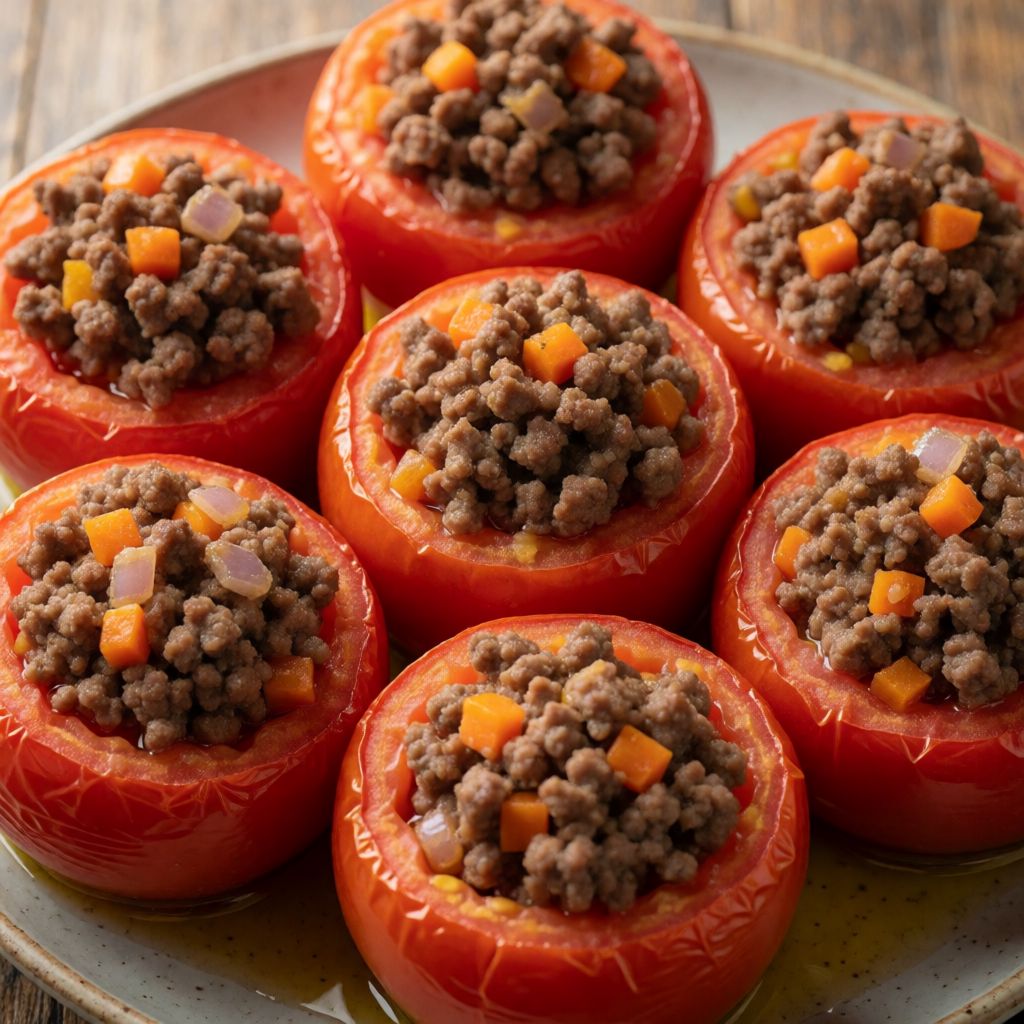
Stuffed Tomatoes with Meat
A comforting dish of tomatoes filled with a rich meat stuffing, finished with parmesan and olive oil.
Labels are worked out automatically from the ingredients and can be wrong. Check the packaging if it matters to you.
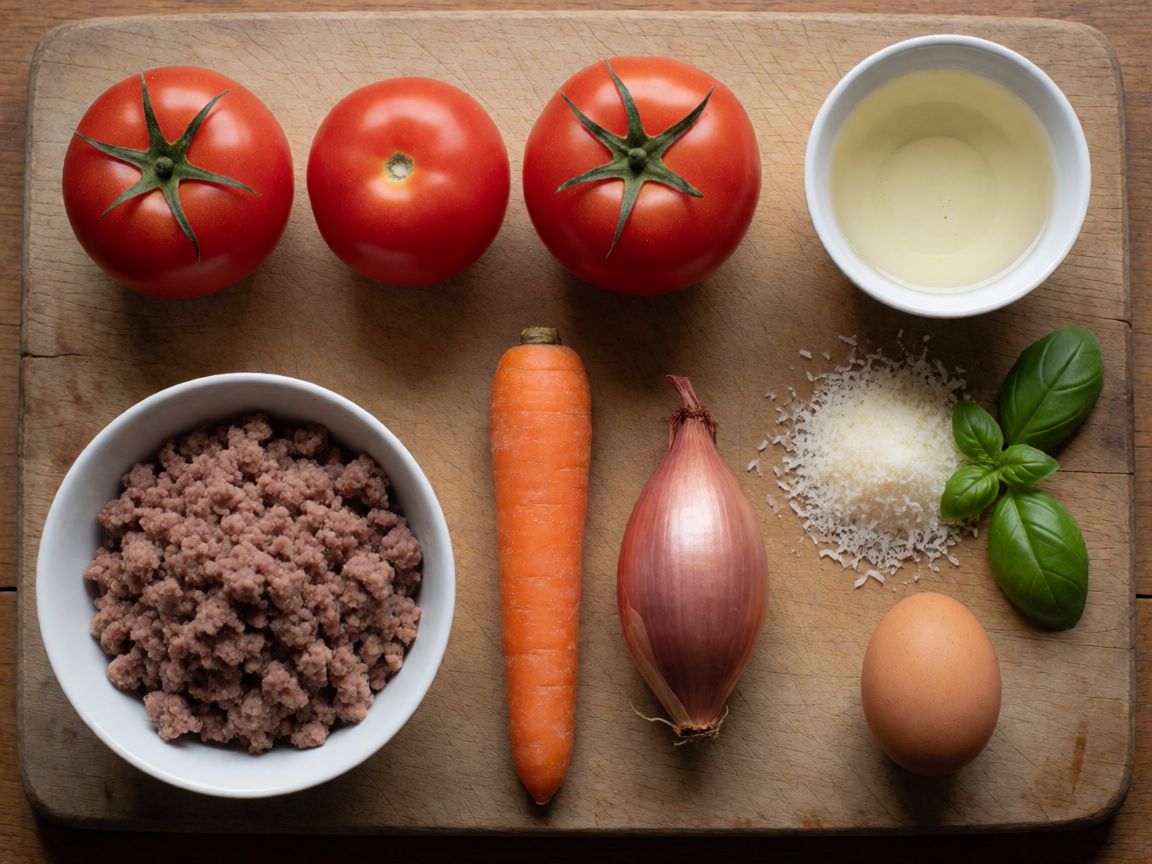
Ingredients










Steps
Wash the tomatoes, slice off the tops with a sharp knife, and scoop out the flesh with a spoon.
Finely chop the removed tomato flesh, discarding some of the seeds.
Finely chop the carrot and shallot and sauté them in olive oil.
Add the minced veal and pork and fry until browned.
Pour in the white wine and let it evaporate completely, season with salt to taste.
Add the chopped tomato flesh, reduce the heat and cook for 5-6 minutes.
6 minSeason with basil, remove from the heat and let cool.
Add the grated parmesan and egg, mix well.
Arrange the tomatoes and their tops on a baking tray lined with parchment, fill with the meat stuffing.
Sprinkle each tomato with parmesan and drizzle with olive oil.
Bake in a preheated oven at 180°C for 15-20 minutes. The filling is ready when the internal temperature reaches 71°C, checked with a food thermometer.
20 min
This is a tomato doing two jobs at once — holding the filling and becoming part of it. You cut off the top, scoop out the inside, and that same flesh goes back in later, chopped into the meat. Nothing wasted — that's kitchen arithmetic from poorer households, not a chef's flourish.
What decides whether the whole thing holds together is the tomato's wall. Too soft and ripe, and twenty minutes in the oven turns it into soup wearing a hat. Too firm and unripe, and the skin stays tough while the inside never loses its sourness. You want give under your thumb, not mush — the same test as a carrot bending instead of snapping, except here it's a tomato and your thumb instead of a knife.
Inside, the filling has its own discipline. The wine goes in to deglaze — lifting what's stuck to the pan and cutting the fat of the meat — and it has to disappear completely before the next thing goes in, or the filling stays wet and the tomato steams instead of roasting. Some say you cook wine to "burn off the alcohol" — no, a splash in a hot pan is gone in a few minutes regardless, that's not how alcohol works. You reduce it because raw wine tastes sharp and thin, and cooked down it tastes round.
Start with the meat. Veal and pork together work because one brings no fat and not much flavour, the other brings both — lean plus fat is the actual rule, not this exact pairing. If your butcher only has beef, ask for something around 20% fat; if you only have pork, make sure it isn't the leanest cut going, or the filling dries into pellets once it's been cooked twice over — once in the pan, once in the tomato.
Carrot and shallot are chopped fine, not for looks but because there's no time here to soften a rough dice — this isn't a ragù simmering for two hours, it's a few minutes of sauté before the meat goes in. Shallot rather than onion because it's sweeter and milder straight from raw, with none of the sharpness a stronger onion keeps even after frying. A mild onion works if that's what's in the fridge — just give it a minute or two longer in the pan before the meat follows.
The tomato flesh you scooped out earlier comes back in step six and does two things: it returns the moisture the meat lost while browning, and in a British kitchen it may be doing more flavour work than the shell itself. A lot of supermarket tomatoes here are bred to survive a shelf, not to taste of much. If yours taste mostly of water, those five or six minutes cooking the chopped flesh down are what concentrate whatever sugar and acid is actually in there — and a teaspoon of tomato paste stirred in alongside does no harm as backup.
Parmesan does two jobs. Inside the filling it salts and binds; sprinkled on top before baking, it browns into a loose crust that keeps the stuffing from drying out under direct oven heat — standing in for the lid you don't have, since parchment on a tray is doing the job a heavy lid would do elsewhere. Any hard, aged grating cheese works on the same criterion: salty, dry, melts into a crust rather than a puddle. Pecorino if you want it sharper, grana padano if parmesan isn't on the shelf.
Basil goes in off the heat, right as the pan comes away — not from any rule carved in stone, but because its aroma lives mostly in oils that cook off fast. Dried basil survives heat better and can go in earlier, with the pan still on; fresh basil chopped at the last second is what gives you the green top note instead of a faint memory of it.
Olive oil plays two different parts here and probably shouldn't come from the same bottle for both. For sautéing the carrot and shallot, any oil with no strong smell of its own holds up fine — sunflower, a mild rapeseed, even a basic olive oil. For drizzling raw over the stuffed tomatoes before baking, you want the opposite: something that actually tastes of something, a fruitier extra virgin, because that oil isn't cooking off — it's sitting on top, doing its work as flavour, not as fat. That's patience too, in its way: waiting to use the good bottle only where it can be tasted, not where it just gets hot.