
 AI photo
Sun-Dried Tomato, Chilli and Parmesan Bread Rolls
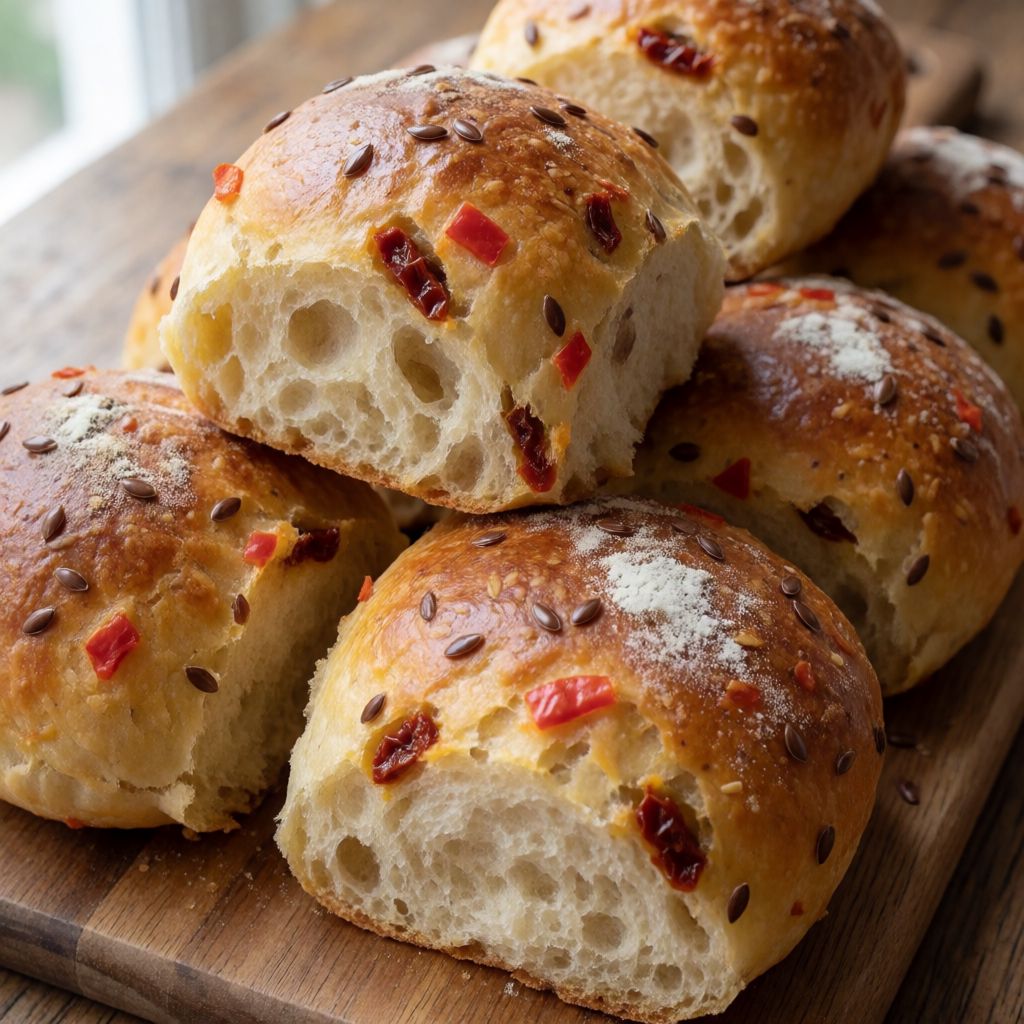
Soft bread rolls flecked with sun-dried tomatoes, chilli and flax, finished with a crust of parmesan.
Labels are worked out automatically from the ingredients and can be wrong. Check the packaging if it matters to you.
Ingredients
- 400 ml Water
- 25 g Yeast
- 1 tsp Salt
- 2 tbsp Olive Oil
- 50 ml Flax Seeds
- 1 tsp Red Chilli finely chopped
- 100 g Wholemeal Flour
- 2 tbsp Sun-Dried Tomatoes finely chopped
- 375 g Plain Flour
- 40 g Parmesan freshly grated
- 1 tbsp Milk for brushing
- pinch Salt











Steps
In a bowl, mix the water with the yeast, then add the salt, chilli, flax seeds, wholemeal flour and sun-dried tomatoes.
Gradually add the plain flour, mixing until the dough stops absorbing it, then knead well on the worktop. The dough should be elastic and may stick slightly to your hands.
Oil a bowl with olive oil, place the dough in it and turn to coat on all sides. Leave to rise for 30 minutes.
30 minKnock back the dough, shape into rolls and place on a lined baking tray. Leave to rise for 1–2 hours.
90 minBrush with milk, sprinkle with coarse salt and freshly grated parmesan.
Preheat the oven to 250°C.
Once the oven is hot, put the rolls in and reduce the temperature to 200°C. Bake for 15–18 minutes.
18 minWhere the parmesan is, the rolls may look a little soft, but they are ready when they turn a good golden colour.
What was changed
Graham flour has been swapped for Wholemeal Flour, as it is not sold in UK shops.
A roll is a small argument about water. Flour holds roughly its own weight in water before the gluten network gives up and goes slack, and everything in this dough — the flax, the chopped sun-dried tomatoes, the wholemeal flour sitting in with the white — is pulling moisture out of that budget. That's why you don't just tip in all the plain flour at once and call it done; you add it until the dough "stops absorbing it," which is the dough itself telling you the limit, not a number on a bag.
Some say a roll needs a soft, wet dough to be "fluffy." No — a dough that stays slightly tacky on your hands isn't underworked, it's correctly hydrated for a mix this heavy with inclusions. Dry it out chasing a clean-handed ball and you get a dense, crumbly roll, because you've pushed the gluten past the point it can stretch around all those seeds and tomato bits.
Two rises, not one, because this dough has work to do twice. The first thirty minutes in an oiled bowl builds structure and flavour from the yeast while the dough is still forgiving — knock it back and you're not punishing it, you're pushing out the big ragged bubbles so the crumb sets even, not holey. The second rise, after shaping, is the one that actually decides the roll's size and lightness, and it's slower and more patient — ninety minutes, maybe two hours, because shaped dough with flax and wholemeal in it is heavier than a plain white roll and the yeast needs the time to lift that weight, not just inflate air.
Yeast first, in the water, before salt gets anywhere near it — that's the one sequencing rule in this recipe that isn't optional. Salt tightens and slows yeast on direct contact; mixing it straight in can leave you with a dough that rises reluctantly, and then everyone blames the yeast. Twenty-five grams is a generous amount for this quantity of flour, because there's a lot pulling against the rise here — oil, cheese, chopped fruit — so don't go thrifty on it thinking fresh yeast is interchangeable gram-for-gram with dried; if that's what you have, dried is usually about a third of that weight, check your packet.
Flax seeds aren't decoration. Whole, they do very little for the dough except sit there; what they're really contributing is a faint nuttiness and, because they swell in liquid, a bit more water-holding capacity in the crumb, which keeps these rolls from drying out as fast as a plain white one would. If you don't have them, leave them out rather than substitute blind — don't reach for a seed that doesn't swell the same way and expect the same result.
The wholemeal flour isn't there to make this a "healthy" roll — a hundred grams against nearly four hundred of plain flour isn't making a dietary statement, it's adding bran and colour and a slightly more savoury base that plays well against the sweet-sharp sun-dried tomato and the salt-fat hit of parmesan. If you've only got plain flour, you can skip it, but the crumb will come out a shade paler and a touch blander — not wrong, just a different roll.
Sun-dried tomatoes: chop them finely, as the recipe says, and if they're the oil-packed kind, let the excess oil drip off first or you're adding uncounted fat into the moisture equation you worked out earlier for the flour. The oil-packed kind also bring a stronger, almost caramelised sweetness than the dry kind rehydrated at home — either works, the only sin is leaving them in chunks big enough that a roll splits open on one.
The chilli is doing a specific job: a small, sharp contrast against the richness of cheese and oil. "Finely chopped" matters more than it sounds — a rogue seed-heavy piece in one roll and nothing in the next means twelve people get twelve different rolls. If fresh red chilli isn't to hand, dried chilli flakes work as a stand-in, judged by smell and a tiny taste of the flakes themselves, not by a teaspoon measure that assumes a heat level you haven't checked.
Olive oil here is for the dough's pliability and for the sheen on the rising bowl — it's not a flavour ingredient at the quantity used, so any neutral oil with no smell of its own would do the structural job, though olive oil's own character does round out the crumb a little, which is worth keeping if you've got it. Parmesan should be grated fresh off the block — the pre-grated kind is drier, often anti-caking powder dusted, and melts patchily instead of browning into that gold crust the recipe is watching for. A pecorino or a hard, salty grana would substitute on the same logic: a hard cheese that browns rather than just melts.
And the milk brush: it's for colour, not flavour, since milk's sugars caramelise faster than water alone — egg wash would do the same job more aggressively if you wanted a deeper shine, but milk keeps it gentler, which suits a roll that's already got cheese doing visual work on top. Twelve rolls from this amount is the right scale for a kitchen table, not a kazan-sized batch — size them by eye to a fist, because a roll that's too big won't cook through in that 15–18 minute window at 200°C before the outside overshoots gold into dark.