
 AI photo
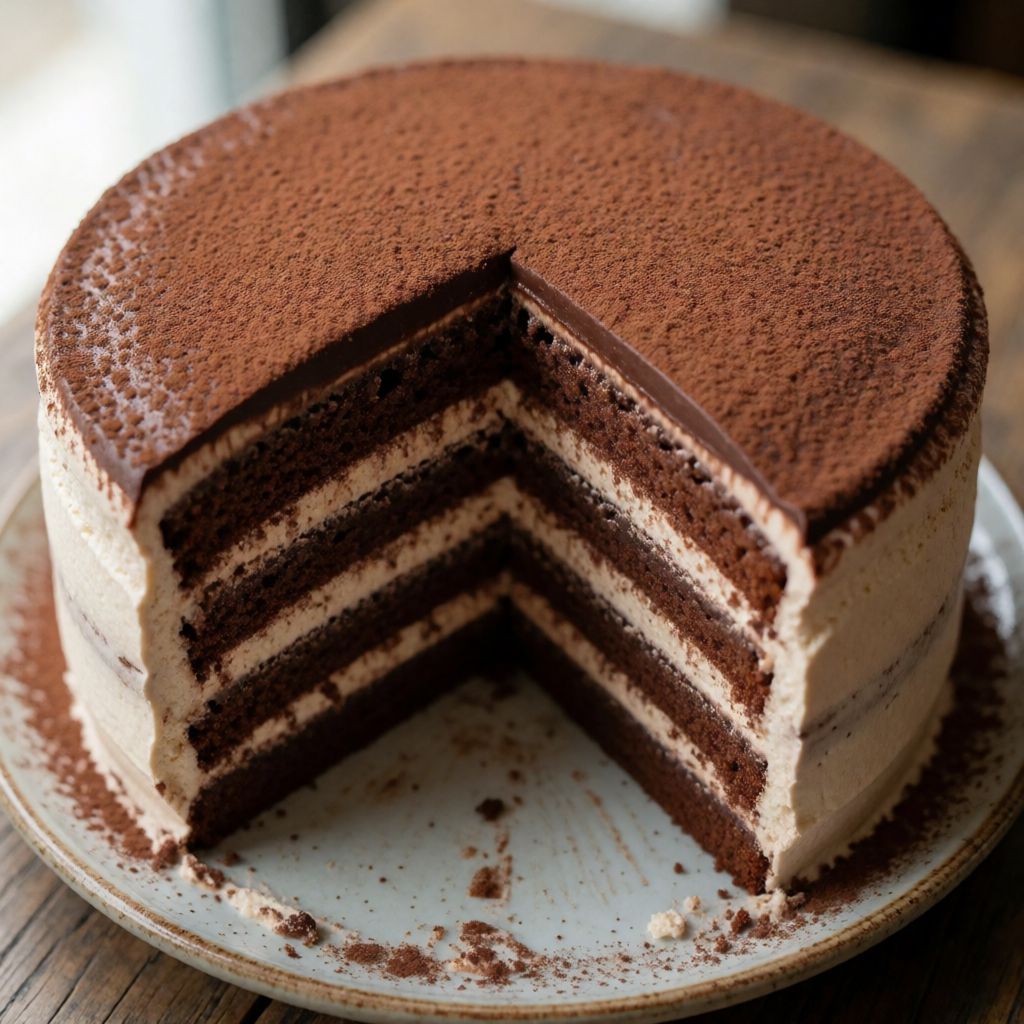
Mother-in-Law Cake with Cocoa
A rich cocoa sponge cake, baked in a round tin and lightly dusted with icing sugar.
Labels are worked out automatically from the ingredients and can be wrong. Check the packaging if it matters to you.
Ingredients
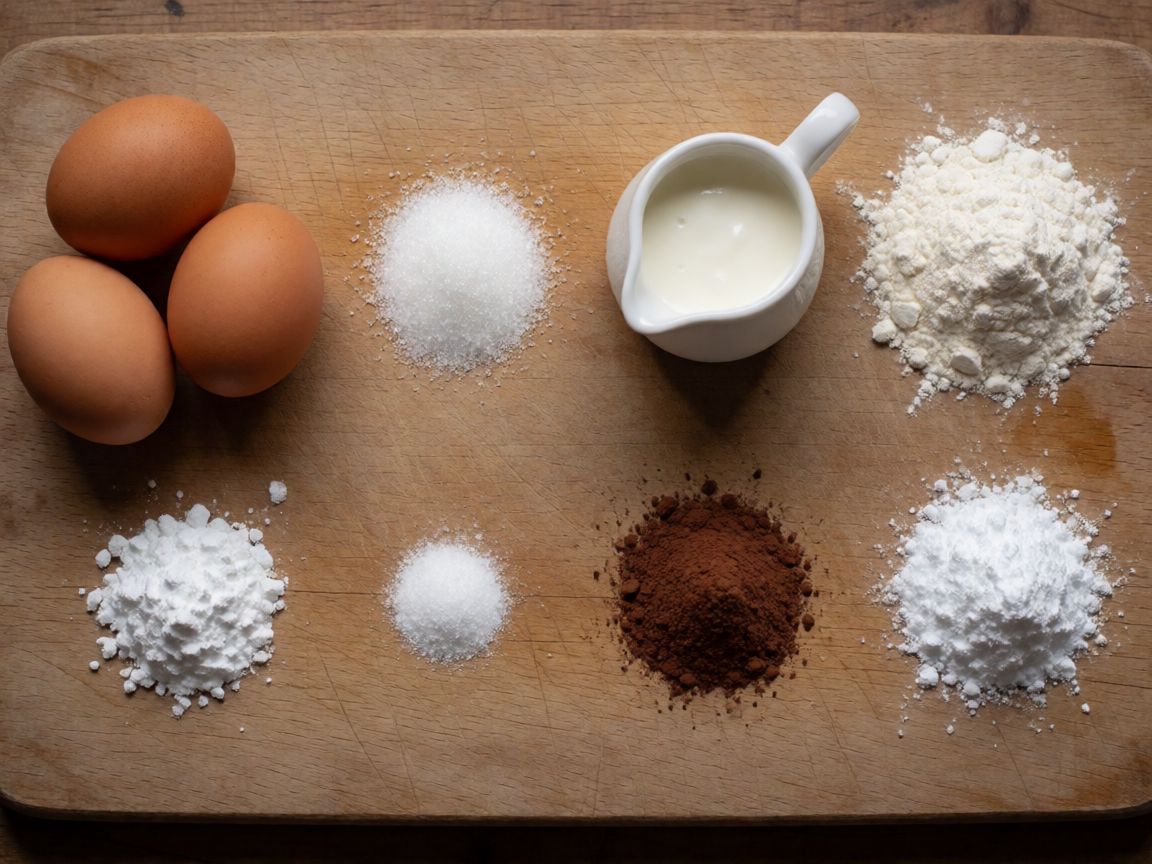
- 3 pcs Eggs
- 100 g Caster sugar
- 200 ml Double cream
- 130 g Plain flour
- 50 g Potato starch
- 15 g Baking powder
- 40 g Cocoa powder
- Icing sugar to taste







Steps
Break the eggs into a large bowl, add the caster sugar and beat with an electric mixer until pale and creamy.
Without stopping the mixer, pour in the double cream in a thin stream.
Sift in the plain flour, potato starch, baking powder and cocoa powder, adding them gradually.
Mix the batter thoroughly until smooth.
Pour the batter into a 22 cm tin lined with baking parchment.
Bake in a preheated fan oven at 160°C for 35–40 minutes.
38 minLeave to cool, then transfer to a plate.
Dust with icing sugar before serving.
This is a lean chocolate sponge — no butter, no oil, just eggs beaten with sugar until they carry air, and double cream folded in for richness and moisture. It bakes dense, dark, faintly damp inside — closer to a mud cake's quiet cousin than a Victoria sponge. The name has nothing to do with age or a secret handed down through kitchens; it's one of those jokey Soviet-era titles (like the salad called "husband in a suitcase") given to cheap, fast bakes a daughter-in-law could pull off without butter, which was pricier and the memory of rationing lingered long after the shortages ended.
What decides whether this works is the egg foam. Beat the eggs and sugar until pale and thick enough to leave a ribbon when you lift the whisk off — that foam is your only real leavening partner alongside the baking powder, because there's no butter creamed with sugar to trap air the usual mechanical way. Pour the cream in while the mixer keeps running, in a thin stream. Dump it in all at once and you knock the air straight back out, and the cake won't rise so much as sit there, dense and flat on top.
The flour-and-potato-starch mix matters for the same reason sponges go wrong elsewhere: starch has no gluten to speak of, so it dilutes flour's gluten-forming power and keeps the crumb soft instead of chewy. Swap all the starch for more flour, thinking you're saving a trip to the shop, and you get something closer to bread than cake — tougher, drier, and that's exactly the complaint people make without knowing why.
Eggs: three, and room temperature if you can manage it — cold eggs foam slower and never reach quite the same volume, so if they're straight from the fridge, give them ten minutes out before you start whisking.
Caster sugar: the fine crystals dissolve into the egg faster than granulated would, which stabilises the foam sooner. If all you've got is granulated, pulse it a few seconds in a processor — not to make icing sugar, just to knock the grit off it.
Double cream: UK double cream, around 48% fat, is doing two jobs here — richness, and the only fat in the whole bake. It also turns a stiff egg foam into something pourable. Single cream works but the finished cake dries out a touch; whipping cream sits somewhere in between and is a fair substitute.
Potato starch: pure starch, no protein, nothing to toughen the crumb. Cornflour does the same job — any starch with no flavour of its own will do. Don't leave it out and make up the weight in flour; that's precisely where a rubbery, bready result comes from, and it's a defect of substitution, not of the recipe.
Baking powder: 15g against 130g flour is a generous dose, and that's deliberate — this batter is heavy with cream and has less air trapped mechanically than a butter sponge would have, so the chemical rise has to carry more of the weight. Don't look at that number and halve it out of habit; that's the whole point of it being this high.
Cocoa powder: plain, unsweetened cocoa, not a drinking-chocolate mix — that already carries sugar and milk powder and will throw the whole balance off. Natural cocoa gives a sharper, more acidic note; Dutch-processed is rounder and darker. Either is fine, just know which you're using.
Icing sugar at the end is cosmetic, not structural — a dark, slightly damp cake needs the contrast, and granulated sugar would just sit on top gritty instead of settling into a fine dust. A 22cm tin lined with parchment is enough tin — nothing fancier is needed, but line it properly, because a wet, starchy batter like this clings to bare metal far more stubbornly than a dry one would. And let it cool fully before you move it: the starch is still setting as the heat drops, and cut it warm and the crumb collapses under the knife instead of holding a clean edge. Good with tea, the way most things dense and a bit bitter are.