
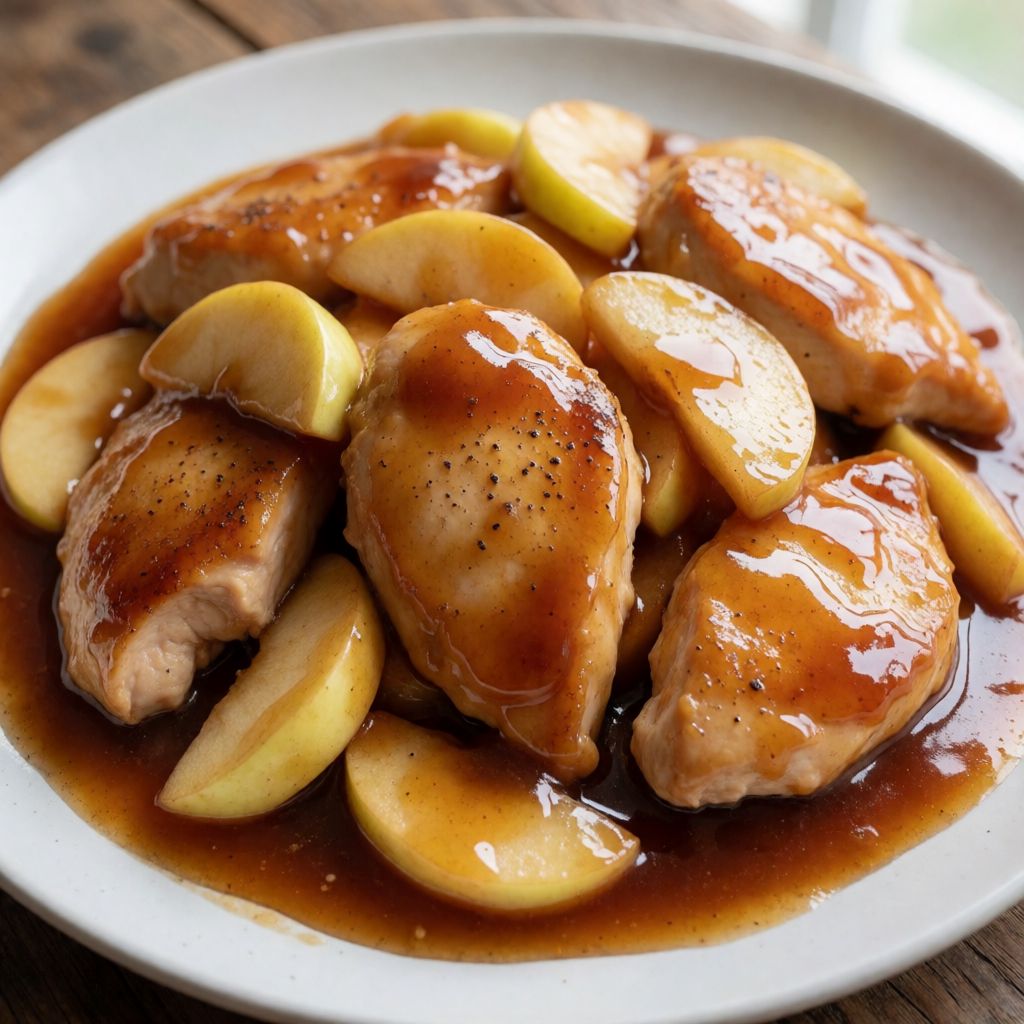
 AI photo
Chicken in Sweet and Sour Sauce
A quick pan-fried chicken breast with sautéed apple wedges, finished in a light Marsala pan sauce.
Labels are worked out automatically from the ingredients and can be wrong. Check the packaging if it matters to you.
Ingredients
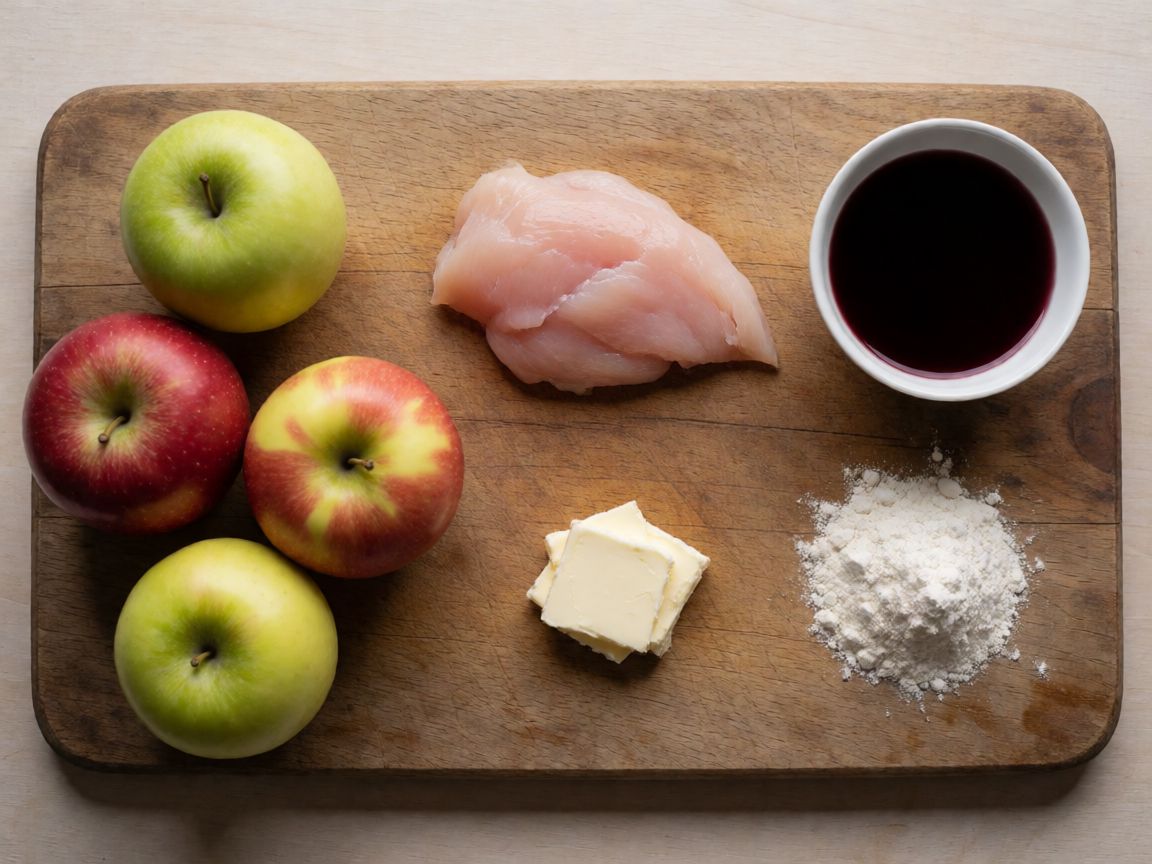
- 400 g Chicken breast
- 4 pcs Apple
- Salt to taste
- Black pepper to taste
- Olive oil to taste
- 100 g Butter
- Plain flour to taste
- 8 tbsp Marsala wine








Steps
Peel the apples and cut them into wedges.
In a non-stick frying pan, melt the butter and sauté the apple wedges, turning them gently.
5 minCover with a lid and keep warm.
Coat the chicken breast in flour.
Heat the olive oil in a frying pan and add the chicken.
Turn it over, then season with salt and pepper.
Pour in the Marsala. Cook until the centre reaches 74°C.
10 minArrange the chicken on a plate with the apples, thicken the sauce and spoon it over.
Serve hot.
This is a weeknight dish wearing a bit of French bistro gloss: a lean chicken breast seared and finished in a sweet fortified wine, with butter-fried apple wedges sitting next to it for texture and a sharper edge against all that sweetness. Nothing here needs a kazan or a big pan collection — one frying pan does the chicken, another (or the same one, washed and dried) does the apples. Twenty minutes, start to plate, if you don't dawdle.
What decides whether it works is almost entirely about the chicken breast, because breast meat has no fat cushion to protect it. A thigh forgives you two extra minutes in the pan; a breast does not — it goes from juicy to cardboard in the time it takes to answer the phone. That's why checking the centre at 74°C matters far more than the ten minutes on the card. Ten minutes is an average guess across breasts of different thickness; the thermometer is the only honest number in this recipe.
Some say searing the meat first "seals in the juices." No — moisture still escapes through the cut fibres no matter how hard a crust you put on. What searing actually buys you is colour and flavour through browning, and more usefully, the fond — the browned bits stuck to the pan — which is what the Marsala deglazes into a sauce. Skip the sear and pour wine onto pale meat, and you get chicken poached in boozy water, not chicken in sauce.
Chicken breast, not thigh, because breast cooks fast and takes a pan sauce cleanly — thigh releases more of its own fat into the pan and muddies what should be a bright, winey sauce. If thigh is what's in the fridge, use it; it's more forgiving on timing, just expect a slightly fattier sauce and flatten the meat a little so it cooks through evenly.
The flour is doing two jobs, not one. It helps the crust brown faster by giving the surface something dry to catch heat on, and later — when the Marsala hits the pan — that same flour, now stuck to the base as fond, dissolves into the liquid and thickens it without you needing a separate roux. That's the whole mechanism behind step 8's "thicken the sauce": mostly it thickens itself, if you haven't rinsed the pan clean in between. Plain flour is right here; cornflour would give you a glassy, gluey sauce, wrong texture for this dish.
Apples: the criterion is firm flesh that doesn't collapse under heat, with enough tartness to cut the wine's sweetness. In a British shop that's Granny Smith, Braeburn, or Cox. Leave the Bramley for apple sauce — it was bred to fall apart into fluff, which is exactly the wrong texture for wedges that need to hold their shape in a hot pan. The apple-with-meat habit itself isn't sentiment; it's old economics — fruit stretched a small amount of meat further and added sweetness in households that couldn't spare sugar for every dinner.
Two fats doing two different jobs. Butter for the apples, because its milk solids brown and go nutty at a gentler heat, which matches the apple's own slow caramelising — push that heat too high too fast and the butter scorches before the fruit softens. Olive oil for the chicken sear, because the pan needs to run hotter there and butter alone would burn before the meat colours. The criterion for the oil is simply: no flavour of its own, high enough smoke tolerance for a proper sear. Ordinary olive oil does it; so would sunflower or groundnut oil, and either is actually a touch more neutral.
Marsala is a fortified Sicilian wine, and its popularity in Britain specifically is not an accident — a Liverpool merchant family fortified local Sicilian wine in the 1700s precisely to survive the sea voyage and compete with Port and Madeira for British taste. So this bottle has been angling for a place in an English kitchen for about two hundred and fifty years. If you haven't got any, the criterion is a wine fortified with spirit and carrying real sweetness — cream sherry or a sweet Madeira will do the same job. In a pinch, cider with a spoon of brandy and a little honey gets you close, and it keeps the apple theme honest besides.
On quantities: the card says this serves one, but 400g of breast, four apples and 100g of butter is a dinner for two, generously — call it a hungry single portion only if nothing else is coming after. And don't rush either pan to save five minutes: the apples want their own slow heat to soften without scorching, the sear wants enough time to actually brown before the wine goes in. Turning the hob up to shortcut either one is exactly how you end up with burnt butter and a grey, under-browned breast — patience here isn't virtue, it's the only thing standing between you and a flat sauce.