
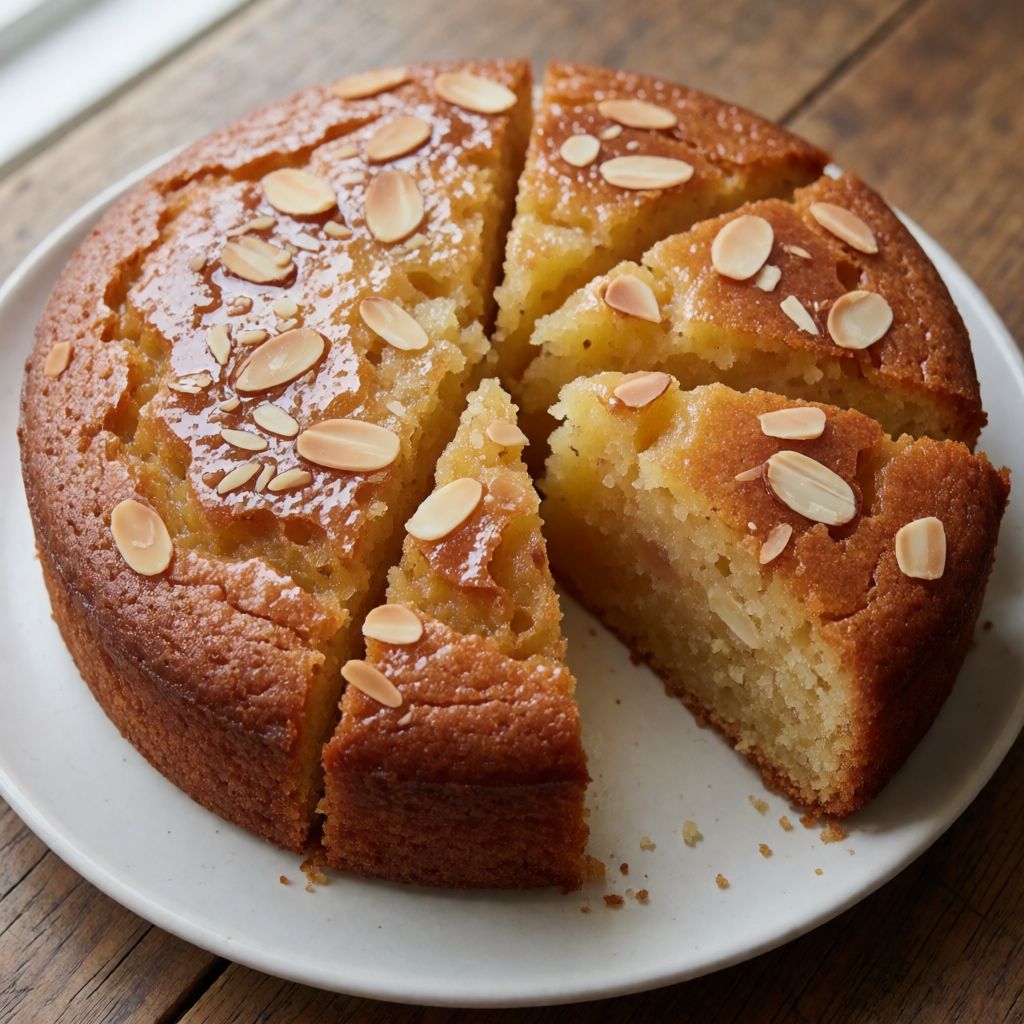
 AI photo
Potato and Almond Cake
A potato cake made with mashed potato, almonds and a hint of rum.
Labels are worked out automatically from the ingredients and can be wrong. Check the packaging if it matters to you.
Ingredients
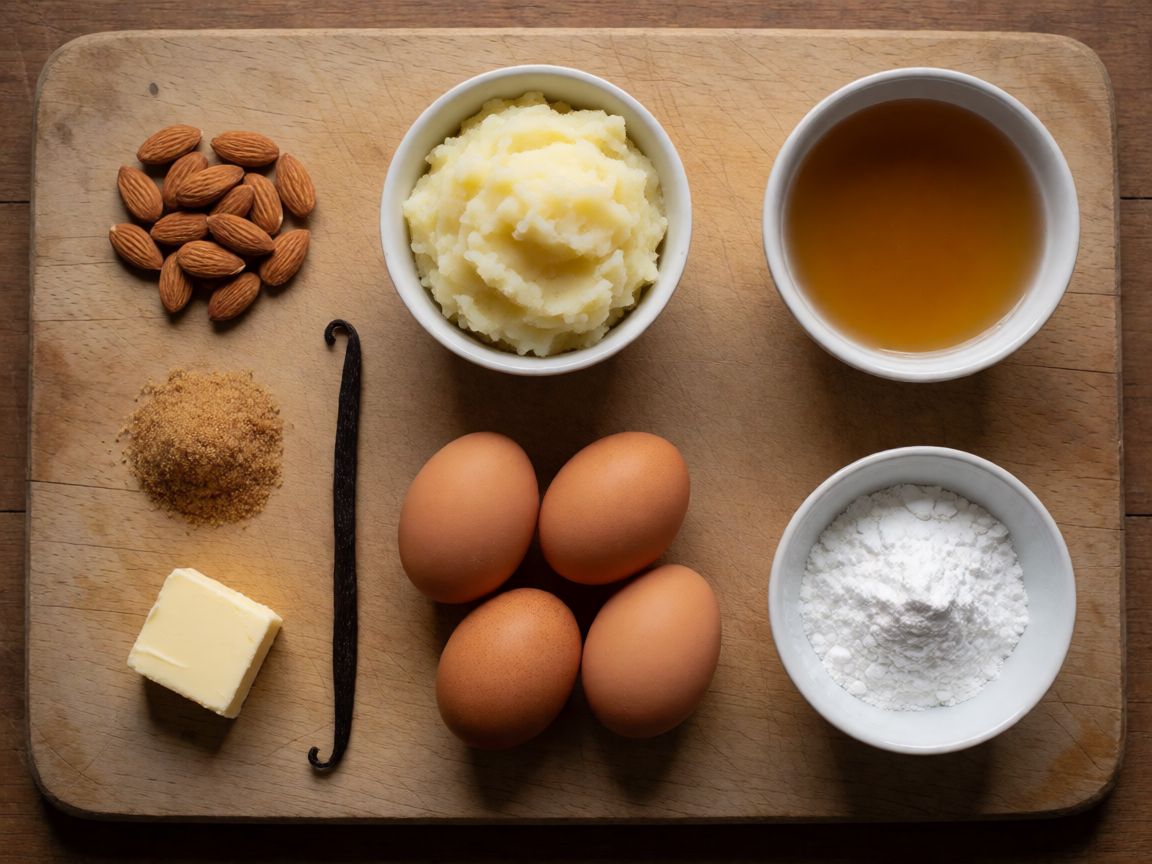
- 150 g Almonds
- 300 g Potato mashed
- 150 g Brown sugar
- 120 g Butter
- 3 pcs Eggs
- 0.5 pcs Vanilla pod
- 2 tbsp Rum
- 1 pinch Salt
- Potato starch as needed
- pinch Icing sugar for dusting




Steps
Wash the potatoes and boil them in their skins in boiling water.
45 minLet the potatoes cool, peel them and mash into a purée.
Grind the almonds in a blender until they resemble coarse flour.
Crack the eggs, separating the whites from the yolks.
Add the brown sugar to the yolks and beat with a mixer, gradually pouring in the melted butter.
Gradually add the almond flour together with a pinch of salt, continuing to beat.
Split the vanilla pod in half and add the black seeds from the middle.
Add the mashed potato, folding it in gently by hand with a whisk, then pour in the rum.
Beat the egg whites with a mixer until stiff peaks form.
3 minGradually fold the beaten egg whites into the batter, mixing gently by hand with a whisk in one direction.
Grease a baking tin with butter and dust with potato starch, then pour in the batter.
Bake at 160°C.
50 minAfter baking, dust the cake with icing sugar, and decorate with raspberries and redcurrants if you like.
A potato in a cake sounds like a joke until you remember that potato is just starch and water with no opinion of its own — and that's exactly the point. It doesn't bring flavour, it brings structure: a damp, binding crumb that flour would make gluey and ground almonds alone can't hold together. This is almond cake with potato doing the job flour does elsewhere, and that swap is the whole reason the cake exists, not a gimmick on top of it.
What decides whether it works is two separate air pockets meeting without deflating each other. You whip egg whites to stiff peaks — real peaks, the kind that stay put when you tip the bowl, not just foam — and you fold them into a yolk-almond-potato batter that's comparatively heavy. Fold wrong, in circles, beating instead of turning, and you knock the air straight back out; the cake bakes flat and dense, and the usual verdict is "the almonds didn't rise it," when actually nothing rose it because you killed the only rising agent in the recipe before it went in the oven. There's no baking powder here. The egg white is it.
Some say mashed potato in a cake must mean it's heavy, stodgy, a bit grim. No — because it's boiled in its skin and mashed dry, with no milk or butter folded into the potato itself, so you're adding moisture-holding starch, not wet filler. Boiling in the skin matters too: peel first and the potato drinks pan water, goes watery and thin; boil in the jacket and it stays a proper purée.
Almonds ground "to coarse flour" and not to paste is a line worth taking seriously. Over-grind in a blender and the oil in the nut starts to release — you get almond butter, which clumps and refuses to absorb butter and yolk evenly, leaving greasy pockets in the finished cake. Pulse it, don't run it continuously, and stop while it still has a little grit, like fine sand rather than talc. Ground almonds from a bag work fine as a shortcut; they're usually a touch finer, so if you use shop-bought, fold gently and don't overwork the batter once they're in.
The potato: 300g mashed, boiled whole in its skin, is doing a job cream or milk can't. It holds water inside its starch granules and releases it slowly in the oven, which is why this cake stays moist for longer than a straight almond sponge — almond flour alone dries out fast because it has no gluten network and no particular water-holding trick of its own. Mash it while warm, with nothing added, no butter, no milk — those would make it slack and wet instead of dense and bindable. If your potato is waxy and refuses to mash smooth, push it through a sieve rather than beating it; beating a potato too hard releases too much starch and turns it gluey, the texture bakers call "potato glue," and you really don't want that in a cake.
Brown sugar rather than white isn't fashion — it's moisture and a faint molasses note that plays well against the almond's flatness and the rum's sharpness. White sugar will work if that's what's in the cupboard; you'll lose a shade of depth and a little moisture, nothing fatal.
Butter: melt it, don't brown it, and pour it in gradually while beating so it emulsifies into the yolk-sugar mixture instead of pooling and separating out later in the oven as a greasy ring. Any neutral fat with no smell of its own would substitute at a pinch — a flavourless vegetable oil — but you lose the structure butter gives when it firms up again on cooling, which is part of what holds the crumb together once the cake is out and resting.
The vanilla pod split for its seeds, the two tablespoons of rum: these are there to give the almond somewhere to go, not to announce themselves. Vanilla extract instead of a pod is a fair swap — use it to taste, a teaspoon roughly matches half a pod. No rum in the house: brandy does the same warming job, or skip it and lean a little harder on the vanilla so the cake isn't flat on the tongue.
Potato starch for dusting the tin, not flour — it keeps the surface non-stick without adding a floury taste or a pale dusty rim where flour clings and scorches. Cornflour does the same thing if that's what you have.
On the UK kitchen specifically: a domestic oven running at 160°C fan or conventional will behave differently tin to tin, so treat 50 minutes as the floor, not the finish line. Test with a skewer — it should come out with moist crumbs clinging, not wet batter, and not bone dry either. The cake firms as it cools, so pulling it slightly before you think it's ready is the safer error. This isn't a cake you rush; the potato needs its 45 minutes to boil and cool properly before it goes anywhere near the mixer, and trying to speed that up with a half-warm potato just means a lumpier mash and a batter that won't take the egg white evenly. Patience here isn't virtue for its own sake — it's what keeps the texture right.