
 AI photo
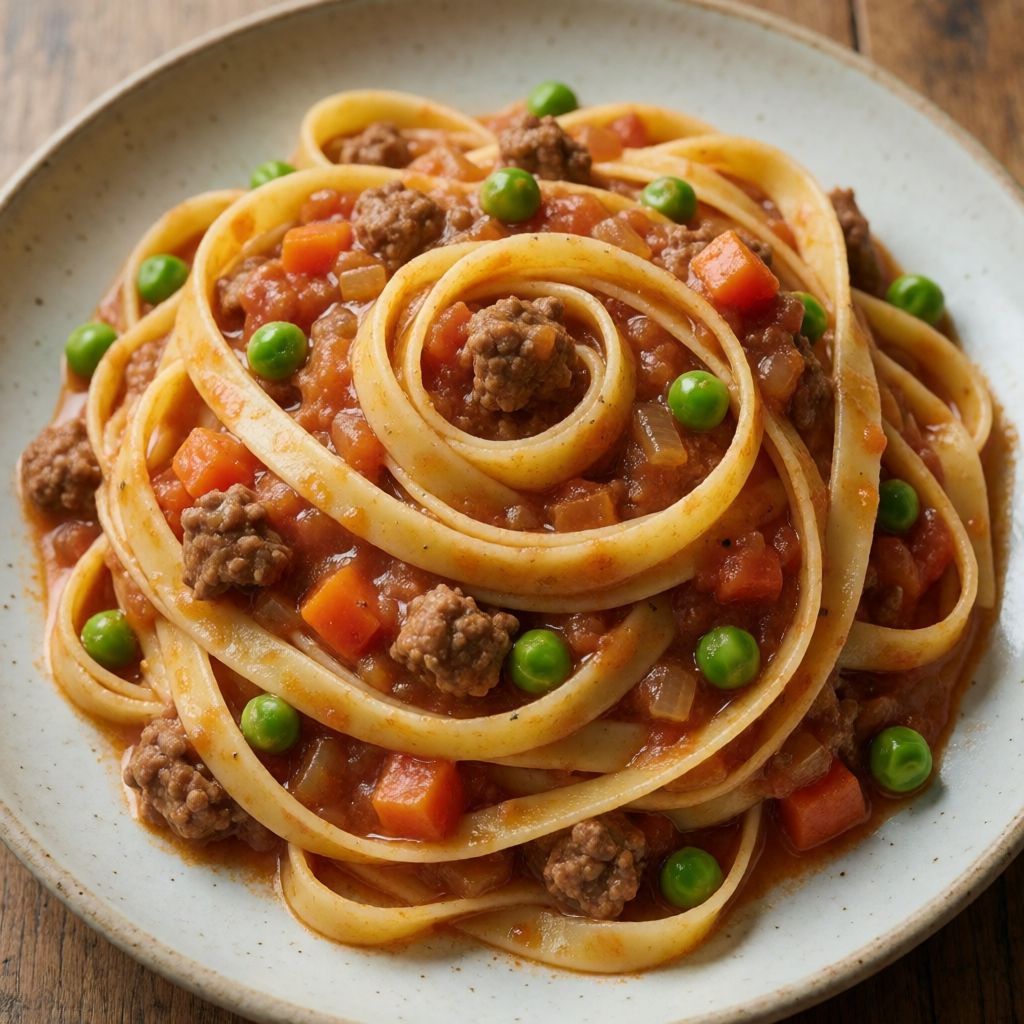
Tagliatelle with Beef Sauce
A hearty pasta dish of slow-braised beef, carrot, peas and potato in a tomato sauce, tossed with tagliatelle.
Labels are worked out automatically from the ingredients and can be wrong. Check the packaging if it matters to you.
Ingredients
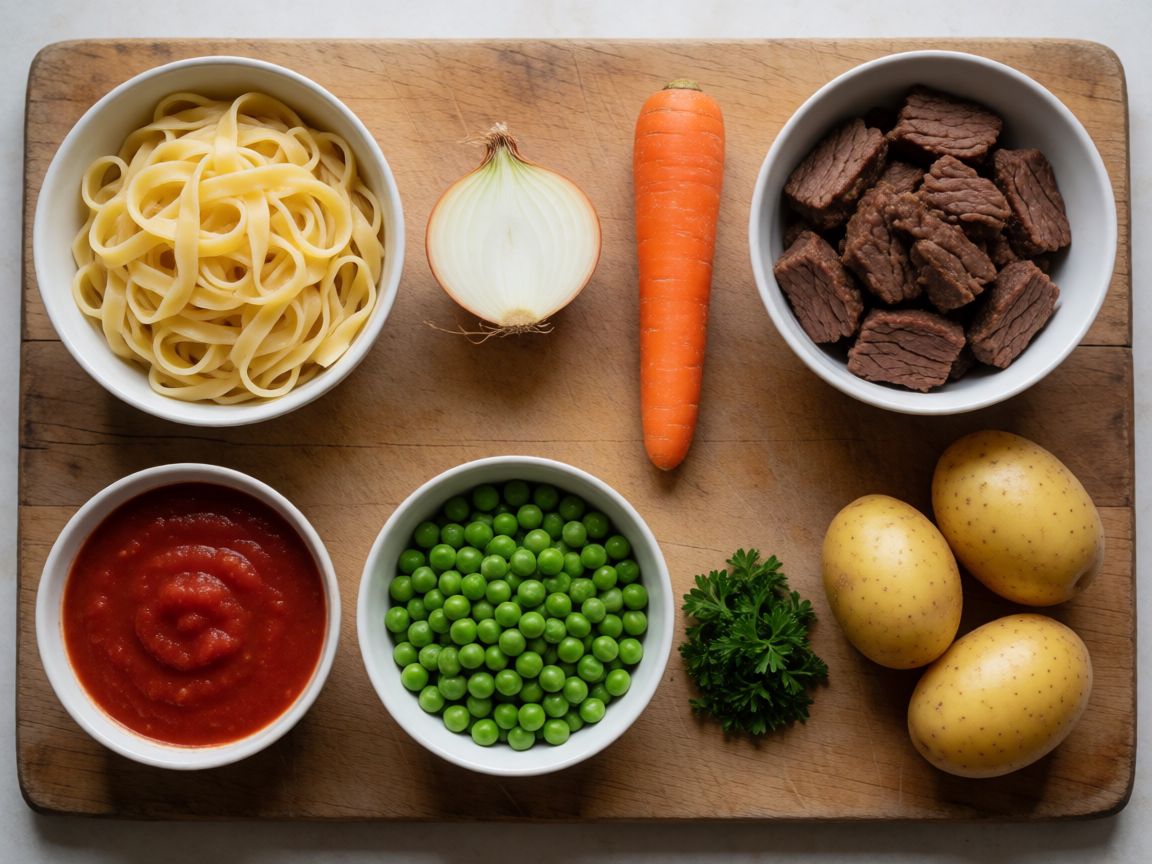
- 350 g Tagliatelle
- 500 g Beef
- 1/2 pcs Onion
- 1 pcs Carrot
- 1 tbsp Tomato sauce
- 200 g Peas
- 3 pcs Potato
- Olive oil to taste
- Salt to taste
- Black pepper to taste
- Parsley to taste








Steps
In a large pot, heat the olive oil and fry the onion until golden
Add the beef and brown the pieces on all sides until nicely coloured
Cut the carrot into small cubes
Add the carrot and tomato sauce to the pot
Pour in hot water, season with salt and pepper, and cover with a lid
Simmer the meat
60 minCut the potato into large chunks
Add the potato and peas to the pot
Simmer for a further 40 minutes
40 minAdd parsley to taste
Cook the tagliatelle in salted water
Toss the pasta with the meat sauce and serve with Parmesan
This isn't an Italian ragù dressed up with potatoes — it's closer to a stew that happens to land on pasta, and that's not a flaw, it's the whole point. You're doing two separate jobs with the same pot: building a long, patient braise of beef, carrot and tomato, and then letting pasta carry it instead of bread or rice. What decides whether it works is whether you treat the beef and the pasta as two different time zones. The beef wants an hour-plus of low, slow heat to go from tough to yielding. The tagliatelle wants eight minutes, tops. Cook them in the same breath and you ruin both.
The browning at the start is not decoration. Those coloured, slightly stuck-on bits on the meat are flavour you're about to dissolve back into the sauce — in French cooking they'd call it the fond, and it's the difference between a sauce that tastes of something and a grey broth that tastes of boiled meat. Some say you should turn the heat up high to "seal in the juices." No — searing doesn't seal anything, juices still leak, but the browned crust itself is the flavour, not a barrier. You want colour, not speed.
Then everything slows down. Water goes in, lid goes on, and the beef sits in barely-trembling liquid for an hour before the potato and peas even show up. That staggered entry matters: potato chunks fall apart if they stew for the full hour, peas turn khaki and tired if they're in there from the start. You're not cooking everything together — you're cooking in sequence, each thing added when the pot has just enough time left to finish it, not more.
The beef is the engine, so choose a cut that needs time to be good, not one that's already tender. Shin, chuck, blade — anything with connective tissue and a bit of fat running through it. That connective tissue is collagen, and collagen only turns silky with long, gentle heat; sear a tender steak cut this way instead and you'll just get dry grey cubes, because there's no collagen left to melt into the sauce. If you're in a standard UK kitchen with no kazan, a heavy-based casserole or your biggest saucepan with a lid does the job — the point of the lid isn't ceremony, it's trapping the steam so the liquid stays at a bare simmer instead of boiling the beef dry.
Onion first, and you want it gold, not brown — browned onion at this early stage turns bitter and you carry that bitterness through the whole hour of cooking, since nothing added later will cook it back out. The carrot, cut small, isn't there for bulk; small pieces melt down into the sauce over the long simmer and thicken it slightly with their own sugars, so by the end you shouldn't be finding distinct carrot coins, you should be finding sweetness. One tablespoon of tomato sauce is a seasoning here, not a base — it's there to add acidity and a little colour, not to turn this into a tomato sauce. If you only have tinned tomatoes, a spoonful of the thick part will do the same job; don't drown the pot in them or you've made a different dish.
Potato in large chunks, added with 40 minutes left rather than at the start, because potato cooked for a full hour of simmering just disintegrates into the liquid — large chunks and a shorter window are both insurance against that. Peas go in at the same point for the opposite reason: they're already tender, they just need warming through and a few minutes to lose their rawness, any longer and they lose colour and go dull. Frozen peas are not a compromise here — they're often fresher than "fresh" peas that have sat around, since they're frozen within hours of picking.
Salt and pepper go in early with the water, not at the end, because the beef needs time to actually take up seasoning as it cooks, not just have it sitting on the surface of the sauce. Parsley goes in at the very end, off the heat or close to it, because its flavour is volatile — long cooking just burns it off into the air above your pot, so you'd be wasting it by adding it with the onions.
For the pasta itself: tagliatelle because its width and texture are built to carry a thick, meaty sauce rather than slip off it the way a thin spaghetti would. Salt the pasta water properly — this is the one and only chance the pasta itself has to taste of anything, since it's not sitting in the sauce long enough to absorb much seasoning after the fact. Cook it separately and toss it with the sauce rather than ladling sauce over a plated nest of pasta — tossing coats every strand, ladling just pools sauce on top and leaves the pasta underneath bare. Parmesan at the end isn't tradition for tradition's sake; it's salt, fat and a sharp edge that a long-cooked, slightly sweet beef-and-carrot sauce genuinely needs to stop it tasting flat. And the whole hour-plus simmer: don't rush it by cranking the heat to "save time." A fierce boil toughens the beef's outer fibres before the inner collagen has had any chance to soften — you'd just be swapping forty minutes of patience for a worse result, which isn't a trade worth making.