
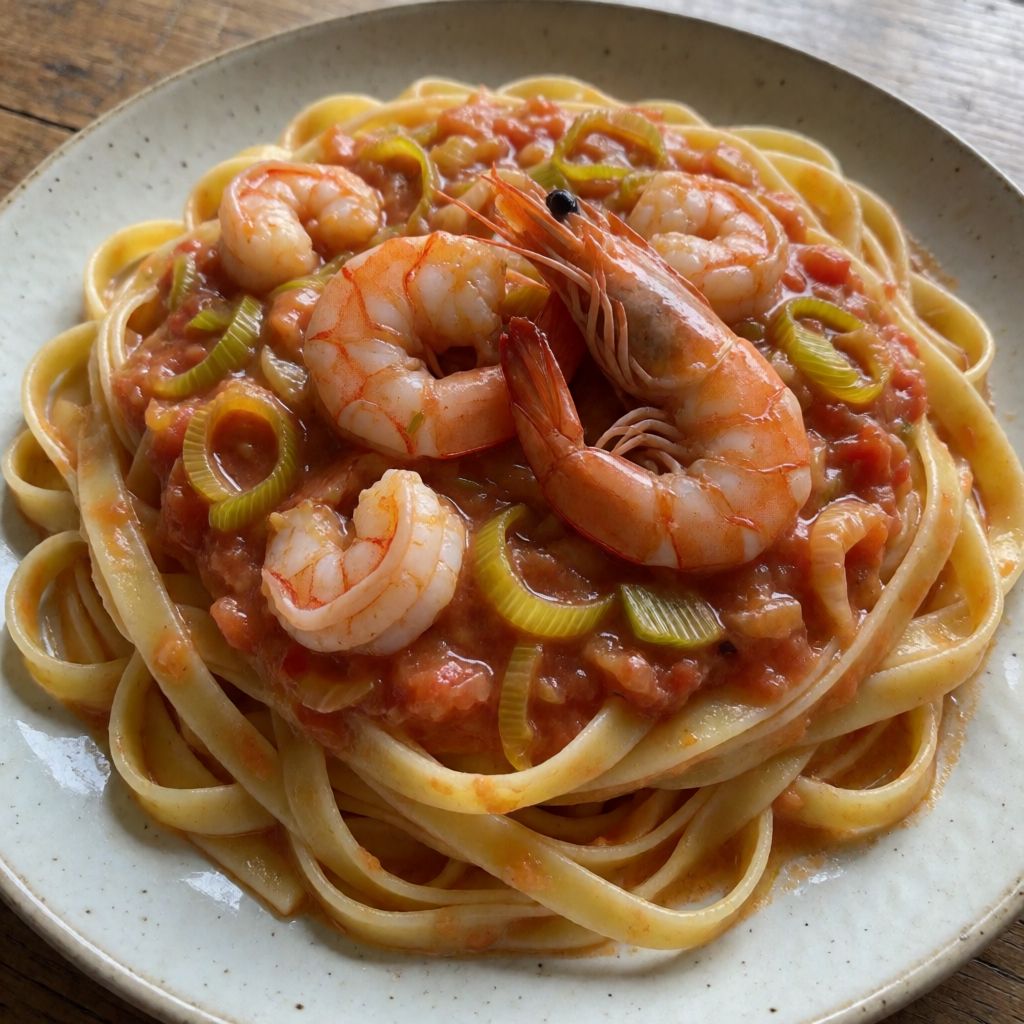
 AI photo
Tagliatelle with Tiger Prawn Ragù
A quick, bold ragù of tiger prawns, leek and tomato tossed with fresh tagliatelle.
Labels are worked out automatically from the ingredients and can be wrong. Check the packaging if it matters to you.
Ingredients
- 400 g Tiger prawns
- 1 pcs Leek
- Olive oil to taste
- 1 tbsp Brandy
- 200 g Datterino tomato passata
- Salt to taste
- Black pepper to taste
- 1 tbsp Taggiasca olives pitted, in oil
- Parsley to taste
- 400 g Tagliatelle










Steps
In a deep frying pan, fry the leek in 2 tbsp olive oil.
Add the tiger prawns.
Pour in the brandy and let it cook off completely.
Add the datterino tomato passata and simmer gently for about 10 minutes, until the prawns are cooked through (63°C at the thickest point).
10 minSeason with salt and black pepper to taste, then stir in the pitted Taggiasca olives.
Sprinkle with parsley.
Cook 400 g tagliatelle in a large pot of salted boiling water until al dente.
Drain and tip the tagliatelle into the pan with the sauce.
Toss well over the heat for a minute, then serve at once.
What was changed
Datterino tomato passata replaces the tomato paste with a ready datterino tomato passata, closer to what is used for this sauce.
This is a ragù that pretends to be something slow and isn't. Ragù in the Italian sense just means "meat or seafood simmered down with tomato into a sauce" — it doesn't demand hours. Here the prawns themselves set the clock: they go from translucent to opaque in minutes, and the whole dish is built around not missing that window.
What decides whether it works is the leek and the brandy doing their job before the prawns ever go in. The leek softens in oil until it loses its raw, sulphurous bite and turns sweet — that's the base. The brandy isn't for flavour, it's for burning off alcohol so you're not left with a boozy sauce; you let it bubble hard until the smell changes from sharp to just warm, then it's gone and you move on.
The prawns go in for a short, hot stretch, then the passata turns it into sauce and everything simmers together only until the prawns are properly cooked — not a second longer, because prawns don't tenderise with more time, they toughen. Think of boiling an egg past its point: same mechanism, rubber instead of flesh. The olives and parsley at the end are seasoning moves, not cooking ones — they go in once the heat's doing the gentle part, so they stay themselves instead of turning bitter.
The pasta is the last domino, and it's non-negotiable that it finishes in the pan with the sauce, not on the plate under it.
Some say tiger prawns need barely a minute or they go to rubber — no, because the real line isn't time, it's temperature: around 63°C at the thickest part of the tail, the protein just sets and goes opaque; past that, the muscle fibres squeeze tight and push the moisture out, and no amount of careful timing saves you from overshooting if you're guessing. In a flat kitchen without a probe, use your eyes: the flesh turns from grey-pink and glassy to white and firm, and it curls slightly. That's your signal, not the clock on the hob.
The leek stands in for the onion-garlic base you'd expect in a tomato sauce, and it's a fair swap, not a downgrade — leeks are milder, sweeter once cooked, and they don't leave the raw sharpness onion can if you rush the frying. Any allium that softens into sweetness works: a mild onion, a shallot or two, even spring onion whites in a pinch. What matters is the mechanism, not the vegetable: you're cooking out the sulphur compounds that make raw alliums sting, and that only happens with gentle heat and enough time for the smell in the pan to change from sharp to mellow.
The brandy is there to lift the pan, not to get anyone tipsy. Deglazing with a spirit works because alcohol dissolves fats and browned bits that water alone won't shift, pulling flavour off the bottom of the pan into the sauce. But it has to cook off — let it bubble uncovered until the harsh, boozy smell is gone and what's left is just warmth. If you don't keep brandy in the house, a dry white wine does the same job, just with less punch; a splash of stock with a squeeze of lemon is the nearest alcohol-free stand-in, though you lose some of that caramelised depth.
Datterino passata is chosen for sweetness and low acidity — datterino tomatoes are naturally sweeter than standard plum tomatoes, so the sauce doesn't need sugar to balance it. Any decent passata works if you taste and adjust; if yours is sharp, a pinch of sugar or a few seconds longer cooking it down softens that edge. Taggiasca olives, small and mild, are there for a salty, faintly bitter counterpoint to all that sweetness and shellfish richness — any good black olive in oil will do the job, just chop it smaller if the variety you've got is larger and more aggressive, so one bite doesn't take over.
On the pasta: cook it in plenty of well-salted water — salt now, because pasta won't take seasoning well once it's out of the water — and pull it before it's fully done, because it finishes in the pan, absorbing a little sauce and a little starchy cooking water as you toss. That's not a flourish, it's how the sauce clings to tagliatelle instead of pooling at the bottom of the bowl. A wide domestic frying pan is exactly the right tool here — you want surface area for the prawns to sit in a layer, not a deep pot where they stew.
Four portions here means four people who are hungry, not polite. Patience is still an ingredient even in a thirty-five-minute dish — the kind that makes you stand at the hob watching a leek change colour instead of walking off to put the kettle on. Seafood punishes impatience faster than most things in a kitchen, so the discipline is in the watching, not the waiting.