
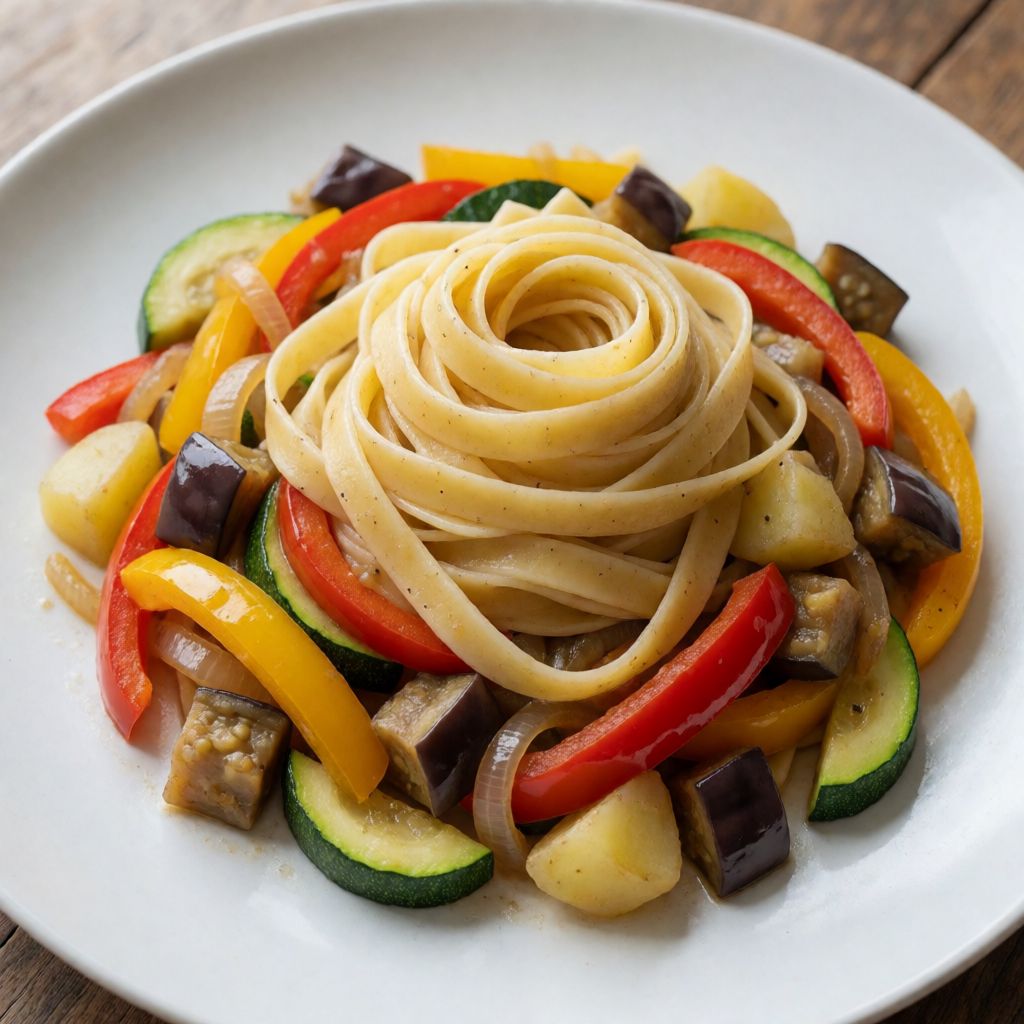
 AI photo
Tagliatelle with Vegetables
A simple pasta dish tossed with sautéed peppers, courgette, aubergine, potato and tomato, finished with egg and pecorino.
Labels are worked out automatically from the ingredients and can be wrong. Check the packaging if it matters to you.
Ingredients
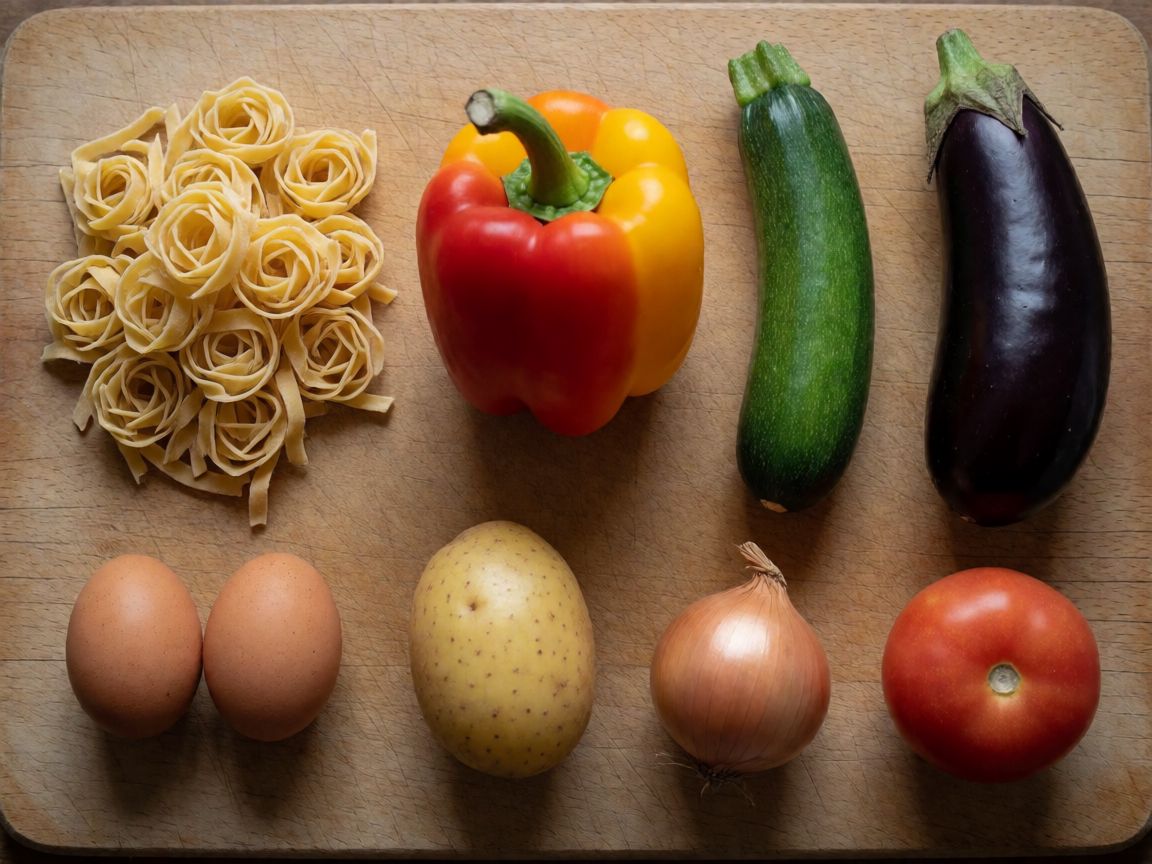
- 380 g fresh egg tagliatelle
- 1 pcs bell pepper
- 1 pcs courgette
- 1 pcs aubergine
- 1 pcs potato
- 1 pcs onion
- 1 pcs tomato
- 2 pcs eggs
- 4 tbsp pecorino
- olive oil to taste
- salt to taste
- black pepper to taste











Steps
Wash the courgette, bell pepper and aubergine, and cut them into small pieces.
Peel the potato, cut into cubes and blanch in salted boiling water.
2 minFry the vegetables in olive oil in a pan over high heat, stirring occasionally.
6 minCut the tomato into large pieces and add to the vegetables.
Crack the eggs into a bowl, add a pinch of salt, black pepper and pecorino, and whisk well.
Cook the tagliatelle, drain al dente and transfer to the pan with the vegetables.
Add the whisked eggs, stir and heat through until the eggs are cooked, finishing with tomato and pecorino.
This is pasta dressed the way a frittata is made — not with a sauce simmered separately, but with egg that sets directly against hot pasta and hot vegetables in the same pan. What decides whether it works is heat control at the very end: too hot and the egg scrambles into dry curds stuck to the pan, too cool and it just slides off the noodles like wet paint. You're aiming for something between a sauce and a soft coating — custard, not omelette.
Five vegetables go in, each cut small and cooked by a different logic: aubergine and courgette need real heat to lose their rawness without turning to mush; pepper wants to keep some bite; potato is pre-blanched because raw potato thrown into a hot pan with everything else would either stay chalky in the middle or burn on the outside before it's done — you can't win that race in six minutes, so you give it a head start in water. Tomato goes in last among the vegetables, cut large, because it's there for juice and acidity, not to cook down into a sauce. If it collapses to pulp, it's lost its job.
Some say you must add the egg off the heat entirely, the way you'd finish a carbonara, panic-style. No — here you want gentle heat still under the pan, because the egg has pasta, vegetables and pecorino all pulling moisture and temperature in different directions; off the heat entirely it won't set at all, it'll just pool. The real skill is in the stirring, not in removing the pan from the fire.
Tagliatelle itself is a flat ribbon for a reason: it carries a loose egg coating better than a tube or a twist does, because the flat surface gives the egg somewhere to cling rather than sliding off or hiding in a hollow. If fresh tagliatelle isn't to hand, any flat ribbon — fettuccine, pappardelle cut narrower — behaves the same way. Dried is fine too, just give it the time dried pasta actually needs; fresh egg pasta cooks in minutes, dried in considerably more, and that gap matters because the pasta has to hit the pan still hot enough to help set the egg.
The vegetables are a fridge-clearing exercise more than a fixed quartet — this is the kind of dish Italian home cooks built around whatever was soft, cheap and needed using before the weekend. Aubergine and courgette are chosen because they're bulky and mild, soaking up oil and whatever flavour is around them rather than fighting it; a British cook without either could reasonably drop in a chunk of marrow or even leftover roast veg from Sunday, cut smaller and added later since it's already cooked. The onion is the backbone flavour, not a vegetable in its own right here — it goes in with the others and you're watching for it to go translucent, not brown; browned onion means burnt bits elsewhere in the pan too, on a hob this hot for this short a time.
High heat with "stirring occasionally" rather than constant stirring is deliberate: you want some contact time against the hot metal for colour and for driving off the water the vegetables release, but constant stirring stops anything ever touching the pan long enough to colour. A wide pan matters more than it sounds — a narrow saucepan crowds the vegetables, they steam each other instead of frying, and you get grey mush instead of vegetables with any bite left. If your widest pan is still narrow, do the vegetables in two batches rather than one crowded one.
The eggs and pecorino whisked together before they go anywhere near heat is the whole mechanism of the dish — you're pre-emulsifying so the cheese's fat and the egg's protein come together smoothly, rather than hoping they combine mid-pan while you're also worrying about the pasta sticking. Pecorino specifically because it's salty and sharp enough to carry the whole dish on four tablespoons; a milder cheese would need much more to do the same work, so if you're substituting with, say, a hard Italian-style cheese from a British supermarket, taste and adjust the salt down rather than up, since pecorino is saltier than most alternatives you'll find on a shelf next to it.
Finishing with tomato and extra pecorino at the very end, after the egg has set, is not decoration — it's temperature control again. Raw-ish tomato added last stays bright and loose; cheese added last stays as texture, not as a melted layer that disappears into the sauce. Everything that goes in after the heat is mostly off is there to stay distinct, not to cook further. That's the one patience point in a dish that otherwise moves fast: know when to stop adding heat, and add the last things when the pan is already doing you a favour by cooling.