
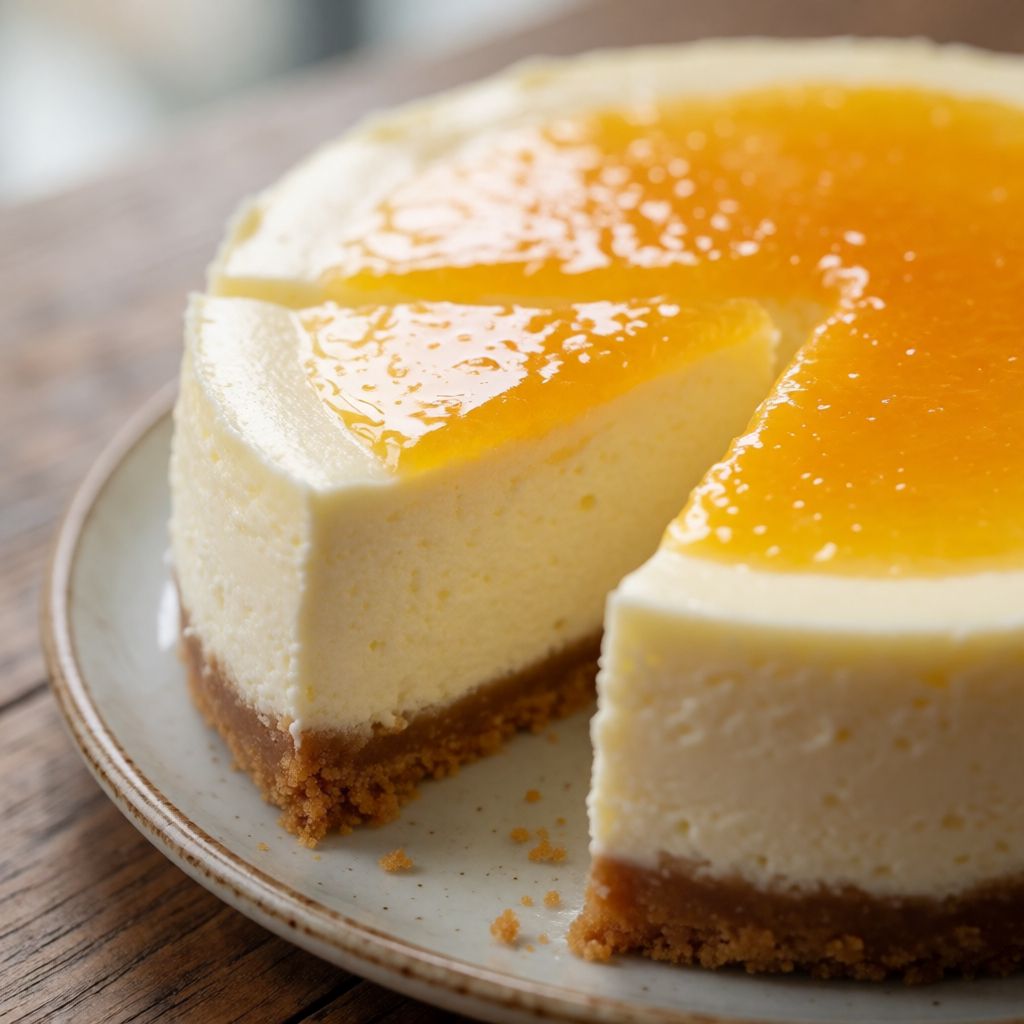
 AI photo
Tangerine Cheesecake
A creamy no-bake cheesecake flavoured with fresh tangerine juice and zest on a crisp biscuit base.
Labels are worked out automatically from the ingredients and can be wrong. Check the packaging if it matters to you.
Ingredients
- 250 g Digestive biscuits crushed
- 90 g Butter melted
- 500 g Cream cheese softened
- 250 ml Double cream
- 150 ml Tangerine juice
- 130 g Caster sugar
- 15 g Tangerine zest
- 10 g Gelatine leaf







Steps
Crush the digestive biscuits in a bowl and add the melted butter. Mix thoroughly.
Butter and line a 22 cm springform tin, press the biscuit mixture into the base, smoothing it into an even, firm layer.
Chill in the fridge.
30 minSoak the gelatine leaves in cold water until softened, then squeeze out well and dissolve in two tablespoons of warm cream.
10 minIn a bowl, soften the cream cheese and add the caster sugar.
Add the tangerine zest and tangerine juice, then stir in the dissolved gelatine.
In another bowl, whip the remaining cream and gently fold it into the cheese mixture.
Spread the cream mixture over the biscuit base, smoothing the surface well.
Chill in the fridge.
240 min
What was changed
The dry crackers were replaced with Digestive biscuits, the usual base biscuit for cheesecakes in British kitchens.
This is not a cheesecake in the oven sense at all — it's a set cream, built on gelatine, not egg. No heat ever touches the filling. That's the whole engine of the thing: you're not cooking cream cheese, you're persuading it to hold its shape with a protein net that only gelatine can spin. Once you understand that, the recipe stops being a list and starts making sense.
Two things decide whether it stands up when you cut it or collapses into a sad tangerine soup. First, the base — butter is the mortar between the crumbs, and if you don't press it down hard and give it real cold time, it crumbles the moment a knife touches it. Second, the gelatine window: bloom it soft in cold water, then melt it into warm — not hot — cream. Too hot and you cook the setting power out of it; it dissolves fine but sets weak or not at all. Too cold and it seizes into little threads before it ever meets the cheese, and you'll be picking rubbery strings out of a mousse for the rest of your life.
Some say cheesecake must go in the oven, must crack on top if it's "real". No — that's a different animal, baked with egg, and it belongs to a different economy of ingredients. This one belongs to the fridge, which is its own kind of oven: slower, gentler, no risk of curdling, no need to watch a door. The British relationship with the fridge-set cheesecake isn't an accident — it needs no oven space, no baking tin fuss, just a tin, a fridge, and four hours you're not allowed to rush.
Start with the biscuits. Digestive biscuits are chosen for being bland and dry — they carry butter without fighting the tangerine on top, and they crumb finely without turning to dust. Any dry, not-too-sweet biscuit works on the same logic: ginger nuts if you want a spiced edge, graham crackers if that's what's in the cupboard, even a plain rich tea in a pinch. What matters is dryness and a willingness to take on butter, not the brand on the packet.
The butter is doing one job only — gluing the crumb into a slab. Melted butter coats every crumb, then re-solidifies in the fridge and locks the base rigid. Skimp on it and the base stays sandy; press it in weakly and it stays loose under the filling's weight. Unsalted or salted both work — salted just nudges the base savoury against the sweet, sharp top, which isn't a fault, it's balance.
Cream cheese has to be properly softened before it meets sugar, or you fight lumps the whole way through and never quite win. Full-fat is worth insisting on — low-fat versions carry more water, which fights the gelatine's job of setting the whole mass. If you've no cream cheese, mascarpone will do it, though it brings more richness and less tang, so you may want a touch more tangerine juice to balance it.
Double cream is whipped separately and folded in — not stirred, folded, which keeps the air inside it. That air is what keeps the finished cheesecake from tasting like a solid block of fat; it's a mousse, not a brick, and the whip is the only place that lightness comes from. Use any cream with enough fat to hold soft peaks — whipping cream at a pinch, but double is more forgiving of a slightly overzealous whisk.
Tangerine juice and zest aren't just flavour, they're the acid that keeps all that cream and cheese from tasting flat and one-note. The zest carries the oils — the actual scent of a tangerine lives in its skin, not its juice — so don't skip it even if you're short on juice. If tangerines aren't in season, clementines or a good orange with a spoon more lemon juice stand in well enough; the mechanism they're serving — cut richness, bring scent — stays the same whatever citrus supplies it.
Gelatine leaf over powder is a matter of control, not superstition — leaves bloom evenly and dissolve cleanly, powder can clump if you're not careful. If leaf isn't to hand, powdered gelatine works the same way: soak it in a little cold water first, then warm it gently the same way, same temperature caution applies. Either way, the caster sugar's only job is to dissolve fast and clean into the cheese — finer sugar means no grainy bite later, which matters more here than in a baked cake, since nothing will ever get hot enough again to melt a stray crystal.