
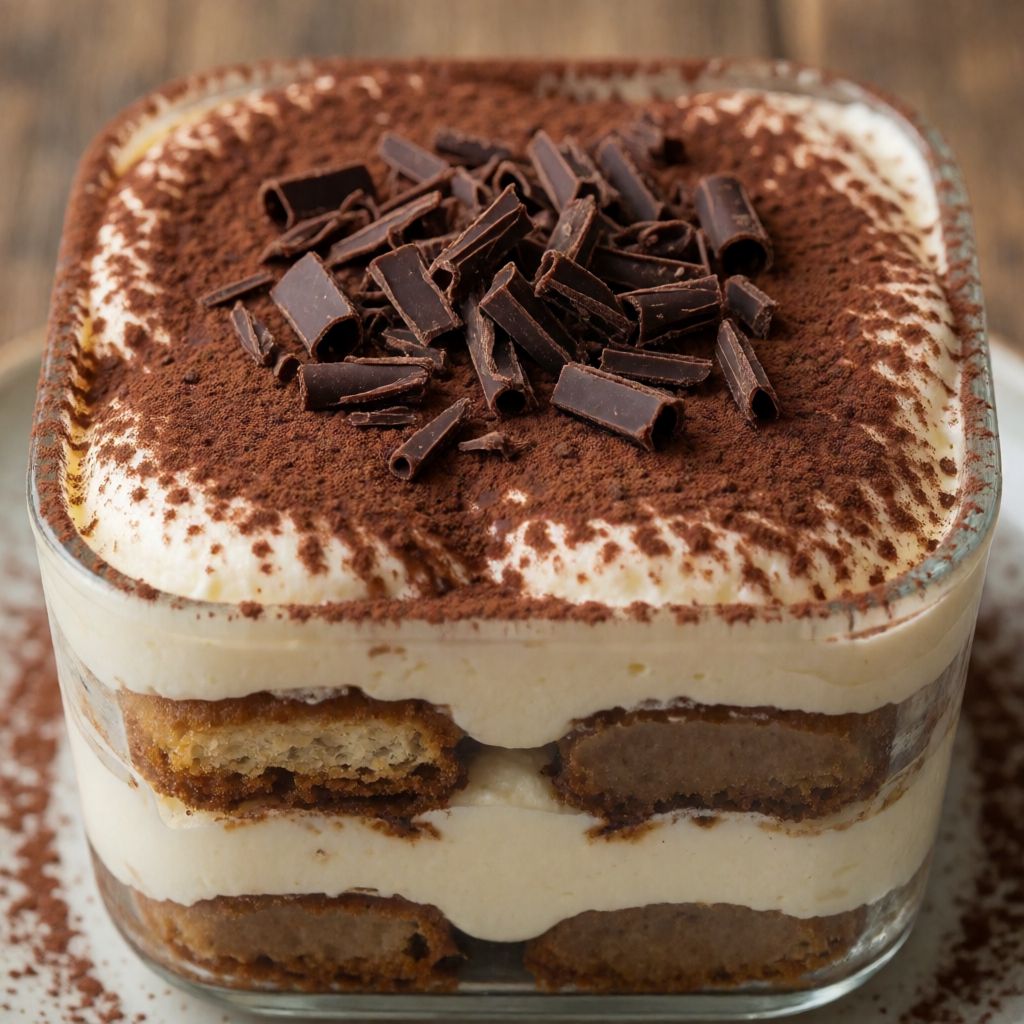
 AI photo
Eggless Dark Chocolate Tiramisu
A creamy egg-free tiramisu with dark chocolate, mascarpone, coffee-soaked sponge fingers and whipped cream.
Labels are worked out automatically from the ingredients and can be wrong. Check the packaging if it matters to you.
Ingredients
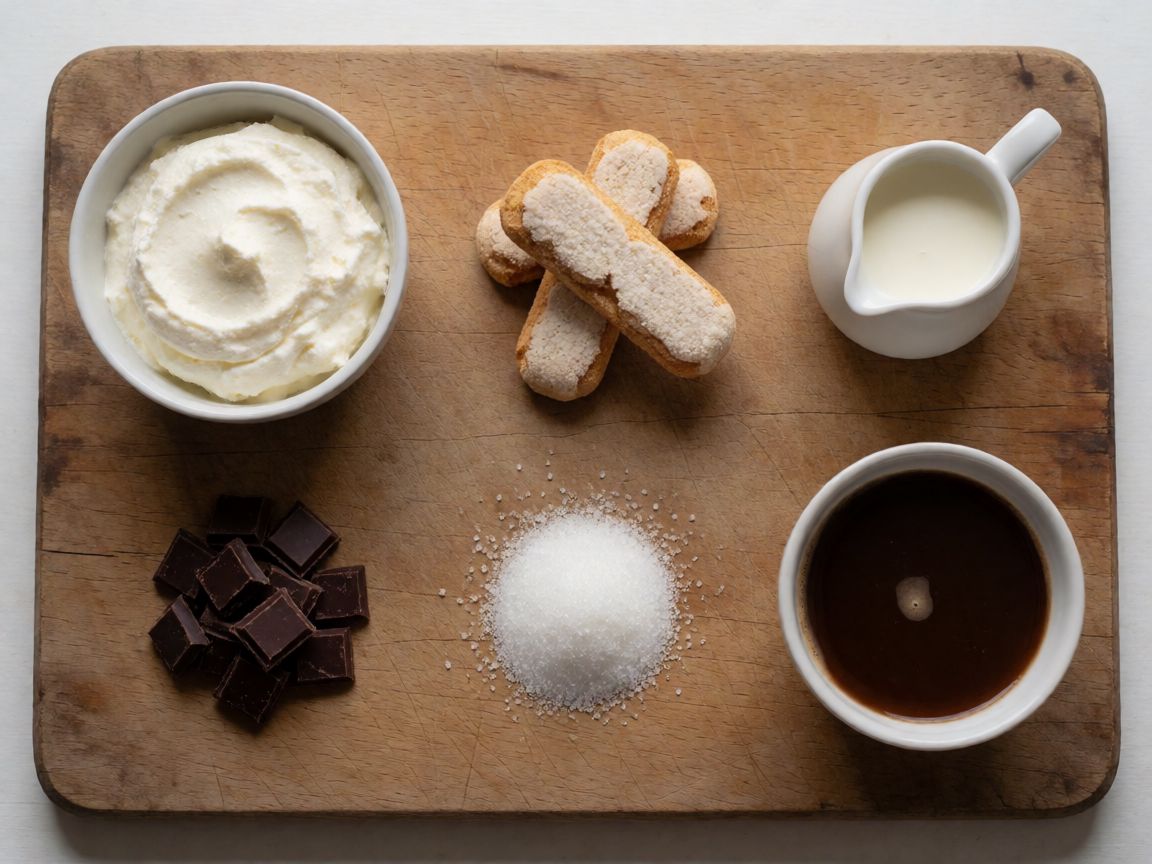
- 200 g Mascarpone
- 140 g Sponge Fingers (Savoiardi)
- 150 g Dark Chocolate
- 25 g Caster Sugar
- 150 ml Double Cream
- 250 ml Coffee
- 1 pinch Salt to taste






Steps
Brew the coffee without sweetening it, then let it cool.
In a bowl, whip the double cream with a mixer until thick, then fold in the mascarpone and sugar, mixing from the bottom up.
Melt the dark chocolate in a bain-marie or in the microwave, let it cool, then stir it into the cream mixture.
Set the cream mixture aside.
Quickly dip the sponge fingers (savoiardi) in the coffee and arrange a layer in the bottom of glasses.
Spoon over a layer of the cream mixture, repeat with another layer of dipped biscuits, then finish with a final layer of cream.
Decorate the top with grated dark chocolate.
This is a tiramisu stripped of eggs — the part most people think holds the whole dessert together. Classic tiramisu gets its lift from whipped egg whites and its richness from raw yolks beaten into mascarpone. Take the eggs out and you need something else to do both jobs: hold air, and carry fat. Here that job falls entirely to double cream, whipped until it holds its own shape, with melted dark chocolate folded in afterwards for weight and bitterness instead of yolk.
What decides whether it works is temperature at two exact moments, neither of which the recipe calls "degrees" because you don't need a thermometer, you need your hand. The coffee has to be properly cool before the biscuits meet it — hot coffee and dry sugar-crusted savoiardi is a bad combination, the biscuit collapses into paste before it's even in the glass. And the melted chocolate has to cool before it goes into the whipped cream — fold it in while it's still warm and you melt the fat that's holding the air bubbles in your cream, and your airy mousse quietly turns into chocolate soup. Patience here isn't a virtue, it's the only thing standing between you and a wet mess.
Some say tiramisu without egg isn't real tiramisu. No — because tiramisu itself is a young, disputed, improvised dish, invented sometime in the mid-twentieth century out of leftover biscuits, cheap local cheese and the coffee that was already on the stove. It was never a ritual with one correct form, it was a thrifty answer to "what do we do with this." Swapping egg for cream is exactly the kind of move the dish was built to tolerate.
Mascarpone is doing the job cream cheese does in a cheesecake — body and a faint sourish backdrop, almost no flavour of its own, high enough in fat that it won't weep when it sits. If you can't find it, a thick whipped mix of full-fat cream cheese loosened with a spoon of cream gets you close enough; what you're matching is the fat content and the blandness, not a specific brand.
Double cream is the engine of the whole dessert, and the fat percentage matters more than the recipe says out loud. Double cream in the UK sits around 48% fat, which is why it whips into something that holds a ridge and doesn't collapse under the weight of the melted chocolate going in afterwards. Whipping cream, at around 35%, will still whip, but it holds its shape less stubbornly — fine if you're eating this within the hour, risky if it's sitting in the fridge overnight waiting for Sunday lunch to finish.
Dark chocolate needs enough cocoa solids to actually taste like something once it's diluted by cream, coffee-soaked biscuit and sugar — go for something in the 60–70% range. Lower than that and it reads as "a bit of sweetness," not as the bitter counterweight the whole pudding is built around. Melt it gently: a bain-marie if you own one, or short bursts in the microwave, stirring between each. Chocolate scorches on sustained high heat and seizes into a grainy lump if a drop of water gets into it — that's the defect you're avoiding, not an abstract rule.
The coffee should be strong and genuinely bitter, with nothing added to it — sugar in the coffee just dilutes the sugar you've already measured for the cream, and you lose control of sweetness. Strong filter coffee, moka pot, or espresso all work; what you're after is a dark, unsweetened liquid with enough punch to cut through cream and biscuit, not a cup of tea's worth of flavour.
Sponge fingers are chosen for their dryness, not despite it — a slice of ordinary sponge cake would turn to sludge the moment it met liquid. Savoiardi are baked specifically to stay rigid and absorb fast and briefly, which is exactly the behaviour this layering needs.
A pinch of salt in a chocolate pudding isn't a seasoning in the savoury sense — it sharpens the chocolate's bitterness and keeps the sweetness from sitting flat on the tongue, the same reason a pinch goes into caramel. This feeds four as individual glasses, which suits a domestic kitchen better than one big dish anyway — no slicing, no second-guessing portions, and it travels to the fridge in a tray without drama. Give it at least an hour there before eating; the layers need that time to settle into each other, biscuit softening evenly, cream firming back up after the chocolate went in. That wait is not wasted time, it's the step that turns "stacked ingredients" into tiramisu.