
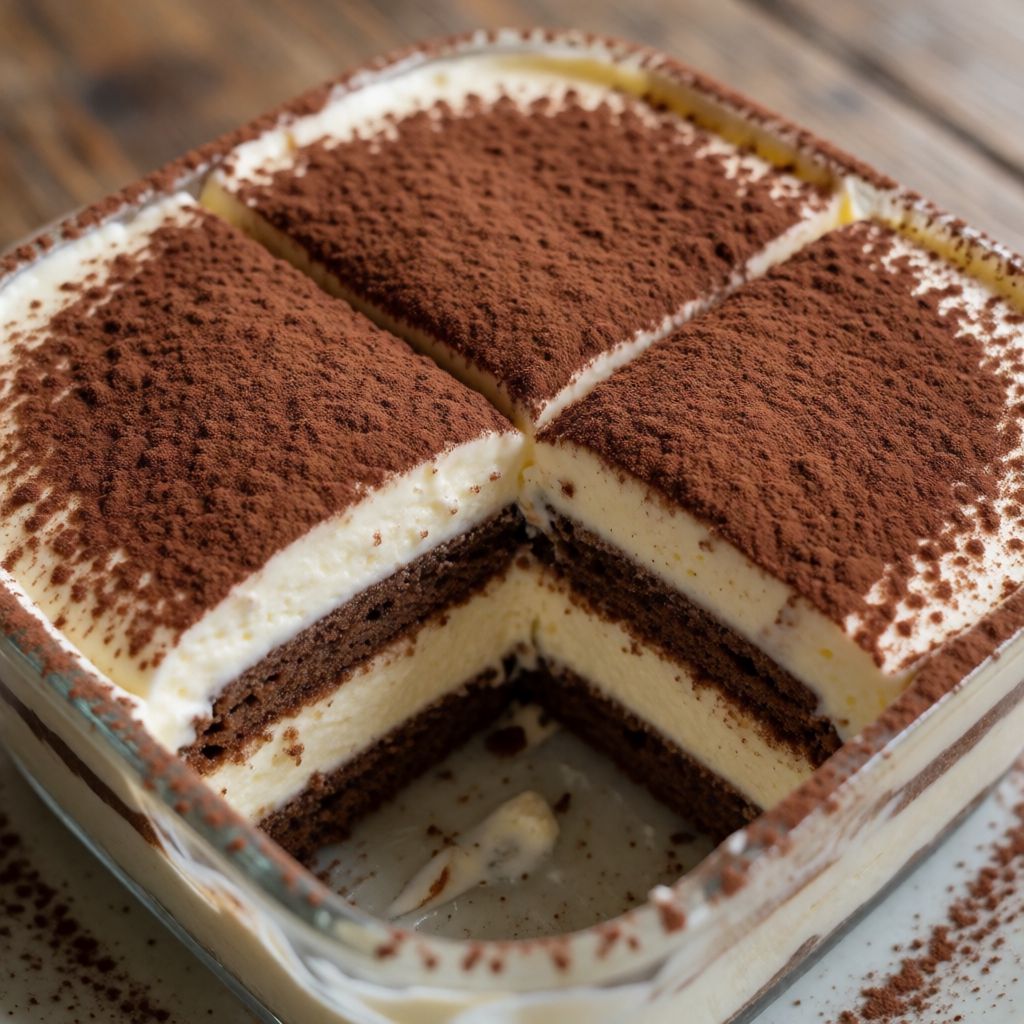
 AI photo
Cocoa Biscuit Tiramisu
A quick no-bake tiramisu layered with mascarpone cream and cocoa biscuits.
Labels are worked out automatically from the ingredients and can be wrong. Check the packaging if it matters to you.
Ingredients
- 250 g Mascarpone
- 50 g Caster Sugar
- 250 ml Double Cream
- 50 g Icing Sugar
- 200 g Cocoa Biscuits
- Milk to taste
- Nutella to taste







Steps
Whisk the mascarpone with a mixer, add the caster sugar and mix well, then set aside in the fridge.
In another bowl, combine the double cream with the icing sugar and whip until thick and firm.
Take out the mascarpone and gradually fold in the whipped cream, stirring gently.
Lightly dip the cocoa biscuits in warm milk and lay them as the first layer.
Spread one or two spoonfuls of the cream, then add another layer of dipped biscuits.
Cover with another layer of the mascarpone and cream mixture, add softened Nutella, then more cream.
Finish the dessert by sprinkling some crushed cocoa biscuits on top, without dipping them.
Chill the dessert in the fridge for 15-20 minutes, then serve.
20 min
What was changed
The biscuits were swapped for Cocoa Biscuits because the original brand isn't widely available in UK supermarkets.
Call it what it is: not tiramisu in the strict Italian sense — no eggs, no coffee, no marsala — but its practical English cousin, built from cream, mascarpone and chocolate biscuits instead of raw yolks and espresso. That's not a complaint. It means no raw-egg worry, no hunting for ladyfingers or alcohol, and a dessert you can build and eat the same evening. Six people, thirty minutes of hands-on work, zero minutes at a stove — because there's no stove in this recipe at all, which in an ordinary flat is its own small relief.
What decides whether it holds together as a dessert rather than a bowl of sweet sludge is two things: how long the biscuit sits in the milk, and how far you take the cream. Dip the biscuit for a soak and you get mush that won't hold a layer — the biscuit's job here is the same one it does in your tea mug, softening the surface by letting fat-carrying milk into the top layer, not dissolving the whole thing. That's exactly why milk and not tea: milk has fat to coat and soften evenly; tea just makes it soggy and faintly bitter. A quick dip, biscuit still structurally a biscuit underneath — that's the cue, not a stopwatch.
Some say tiramisu must rest overnight for the flavours to "come together" — no, because that rule belongs to a dessert where liquid has to migrate slowly through a dry sponge finger. Here the biscuit is only lightly dipped, and the cream is set by whipped-cream fat, not by egg and time. Fifteen to twenty minutes in the fridge is enough to firm the layers so they cut cleanly — not a ritual, just physics with less patience required.
Go through the parts and the logic gets clearer. Mascarpone is the base because it's almost pure fat with very little water and almost no tang — that's what gives this filling its weight without turning sour like a cheesecake filling would. Beat it with the caster sugar first, on its own, before anything else touches it: caster sugar dissolves into fat quickly with a bit of mixing, and doing this now, while the mascarpone is still thick and undiluted, avoids the grainy sugar-crystal feel you'd get trying to dissolve it later into a looser, cream-diluted mixture. If mascarpone isn't to hand or costs too much that week, cream cheese loosened with a splash of the double cream gets you close — expect more tang, less richness, nothing wrong with that, just a different dessert wearing the same coat.
The double cream and icing sugar are whipped separately for the reason above, but icing sugar specifically because it's a fine powder that dissolves into the cream as you whip rather than sitting as grit — caster sugar in whipped cream stays slightly granular on the tongue, which you won't notice in a cake batter but will notice in something this smooth. Use cream with enough fat to hold its own structure when whipped — double cream in the UK is already the right choice for that; lighter creams (single, whipping cream at a push) won't firm up the same way and you'll be folding soup into your mascarpone.
The cocoa biscuits need to be dry and crisp to start with, because their whole job is to soften just enough on the outside while staying biscuit-shaped on the inside — a biscuit that's already soft (a chocolate cookie, say) collapses the moment milk touches it. Digestive-style chocolate biscuits or any dry cocoa biscuit do the job; what you're choosing for is crispness before dipping, not flavour, because the flavour mostly comes from the layers around it anyway.
Milk is there purely as a softening agent, not a flavour — whole milk works slightly better than skimmed because, again, fat carries softness into the biscuit surface more evenly than water does. Warm, not hot: warm is enough to loosen the biscuit's surface starches in a couple of seconds; boiling milk will start to cook the surface into paste before you've even lifted the biscuit out.
Nutella gets "softened" rather than melted, and that distinction matters: warmed just enough to spread thin and even, not heated to liquid, because a hot, runny spread will slide straight into the cream layer below it and you lose the line between layers — which is half the visual and textural point of a layered dessert. If you don't have Nutella, any smooth nut-and-chocolate spread does the same job; thinned dark chocolate ganache works too, just expect a less sweet, more bitter note.
Last thing, and it's not really an ingredient but it behaves like one: patience in two small doses. The patience to fold, not stir, the cream into the mascarpone, and the patience to dip quickly rather than soak because you're in a hurry. Both mistakes come from the same impulse — wanting the dessert to be ready faster than its structure allows — and both leave you with something that tastes fine and looks like it gave up halfway through.