
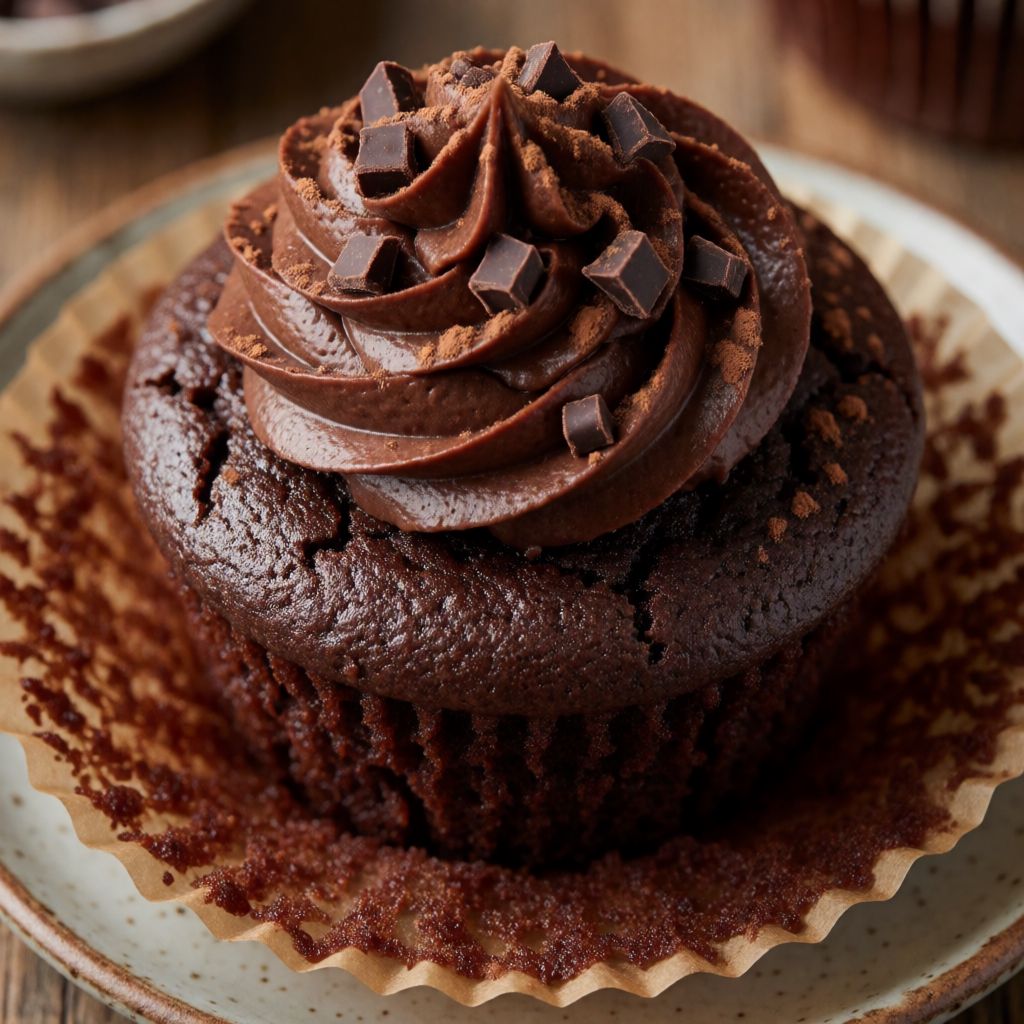
 AI photo
Triple Chocolate Cupcakes
Rich, fudgy cupcakes loaded with three kinds of chocolate for a proper chocolate fix.
Labels are worked out automatically from the ingredients and can be wrong. Check the packaging if it matters to you.
Ingredients
- 230 g Caster sugar
- 3 pcs Eggs
- 0.25 tsp Vanilla powder or one whole vanilla pod
- 175 g Dark chocolate
- 150 g Butter
- 40 g Cocoa powder
- 160 g Plain flour
- 2 tsp Baking powder
- 0.5 tsp Salt
- 200 ml Milk
- 100 g Dark chocolate or alternatively milk or white chocolate








Steps
Whisk the vanilla, sugar and eggs until light and fluffy.
Melt the butter in a saucepan over low heat, then remove the pan from the heat.
Add 175 g dark chocolate to the hot butter and stir until all the chocolate has melted.
Fold the chocolate-butter mixture into the egg mixture together with the milk.
Mix the flour, salt, cocoa powder and baking powder, add the chopped chocolate, then fold into the chocolate mixture.
Divide the batter among 12 paper cupcake cases and sprinkle with chopped chocolate.
Bake in a preheated fan oven at 175°C for 17-19 minutes.
18 min
A chocolate cupcake is really just a small, intensely moist cake wearing a paper dress, and the three chocolates here are doing three different jobs, not one job three times. The melted dark chocolate in the butter gives richness and that slight fudgy density. The cocoa powder in the dry mix gives colour and a deeper, slightly bitter backbone — cocoa is mostly solids with the fat removed, so it doesn't add moisture, it adds flavour without softening the structure. The chopped chocolate folded in last and sprinkled on top gives you pockets of melted chocolate and a bit of shine and crunch once it cools. Lose any one of the three and the cake still works; lose the logic behind why each is there and you get something flat and one-note.
What decides whether these rise properly and stay moist is mostly about heat control and how you treat the eggs and sugar. Whisking the eggs and sugar "until light and fluffy" isn't decoration — you're beating air into the mixture, and that trapped air is doing real lifting work alongside the baking powder. Skip this and the cupcakes rely entirely on the raising agent, which gives you a denser, slightly squat result — not ruined, just less of a rise, more of a push.
Caster sugar rather than granulated is the right choice here because its finer crystals dissolve faster into the eggs during whisking — you want the mixture smooth and aerated, not grainy. If you only have granulated, give it longer in the mixer or a quick blitz in a food processor first; it'll still work, just ask more of your arm or your machine.
The vanilla is there to round off the bitterness of two chocolates and cocoa, not to announce itself. A quarter teaspoon of vanilla powder is a light touch — if you're using a whole pod, split it and scrape the seeds into the sugar before whisking, since vanilla flavour lives in the seeds, not the pod's fibrous shell. Vanilla extract works too, added with the milk rather than the sugar, since it's liquid and would just dilute the whisking stage.
For the 175 g of chocolate melted into the butter, dark chocolate with a reasonable cocoa content (around 60-70%) gives you that fudgy depth without tipping sweet. Go much higher in cocoa percentage and you risk a drier, more bitter crumb, because high-cocoa chocolate has less sugar and fat to carry moisture. This isn't the place for chocolate chips designed to hold their shape when baked — you want something that melts cleanly, so a bar, broken up, behaves better than chips built to resist melting.
Butter here is doing double duty: fat for tenderness and a carrier for the melted chocolate. Any unsalted butter works; if you only have salted, just scale back the added salt slightly, since the recipe's 0.5 tsp salt is calibrated assuming unsalted butter. There's no good substitute that behaves the same way in this step — oil won't let the chocolate melt into it the same smooth way, because butter is partly water and that water helps the chocolate emulsify rather than just float in fat.
Cocoa powder should be the plain, unsweetened kind — not drinking chocolate, which is mostly sugar and milk powder and will throw off both the sweetness balance and the dry-to-wet ratio. Dutch-processed cocoa gives a smoother, less acidic flavour and slightly darker colour; natural cocoa is sharper. Either works with 2 tsp baking powder, but if you want to be fussy about chemistry: natural cocoa is mildly acidic and can react a touch with baking powder on its own, Dutch-processed won't — in a cake this small with this much baking powder already doing the work, you won't notice the difference, so don't lose sleep over it.
Plain flour, not self-raising, because the recipe wants you controlling the lift yourself with the 2 tsp baking powder rather than guessing how much raising agent is already baked into a self-raising bag — bags vary by brand, and that's exactly the kind of inconsistency that gives you domed cupcakes one time and flat ones the next. Milk brings the batter to a pourable, scoopable consistency; whole milk gives a touch more richness than semi-skimmed, but either divides evenly into 12 paper cases without drama. And on the cases themselves — in a home oven without a kazan or anything fancier than a standard muffin tray, paper cases are doing real work holding shape before the batter sets, so don't skip them for a bare tin unless you're greasing generously and watching closely, because a cupcake without support can slump before the crust forms.
The final 100 g of chocolate, chopped and folded in plus sprinkled on top, is where you can play — milk chocolate softens the bitterness for a sweeter tooth, white chocolate gives pockets of contrast against the dark cocoa base. This is the one place in the recipe where "any oil with no smell of its own" logic doesn't quite apply, since chocolate isn't neutral — whichever you choose will taste like itself in the final bite, so pick based on what you want to taste, not just what's in the cupboard.
Twelve cupcakes from this batch is a sensible Sunday-afternoon number — enough for a family after the roast, with a couple left for Monday's tea. Patience here isn't long, but it's precise: the melting, the whisking, the watching near minute seventeen all ask for attention rather than hours. That's the ingredient this recipe actually tests.