
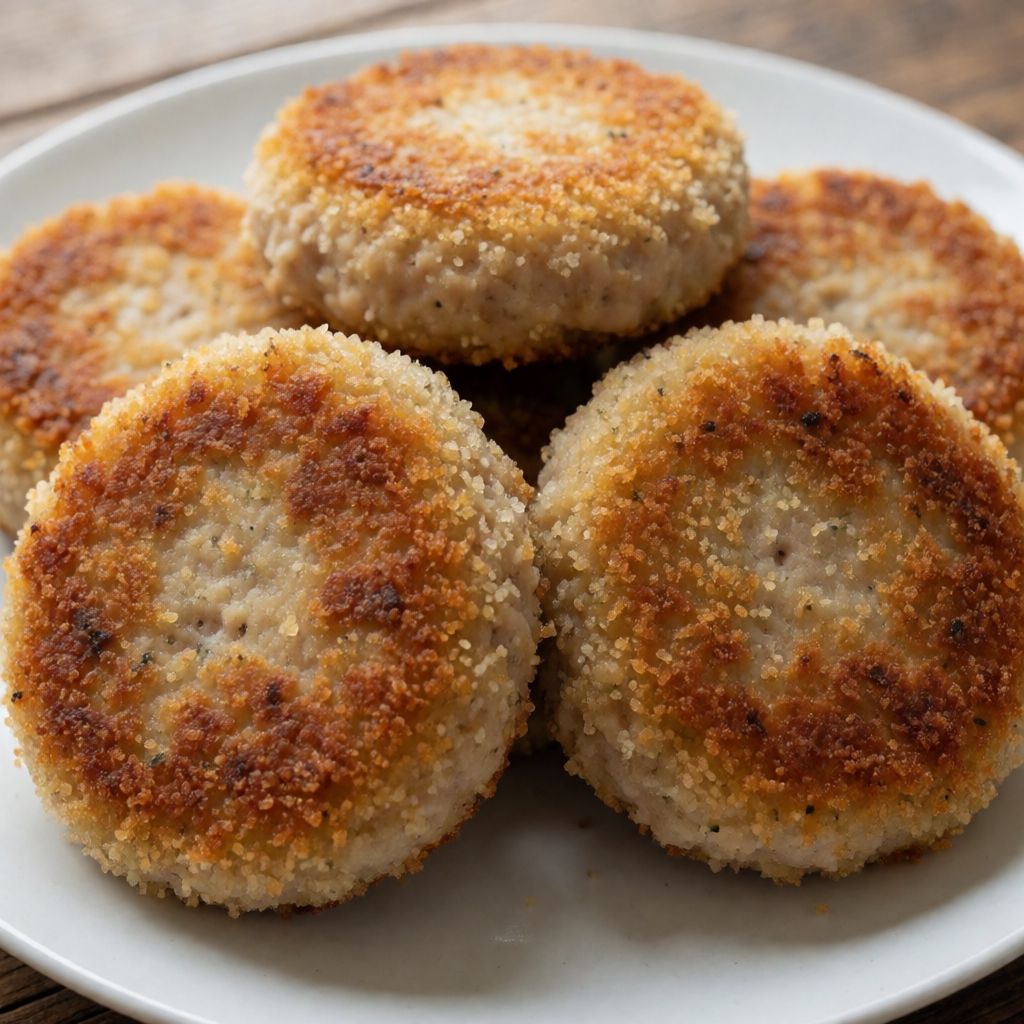
 AI photo
Tuna Fishcakes
Simple pan-fried tuna fishcakes made with canned tuna, soaked bread and egg.
Labels are worked out automatically from the ingredients and can be wrong. Check the packaging if it matters to you.
Ingredients
- 200 g Tuna canned, drained
- 40 g Stale bread
- 250 ml Milk
- Breadcrumbs to taste, dried
- Salt to taste, if using tuna in spring water or brine
- 1 pcs Egg
- Vegetable oil for frying
- Chives optional







Steps
Soak the bread in a bowl with the milk. Wash and finely chop the chives, if using.
Drain the tuna well, removing any oil or water, place it in a bowl and mash with a fork.
Add the chopped chives and the well-squeezed, crumbled bread.
If using tuna in spring water or brine, add a pinch of salt and mix gently.
Add the egg and mix well. If the mixture feels too soft, add a few more breadcrumbs.
With damp hands, shape small patties about the size of a walnut and coat them in breadcrumbs.
25 min
These are small, pan-fried cakes built from one tin of fish and a slice of bread that's gone past its best. There's no magic in a fishcake — it's an exercise in making something lean and dry hold together, then making the outside interesting enough that you forget the inside is, by itself, fairly plain.
What decides whether this works isn't heat, it's moisture. The bread soaks in milk to take on water the tuna doesn't have — tinned fish is cooked and pressed, it has given up its juice long ago. Squeeze that bread too hard and the mix goes dry, cracks when you shape it, falls apart like sand in the pan. Don't squeeze it enough and the mix is slurry, won't hold a wall, slides off the fork. You're aiming for something that behaves like firm mashed potato: holds the shape your hand gives it, doesn't spring back, doesn't run.
Some say tuna in oil makes a better fishcake because the oil adds richness. No — because that oil has nowhere to go. It sits in the mixture, makes it slick rather than bound, and fights the fresh, grassy note the chives are there to bring in. Tuna in water or brine, well drained, with a pinch of salt added back for what the brine took out, gives you a mixture you can actually control. You decide the fat, with the oil in the pan — not the tin.
Stale bread is the right bread, not a compromise — fresh bread is still full of its own moisture and air, and it turns to paste the second milk touches it. A day or two old, gone a bit tight and dense, it drinks the milk instead of dissolving in it, and that's the texture you want when you squeeze it out: damp, springy, not wet. Forty grams is roughly a thick slice with the crust left on — crust is fine here, nobody will notice it once it's mashed in.
The egg is the only thing in this bowl that actually sets. Bread and fish just sit together, loosely, until heat hits the egg and it coagulates, binding everything into one piece rather than a hundred flakes. That's why the mix goes soft right before shaping, and why, if it stays too soft even after the egg, the answer is more dry breadcrumb rather than more egg — you're short on structure, not on glue.
Chives are there for one job: cutting the flatness of tinned fish with something green and sharp. Leave them out and nothing fails, the cake just tastes quieter. If you haven't got chives, a few spring onion tops or a scrap of parsley does the same work — anything fresh, mild, and cut fine enough not to tear the mixture apart when you fold it in.
Any neutral oil works for frying — sunflower, a mild vegetable oil, anything with no smell of its own, because the fishcake's flavour is already decided by what's in the bowl; the oil's only job is heat transfer and crust. Olive oil will fight the tuna and the chives both — keep it for something that wants its taste. In a domestic pan, without a thermometer, judge the oil by a single breadcrumb dropped in: it should hiss and rise straight away. If it sinks and sits, the oil's not ready and the cake will sweat rather than crisp; if the oil's already smoking, it'll colour the crumb before the inside's had any chance to warm through.
Tinned fish in this kind of cake isn't a modern shortcut, it's an old habit dressed in a tin. Before refrigeration and frozen fillets, tinned fish was the only reliable fish in a British kitchen through most of the week, and bread going stale was simply what bread did — nothing was thrown away that could still be made to hold a shape. A fishcake is what you get when a frugal kitchen refuses to waste either.
Patience earns its place here in the squeezing and the shaping, not in watching a clock. Squeeze the bread properly — rushed, half-wet bread is the single most common reason these fall apart in the pan — and shape with damp hands so the surface doesn't tear and let the crumb coating sit unevenly. Twenty-five minutes, start to finish, is honest for this dish, but it's the feel of the mixture under your hand, not the timer, that tells you when to stop.