
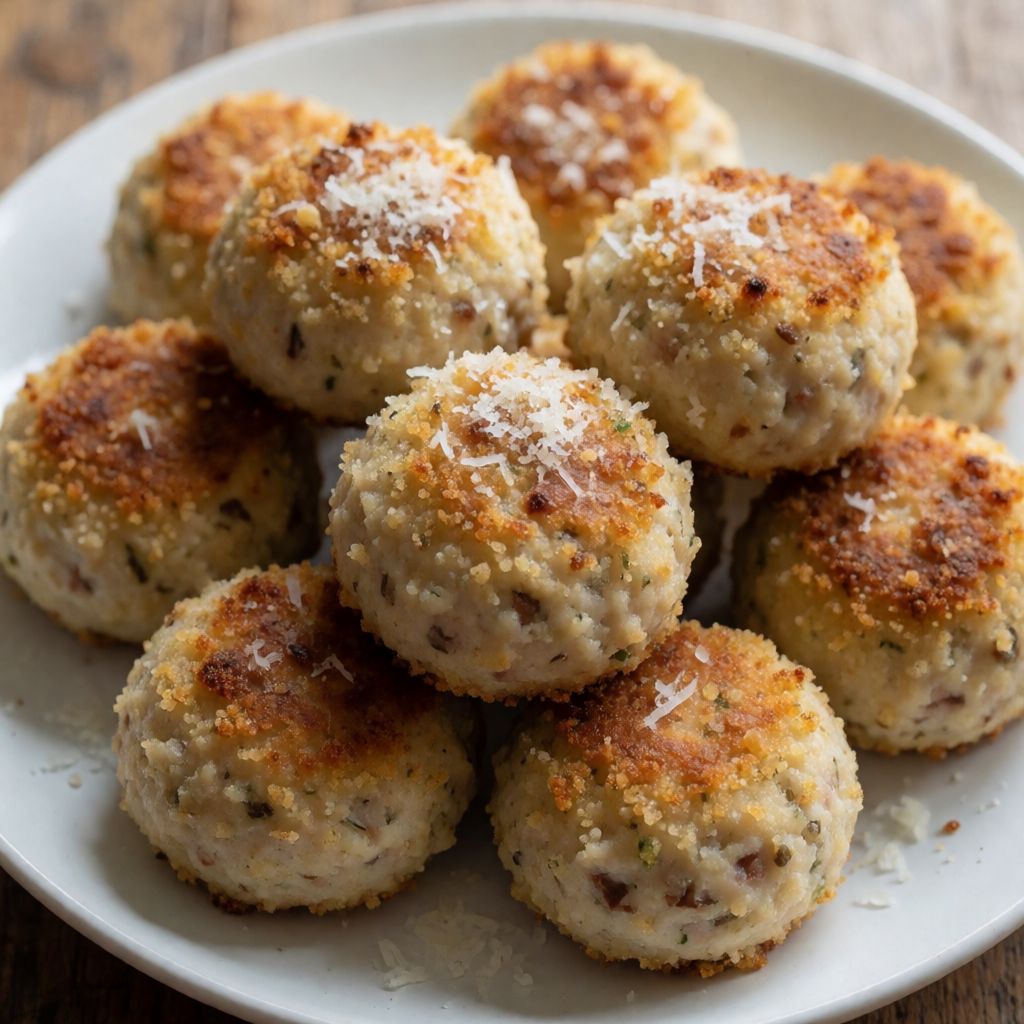
 AI photo
Tuna and Ricotta Meatballs
A comforting dish of tuna and ricotta meatballs, baked or fried until golden and gently spiced with anchovies and capers.
Labels are worked out automatically from the ingredients and can be wrong. Check the packaging if it matters to you.
Ingredients
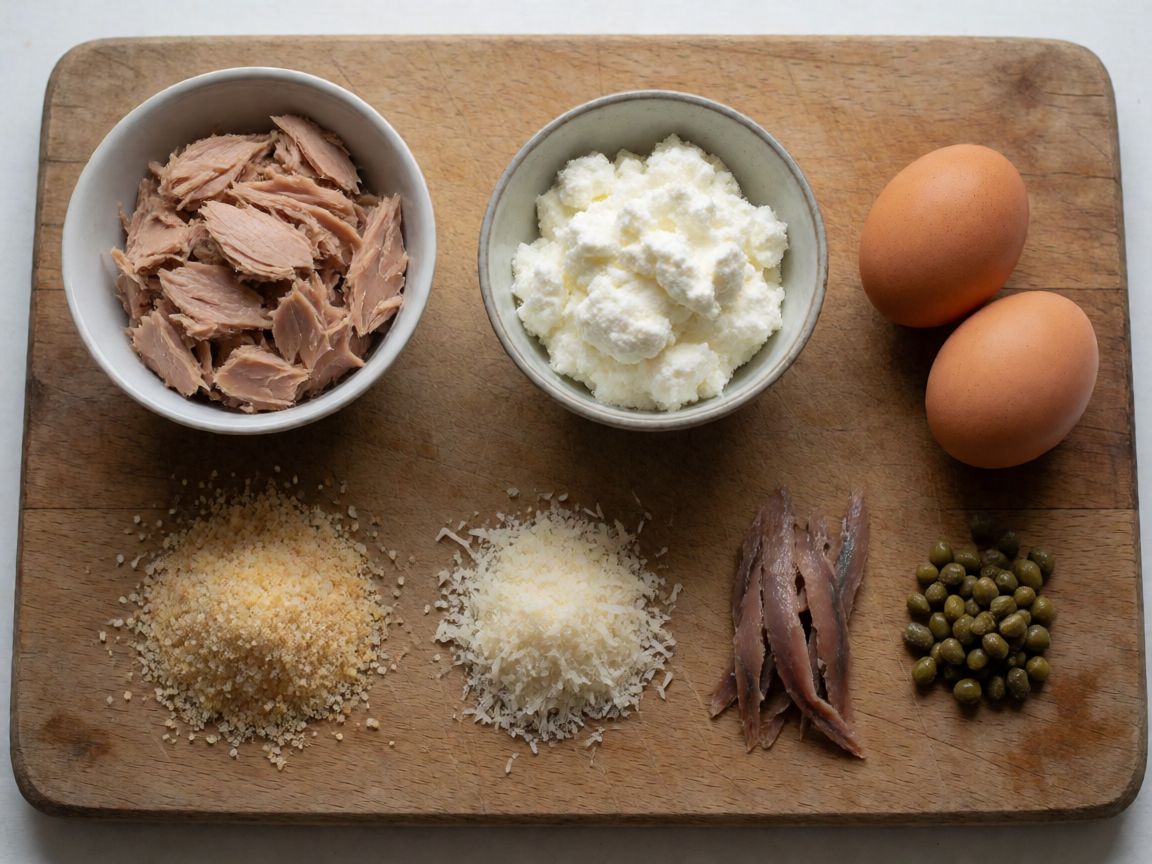
- 250 g Tuna tinned, in spring water, drained
- 250 g Ricotta
- 2 pcs Eggs
- 120 g Breadcrumbs
- 50 g Parmesan
- 25 g Anchovies
- 10 g Capers
- Black pepper to taste
- Vegetable oil for frying








Steps
In a bowl, mix the ricotta until smooth, add the well-drained tuna and the eggs, and stir to combine.
Stir in the finely chopped anchovies and capers for flavour, and season with black pepper.
Add the parmesan and breadcrumbs, and mix until you have a smooth, even mixture.
Shape the mixture by hand into balls of about 30g each and coat them in breadcrumbs.
Place the meatballs on a baking tray lined with parchment paper and bake at 180°C.
18 minAlternatively, fry the meatballs in plenty of hot oil, turning them, until golden brown.
Cook the fish to an internal temperature of at least 63°C at the thickest point.
Place the meatballs on paper towel to drain off excess oil, and serve hot.
This isn't a fishcake and it isn't an Italian meatball in the proper sense - it's an exercise in moisture control. You've got dry tinned tuna, you're softening it with a wet fresh cheese, binding the whole thing with egg, and then wrapping it in crumbs so it holds its shape in heat. Everything that goes wrong with this dish goes wrong because of water: too much left in the tuna and the mixture won't hold a ball shape; too little binder and the balls crack the moment you turn them in the pan.
The common mistake is thinking tinned tuna is already "cooked" so you can be relaxed about heat. No - the tuna's fine straight from the tin, but the raw egg and the ricotta running through it are not, and that's exactly what the 63°C core is checking for. It's not about finishing the fish, it's about setting the egg protein so the inside stops being paste and becomes something that holds together when you bite it.
Shape and crust do the rest of the work. Pack the mixture too loosely and it falls apart in hot oil; pack it too tight and the outside colours before the inside sets, and you get a dry little pellet instead of something soft in the middle. The crumb coating on the outside isn't there to look nice - it's what gives you the gold-brown shell everyone actually wants, while the crumbs mixed into the paste are doing the quieter job of holding the centre together.
Start with the tuna: drain it properly, press it if you have to. Tinned-in-water tuna carries a surprising amount of liquid in the flakes themselves, and if that goes into the bowl unchecked, it dilutes the egg and ricotta's ability to bind anything - you'll be adding extra breadcrumbs just to compensate, and the balance of the dish drifts off without you noticing why.
Ricotta's job is moisture and mildness - it's what keeps the tuna from eating like a dry, salty crumble. It has almost no character of its own, which is the point: it lets the anchovy, capers and parmesan speak instead of fighting them. If you've no ricotta, drained cottage cheese or curd cheese does the same work - any soft, acid-set cheese without a loud flavour. Don't reach for cream cheese; it's too fatty and too assertive, and it'll make the mixture greasy rather than light.
The egg is the actual engineer here, not a vague "binder" - its proteins are liquid in the bowl and firm up once they hit heat, and that's the only reason the ball holds together at all once it's out of your hands. This is also why the core temperature matters more than colour: a pale centre that's still under 63°C is still raw egg, whatever brown the outside has gone.
Breadcrumbs do two separate jobs and it's worth knowing which is which. The ones mixed into the paste soak up whatever moisture is left and give the inside some structure, so it isn't just wet cheese and fish. The ones on the outside exist purely for the crust - that's where the Maillard browning happens, the actual flavour of a fried meatball, and it only happens on a dry, floured-feeling surface, not a wet one. If you've only got stale bread, grate it fine; panko works too and gives a crisper shell, closer to what you'd get on a good fishcake.
Parmesan is there for dry, salty depth against all that ricotta moisture - a counterweight, not a garnish. Any hard aged grating cheese with real character does the job; a soft young cheese won't, because it just adds more moisture where you don't need any. Anchovies work the same way as parmesan but on the savoury axis - dissolved into the mix, they don't make this taste of fish, they round out everything else, which is the oldest trick in Mediterranean cooking and the reason people who swear they hate anchovies will eat this without noticing. Capers are the one acid note cutting through all that richness; if you've none, a chopped gherkin or a bit of lemon zest does a similar job, though it's not quite the same brine.
For frying, use an oil with no smell or flavour of its own - sunflower or rapeseed, both standard in a British kitchen - because you want the crust to taste of the meatball, not of the fat. Olive oil fights you here: it has its own voice, and at the heat needed to form a crust before the inside overcooks, it tends to catch before you're ready. You don't need a deep fryer for this - a wide pan with oil coming halfway up the sides of the balls, turned with a spoon rather than stabbed with a fork, is exactly what this dish was built for in an ordinary flat. A fork punctures the crust, lets fat in, and you lose moisture you spent the whole first half of the recipe trying to keep.
Give the shaped mixture a few minutes before it goes into the pan or oven - that's not idle waiting, that's the crumbs finishing their job of drawing in the last bit of moisture so the outside of the ball isn't sticky and doesn't tear when you turn it. Patience here isn't virtue for its own sake, it's what stops you from losing half your balls to the pan.